Chen Lin, Qin Bingcai, Du Minquan, Zhong Huanzi, Xu Qingan, Li Yuhong, Zhang Ping, Fan Mingwen
The State Key Laboratory Breeding Base of Basic Science of Stomatology (Hubei-MOST) & Key Laboratory of Oral Microbiology Ministry of Education, School & Hospital of Stomatology, Wuhan University, Wuhan, China; Department of Endodontics, Guangdong Provincial Stomatological Hospital, Southern Medical University, Guangzhou, China.
BGI-Shenzhen, Shenzhen, China.
PLoS One. 2015 Feb 6;10(2):e0117064. doi: 10.1371/journal.pone.0117064. eCollection 2015.
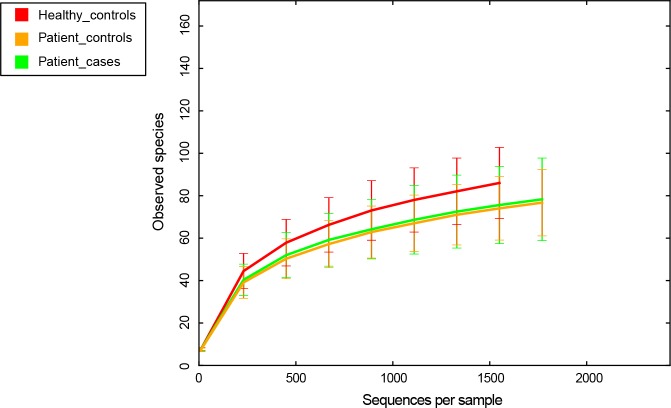
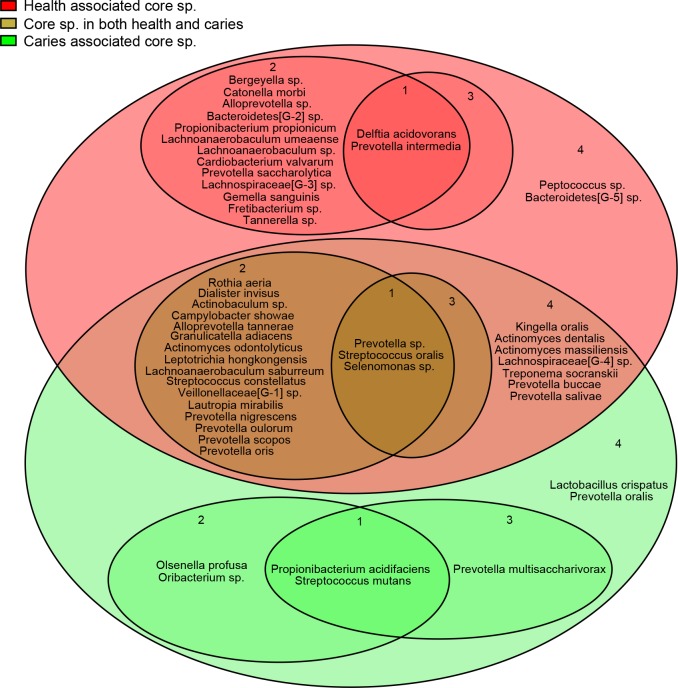
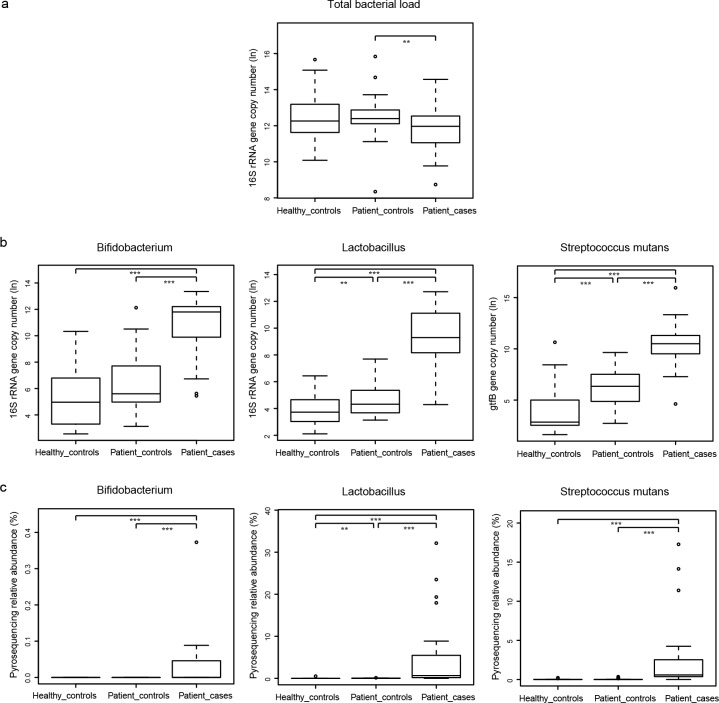
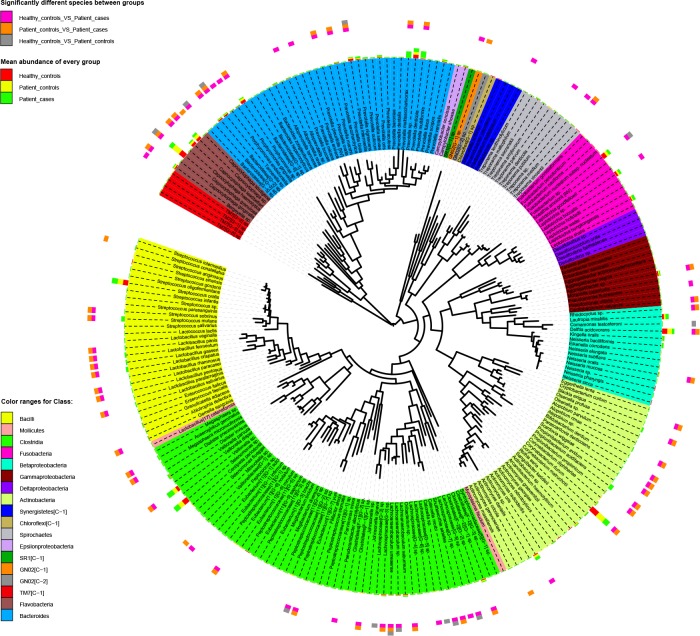
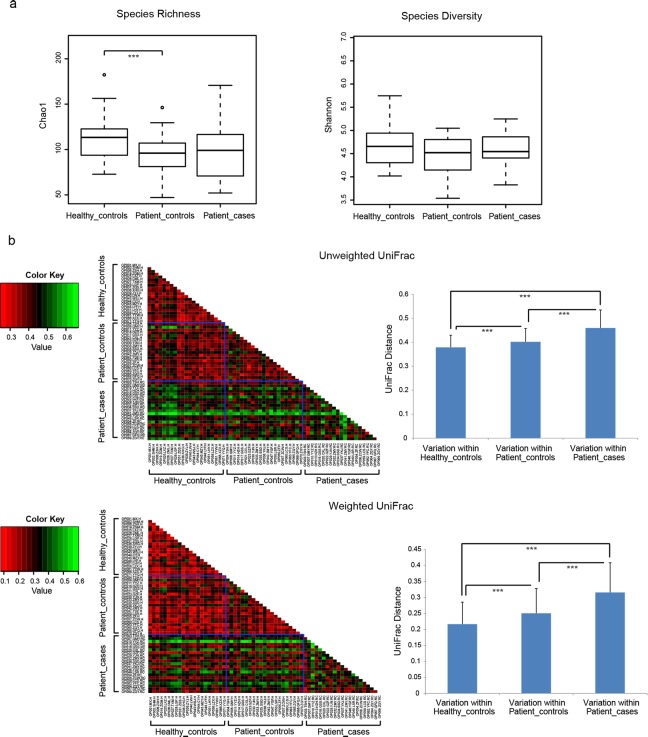
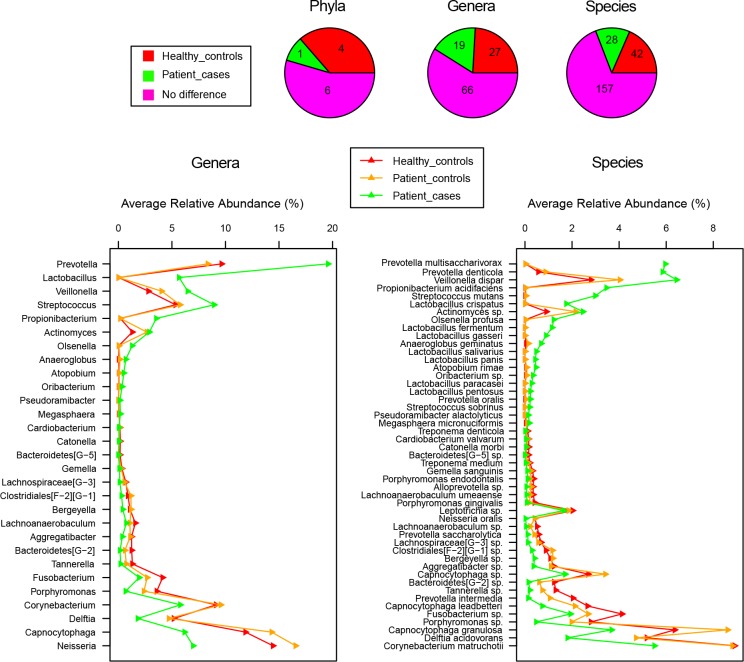
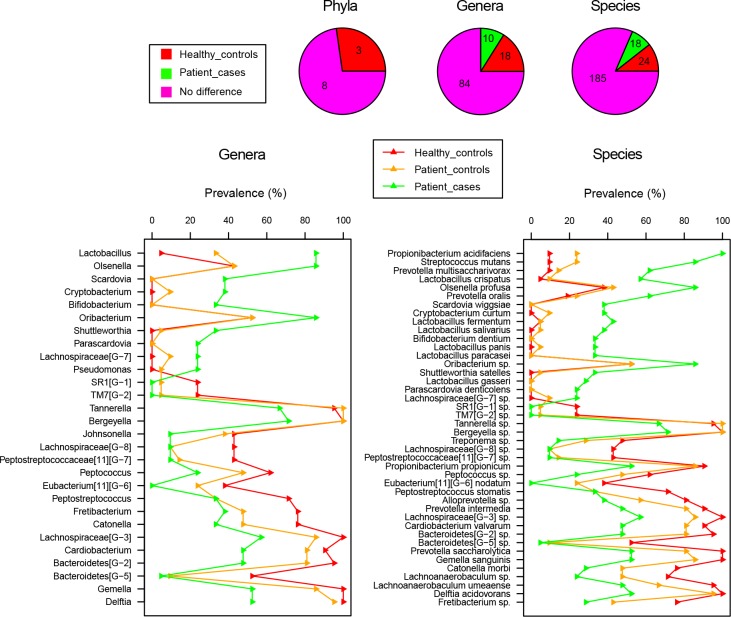
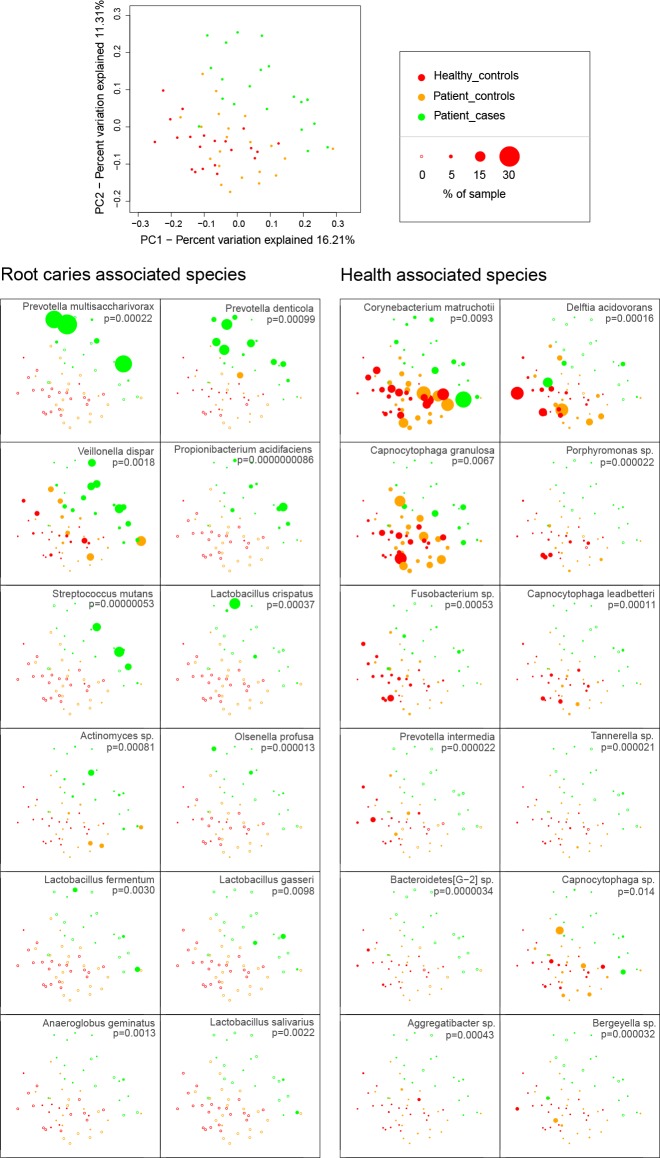
Knowledge of the polymicrobial etiology of root caries is limited. To conduct a comprehensive research study on root caries, we utilized 454-pyrosequencing of 16S rRNA gene libraries and quantitative PCR to compare supra-gingival bacterial communities from healthy sites and carious sites of 21 patients with root caries (Patient-controls and Patient-cases) and the sites of 21 healthy individuals (Healthy-controls) from two nursing homes. Healthy-controls and Patient-cases showed no significant differences in terms of biomass, species richness, and species diversity. However, as for beta diversity based on either community membership metric (unweighted UniFrac) or community structure metric (weighted UniFrac), Healthy-controls and Patient-cases were clearly distinguished from each other, appearing more variable in the community membership and structure in root caries microbiome but relatively conserved in the health microbiome. The Patient-controls group was at an intermediate stage between Healthy-controls and Patient-cases, but was more inclined to the former. Demonstrated in both relative abundance and prevalence of species in health and root caries, Propionibacterium acidifaciens, Streptococcus mutans, Olsenella profusa, Prevotella multisaccharivorax, and Lactobacillus crispatus were found to be most associated with root caries, whereas Delftia acidovorans, Bacteroidetes[G-2] sp., Lachnospiraceae[G-3] sp., and Prevotella intermedia are most associated with health. Our study provides a basis for further elucidating the microbial etiology of root caries in the elderly.
关于根龋多微生物病因的了解有限。为了对根龋进行全面的研究,我们利用16S rRNA基因文库的454焦磷酸测序和定量PCR,比较了来自两家养老院的21名根龋患者(患者对照组和患者病例组)的健康部位和龋病部位以及21名健康个体(健康对照组)的龈上细菌群落。健康对照组和患者病例组在生物量、物种丰富度和物种多样性方面没有显著差异。然而,就基于群落成员指标(非加权UniFrac)或群落结构指标(加权UniFrac)的β多样性而言,健康对照组和患者病例组明显相互区分,根龋微生物群落在群落成员和结构上表现出更多变异性,而健康微生物群落则相对保守。患者对照组处于健康对照组和患者病例组之间的中间阶段,但更倾向于前者。在健康和根龋中物种的相对丰度和流行率方面均显示,嗜酸丙酸杆菌、变形链球菌、丰富奥尔森菌、多聚糖普雷沃菌和卷曲乳杆菌与根龋关系最为密切,而食酸戴尔福特菌、拟杆菌属[G-2]种、毛螺菌科[G-3]种和中间普雷沃菌与健康关系最为密切。我们的研究为进一步阐明老年人根龋的微生物病因提供了依据。