Rankinen Tuomo, Fuku Noriyuki, Wolfarth Bernd, Wang Guan, Sarzynski Mark A, Alexeev Dmitry G, Ahmetov Ildus I, Boulay Marcel R, Cieszczyk Pawel, Eynon Nir, Filipenko Maxim L, Garton Fleur C, Generozov Edward V, Govorun Vadim M, Houweling Peter J, Kawahara Takashi, Kostryukova Elena S, Kulemin Nickolay A, Larin Andrey K, Maciejewska-Karłowska Agnieszka, Miyachi Motohiko, Muniesa Carlos A, Murakami Haruka, Ospanova Elena A, Padmanabhan Sandosh, Pavlenko Alexander V, Pyankova Olga N, Santiago Catalina, Sawczuk Marek, Scott Robert A, Uyba Vladimir V, Yvert Thomas, Perusse Louis, Ghosh Sujoy, Rauramaa Rainer, North Kathryn N, Lucia Alejandro, Pitsiladis Yannis, Bouchard Claude
Human Genomics Laboratory, Pennington Biomedical Research Center, Louisiana State University System, Baton Rouge, Louisiana, United States of America.
Graduate School of Health and Sports Science, Juntendo University, Chiba, Japan.
PLoS One. 2016 Jan 29;11(1):e0147330. doi: 10.1371/journal.pone.0147330. eCollection 2016.
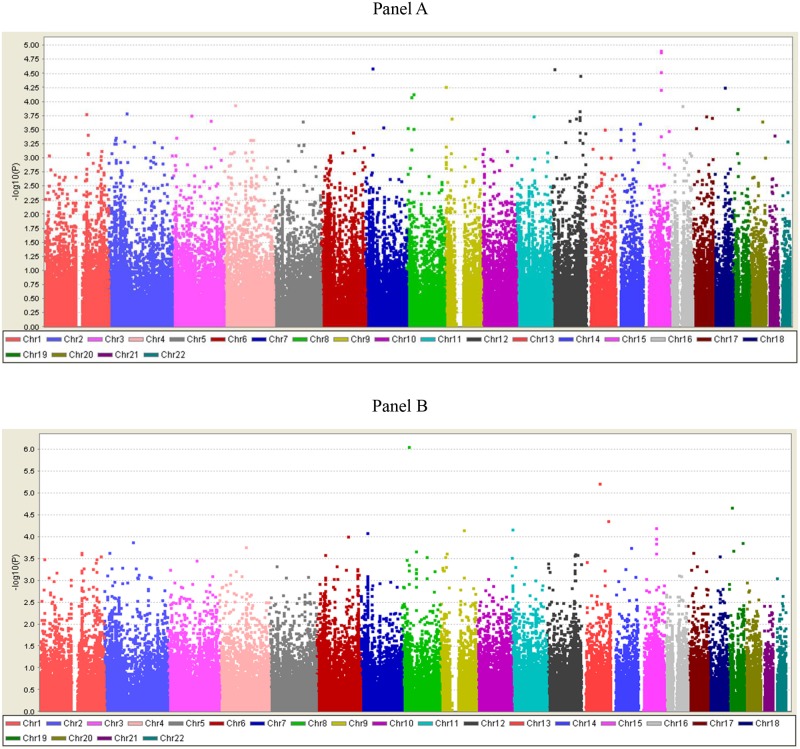
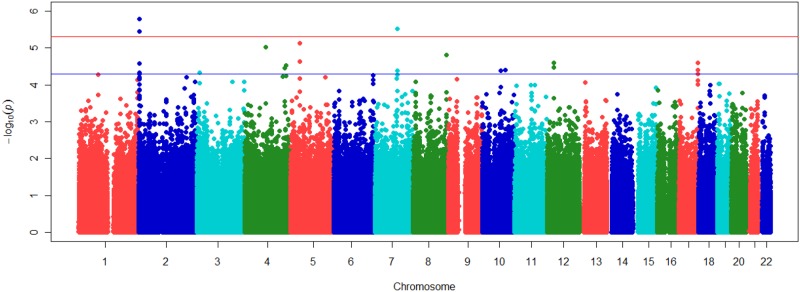
There are strong genetic components to cardiorespiratory fitness and its response to exercise training. It would be useful to understand the differences in the genomic profile of highly trained endurance athletes of world class caliber and sedentary controls. An international consortium (GAMES) was established in order to compare elite endurance athletes and ethnicity-matched controls in a case-control study design. Genome-wide association studies were undertaken on two cohorts of elite endurance athletes and controls (GENATHLETE and Japanese endurance runners), from which a panel of 45 promising markers was identified. These markers were tested for replication in seven additional cohorts of endurance athletes and controls: from Australia, Ethiopia, Japan, Kenya, Poland, Russia and Spain. The study is based on a total of 1520 endurance athletes (835 who took part in endurance events in World Championships and/or Olympic Games) and 2760 controls. We hypothesized that world-class athletes are likely to be characterized by an even higher concentration of endurance performance alleles and we performed separate analyses on this subsample. The meta-analysis of all available studies revealed one statistically significant marker (rs558129 at GALNTL6 locus, p = 0.0002), even after correcting for multiple testing. As shown by the low heterogeneity index (I2 = 0), all eight cohorts showed the same direction of association with rs558129, even though p-values varied across the individual studies. In summary, this study did not identify a panel of genomic variants common to these elite endurance athlete groups. Since GAMES was underpowered to identify alleles with small effect sizes, some of the suggestive leads identified should be explored in expanded comparisons of world-class endurance athletes and sedentary controls and in tightly controlled exercise training studies. Such studies have the potential to illuminate the biology not only of world class endurance performance but also of compromised cardiac functions and cardiometabolic diseases.
心肺适能及其对运动训练的反应存在很强的遗传因素。了解世界级高水平耐力运动员与久坐不动的对照组在基因组特征上的差异将很有帮助。为此成立了一个国际联盟(GAMES),以便在病例对照研究设计中比较精英耐力运动员和种族匹配的对照组。对两组精英耐力运动员和对照组(GENATHLETE和日本耐力跑者)进行了全基因组关联研究,从中确定了一组45个有前景的标记物。在另外七组耐力运动员和对照组中对这些标记物进行了重复验证:分别来自澳大利亚、埃塞俄比亚、日本、肯尼亚、波兰、俄罗斯和西班牙。该研究总共纳入了1520名耐力运动员(其中835名参加了世界锦标赛和/或奥运会的耐力项目)和2760名对照组。我们假设世界级运动员可能具有更高浓度的耐力表现等位基因,并对该亚组进行了单独分析。对所有现有研究的荟萃分析揭示了一个具有统计学意义的标记物(GALNTL6基因座上的rs558129,p = 0.0002),即使在进行多重检验校正后也是如此。低异质性指数(I2 = 0)表明,尽管各个研究的p值有所不同,但所有八个队列与rs558129的关联方向相同。总之,这项研究没有确定这些精英耐力运动员群体共有的一组基因组变异。由于GAMES的效能不足以识别效应大小较小的等位基因,因此一些提示性线索应在世界级耐力运动员与久坐不动的对照组的扩大比较以及严格控制的运动训练研究中进行探索。此类研究不仅有可能阐明世界级耐力表现的生物学机制,还有助于揭示心脏功能受损和心血管代谢疾病的生物学机制。