Tubatsi G, Bonyongo M C, Gondwe M
Okavango Research Institute, University of Botswana, Private Bag 285, Maun, Botswana.
J Health Popul Nutr. 2015 Nov 18;33:21. doi: 10.1186/s41043-015-0031-z.
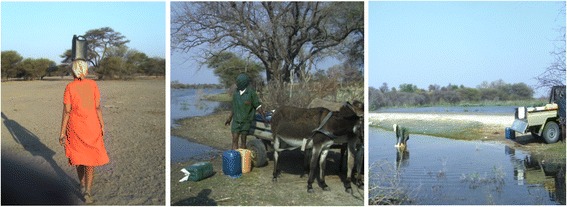
Some rural African communities residing along rivers use the untreated river water for domestic purposes, making them vulnerable to waterborne diseases such as diarrhea.
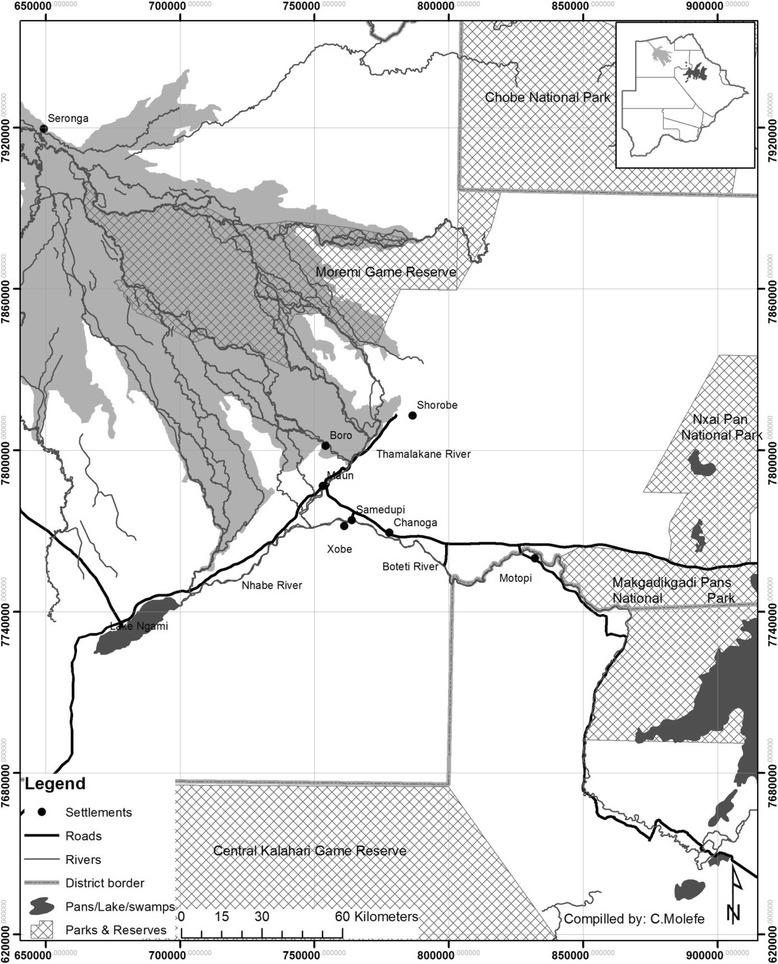
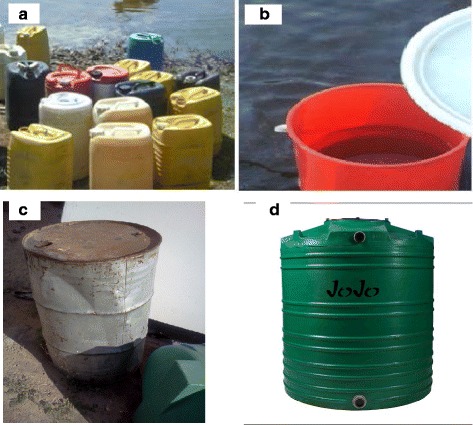
We determined water use practices and water quality, relating them to prevalence of diarrhea in communities along the Boro-Thamalakane-Boteti river system, northern Botswana. A total of 452 households were interviewed and 196 water samples collected show during February, May, September, and December 2012 in settlements of Boro, Maun, Xobe, Samedupi, Chanoga, and Motopi. Information was sought on water use practices (collection, storage, and handling) and diarrheal experience using questionnaires. Water quality was assessed for physicochemical and microbiological parameters using portable field meters and laboratory analysis, respectively.
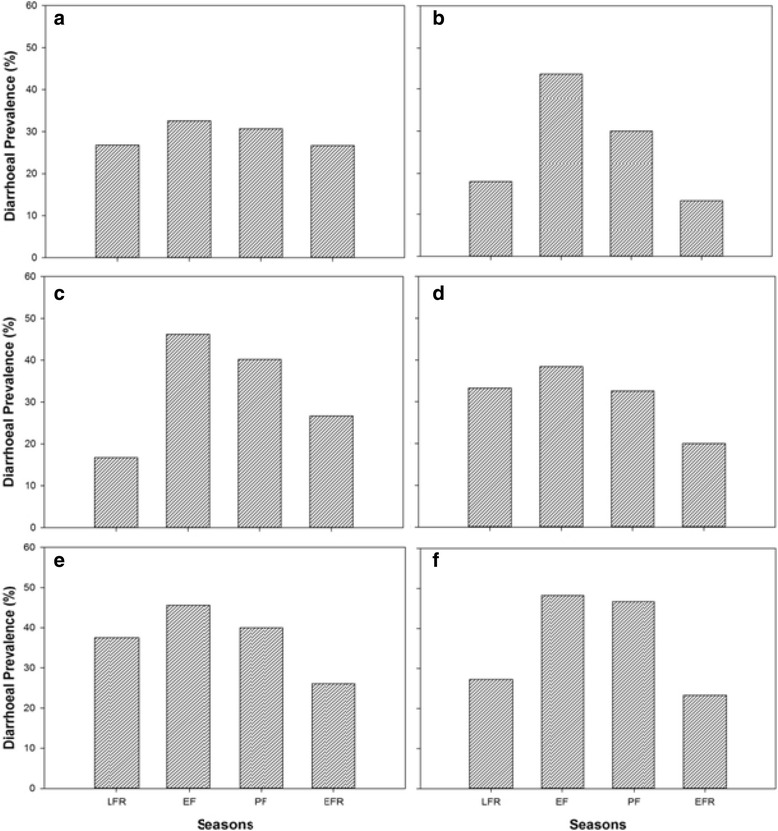
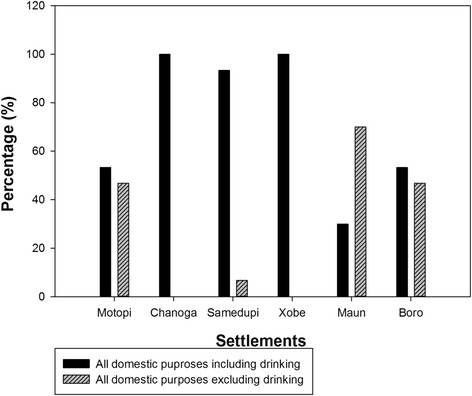
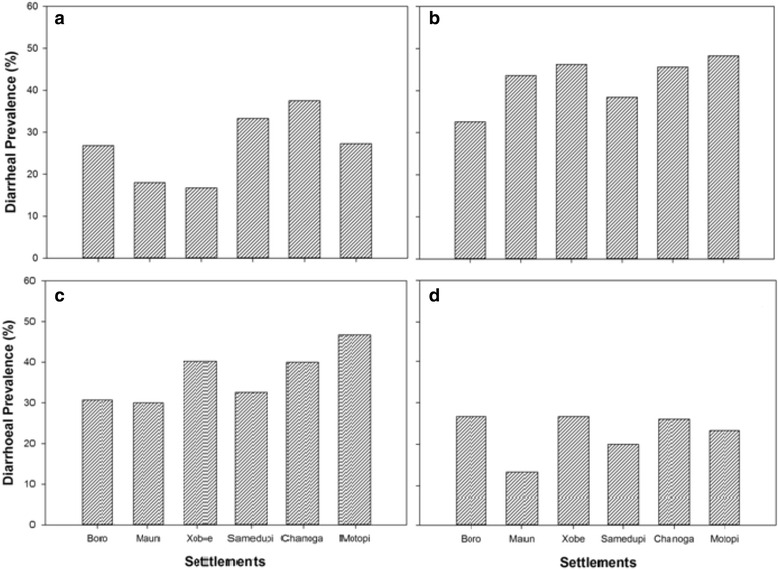
All (100%) of the river water samples collected were fecally contaminated and unsuitable for domestic use without prior treatment. Samples had Escherichia coli (E.coli) and fecal streptococci levels reaching up to 186 and 140 CFU/100 ml, respectively. Study revealed high dependence on the fecally contaminated river water with low uptake of water treatment techniques. Up to 48% of households indicated that they experience diarrhea, with most cases occurring during the early flooding season (May). Nonetheless, there was no significant relationship between river water quality and households' diarrheal experience across studied settlements (p > 0.05). Failure to treat river water before use was a significant predictor of diarrhea (p = 0.028).
Even though the river water was unsafe for domestic use, results imply further recontamination of water at household level highlighting the need for simple and affordable household water treatment techniques.
一些居住在非洲河流沿岸的农村社区将未经处理的河水用于家庭用途,这使他们易患腹泻等水源性疾病。
我们确定了博茨瓦纳北部博罗-塔拉卡内-博泰蒂河系沿岸社区的用水习惯和水质,并将其与腹泻患病率相关联。2012年2月、5月、9月和12月期间,在博罗、马翁、索贝、萨梅杜皮、查诺加和莫托皮的定居点,共对452户家庭进行了访谈,并采集了196份水样。通过问卷调查获取了用水习惯(采集、储存和处理)和腹泻经历的信息。分别使用便携式现场仪表和实验室分析对水质的物理化学和微生物参数进行了评估。
采集的所有(100%)河水样本均受到粪便污染,未经事先处理不适合家庭使用。样本中的大肠杆菌和粪链球菌水平分别高达186和140 CFU/100 ml。研究表明,这些社区高度依赖受粪便污染的河水,而水处理技术的采用率较低。高达48%的家庭表示他们有腹泻经历,大多数病例发生在洪水早期(5月)。尽管如此,在所研究的定居点中,河水水质与家庭腹泻经历之间没有显著关系(p > 0.05)。使用河水前未进行处理是腹泻的一个重要预测因素(p = 0.028)。
尽管河水不安全用于家庭用途,但结果表明在家庭层面水会进一步受到污染,这凸显了对简单且经济实惠的家庭水处理技术的需求。