Ruiz Pedro A, Morón Belen, Becker Helen M, Lang Silvia, Atrott Kirstin, Spalinger Marianne R, Scharl Michael, Wojtal Kacper A, Fischbeck-Terhalle Anne, Frey-Wagner Isabelle, Hausmann Martin, Kraemer Thomas, Rogler Gerhard
Division of Gastroenterology and Hepatology, University of Zurich, Zurich, Switzerland.
Zurich Center for Integrative Human Physiology, University of Zurich, Zurich, Switzerland.
Gut. 2017 Jul;66(7):1216-1224. doi: 10.1136/gutjnl-2015-310297. Epub 2016 Feb 4.
Western lifestyle and diet are major environmental factors playing a role in the development of IBD. Titanium dioxide (TiO) nanoparticles are widely used as food additives or in pharmaceutical formulations and are consumed by millions of people on a daily basis. We investigated the effects of TiO in the development of colitis and the role of the nucleotide-binding oligomerisation domain receptor, pyrin domain containing (NLRP)3 inflammasome.
Wild-type and NLRP3-deficient mice with dextran sodium sulfate-induced colitis were orally administered with TiO nanoparticles. The proinflammatory effects of TiO particles in cultured human intestinal epithelial cells (IECs) and macrophages were also studied, as well as the ability of TiO crystals to traverse IEC monolayers and accumulate in the blood of patients with IBD using inductively coupled plasma mass spectrometry.
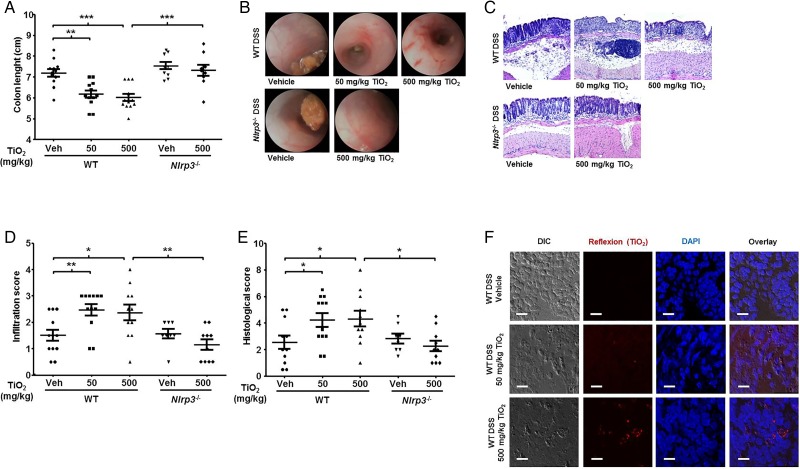
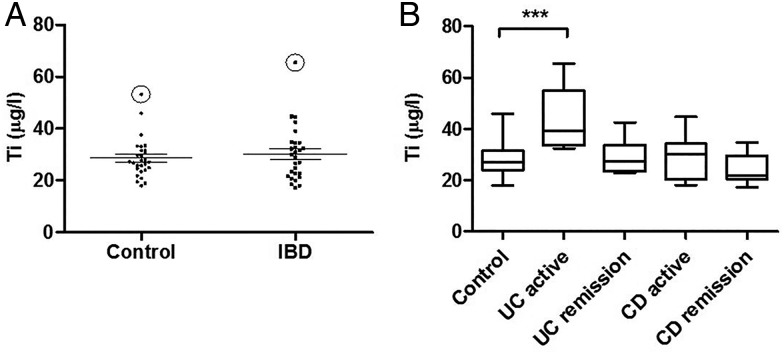
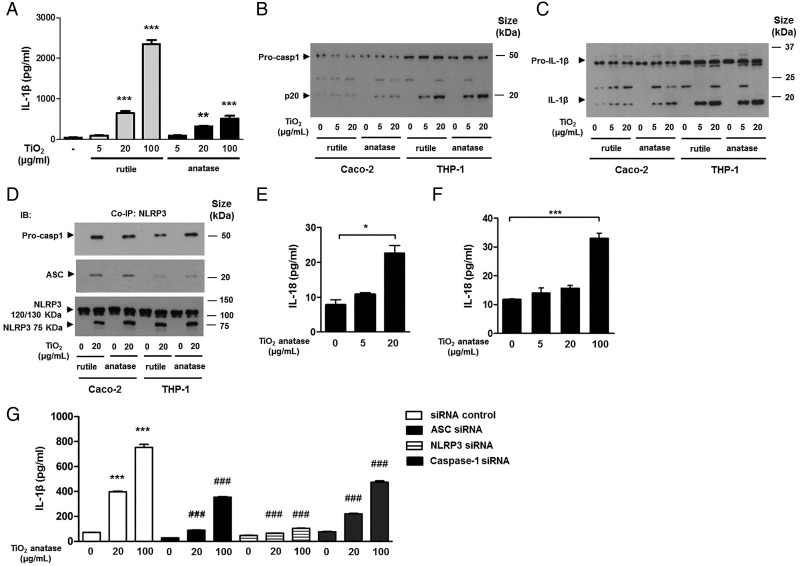
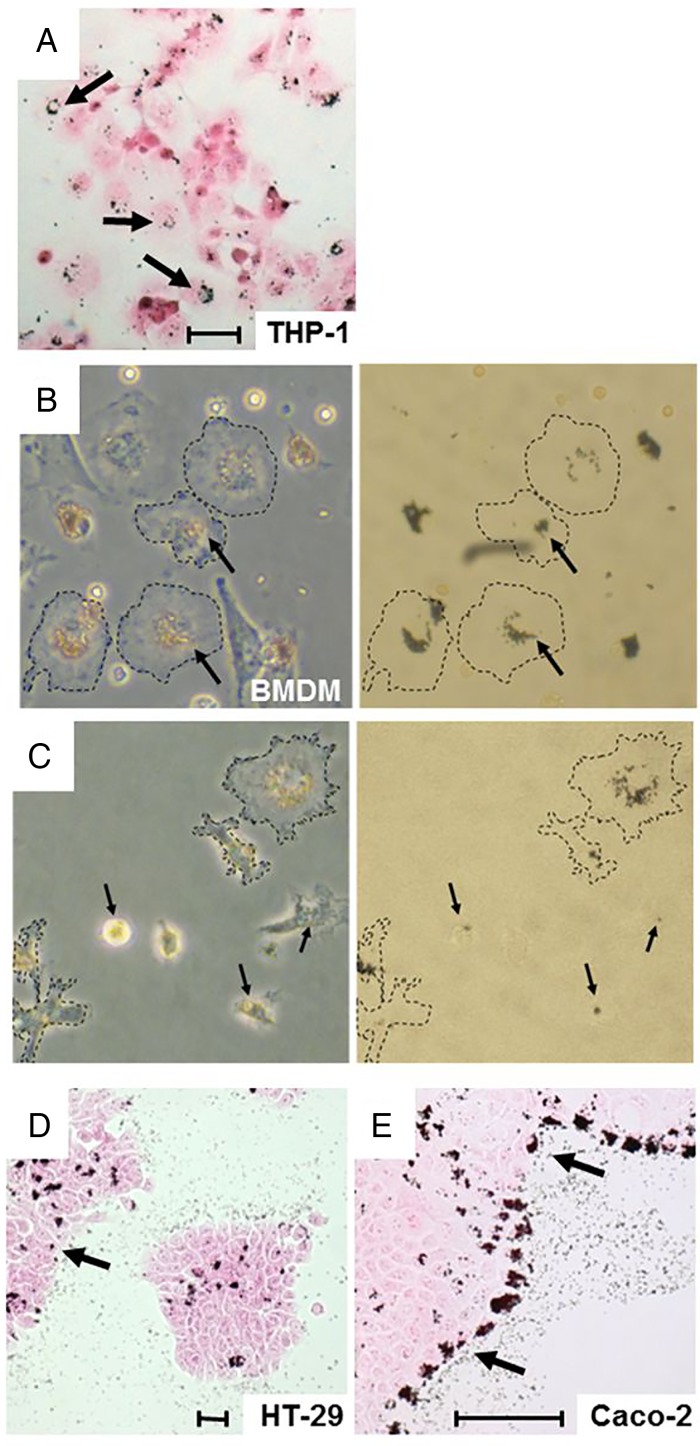
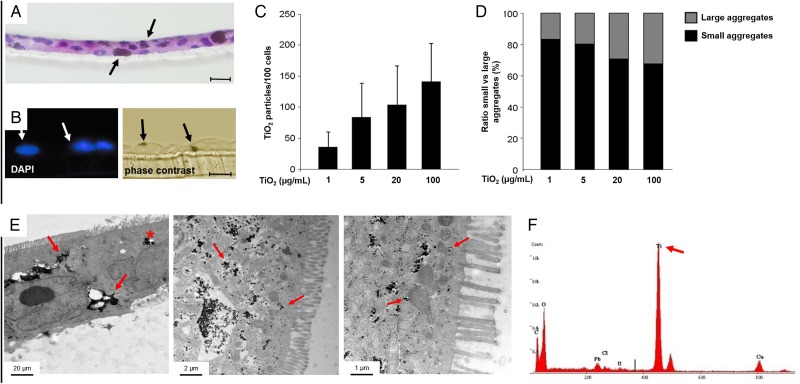
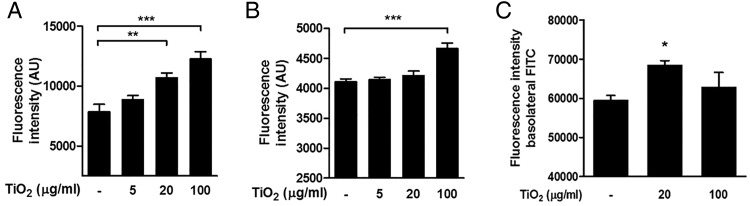
Oral administration of TiO nanoparticles worsened acute colitis through a mechanism involving the NLRP3 inflammasome. Importantly, crystals were found to accumulate in spleen of TiO-administered mice. In vitro, TiO particles were taken up by IECs and macrophages and triggered NLRP3-ASC-caspase-1 assembly, caspase-1 cleavage and the release of NLRP3-associated interleukin (IL)-1β and IL-18. TiO also induced reactive oxygen species generation and increased epithelial permeability in IEC monolayers. Increased levels of titanium were found in blood of patients with UC having active disease.
These findings indicate that individuals with a defective intestinal barrier function and pre-existing inflammatory condition, such as IBD, might be negatively impacted by the use of TiO nanoparticles.
西方生活方式和饮食是在炎症性肠病(IBD)发展中起作用的主要环境因素。二氧化钛(TiO₂)纳米颗粒被广泛用作食品添加剂或用于药物制剂,每天有数百万人摄入。我们研究了TiO₂在结肠炎发展中的作用以及含核苷酸结合寡聚化结构域受体、吡啉结构域(NLRP)3炎性小体的作用。
用葡聚糖硫酸钠诱导结肠炎的野生型和NLRP3缺陷型小鼠口服TiO₂纳米颗粒。还研究了TiO₂颗粒在培养的人肠上皮细胞(IECs)和巨噬细胞中的促炎作用,以及使用电感耦合等离子体质谱法检测TiO₂晶体穿过IEC单层并在IBD患者血液中蓄积的能力。
口服TiO₂纳米颗粒通过涉及NLRP3炎性小体的机制加重急性结肠炎。重要的是,发现晶体在给予TiO₂的小鼠脾脏中蓄积。在体外,IECs和巨噬细胞摄取TiO₂颗粒并触发NLRP3-ASC-半胱天冬酶-1组装、半胱天冬酶-1裂解以及NLRP3相关白细胞介素(IL)-1β和IL-18的释放。TiO₂还诱导活性氧生成并增加IEC单层中的上皮通透性。在患有活动性疾病的溃疡性结肠炎(UC)患者血液中发现钛水平升高。
这些发现表明,肠道屏障功能有缺陷且存在炎症状态(如IBD)的个体可能会受到使用TiO₂纳米颗粒的负面影响。