Xing Miaomiao, Lv Honghao, Ma Jian, Xu Donghui, Li Hailong, Yang Limei, Kang Jungen, Wang Xiaowu, Fang Zhiyuan
Beijing Vegetable Research Center, Beijing Academy of Agriculture and Forestry Sciences, Key Laboratory of Biology and Genetic Improvement of Horticultural Crops (North China), Ministry of Agriculture, 50# Zhanghua Street, Beijing 100097, China.
Institute of Vegetables and Flowers, Chinese Academy of Agricultural Sciences, Key Laboratory of Biology and Genetic Improvement of Horticultural Crops, Ministry of Agriculture, 12# Zhongguancun Nandajie Street, Beijing 100081, China.
PLoS One. 2016 Feb 5;11(2):e0148048. doi: 10.1371/journal.pone.0148048. eCollection 2016.
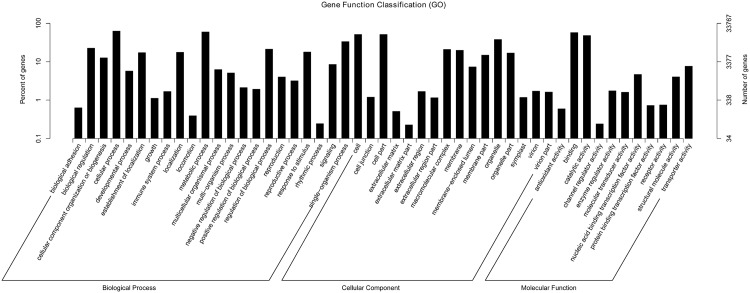
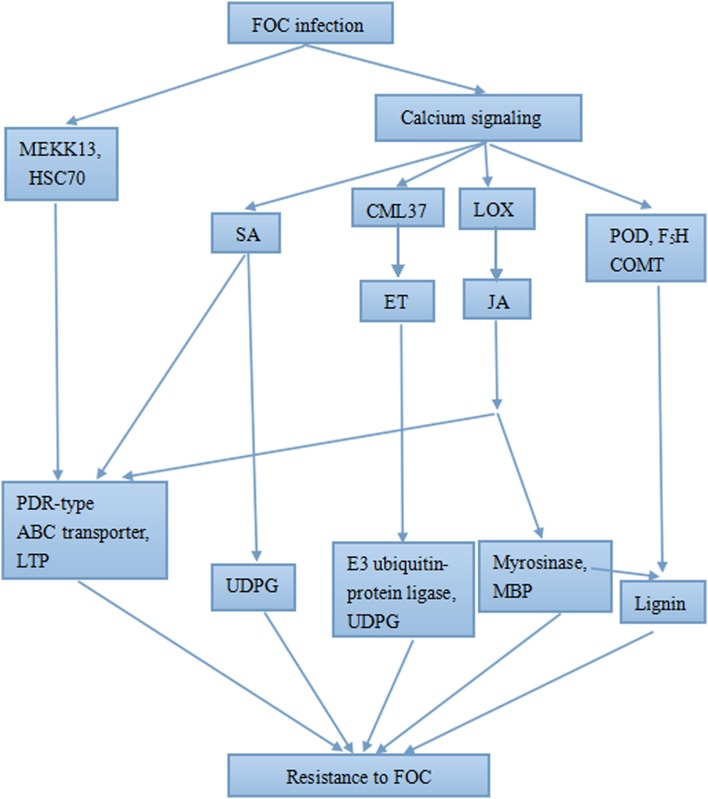
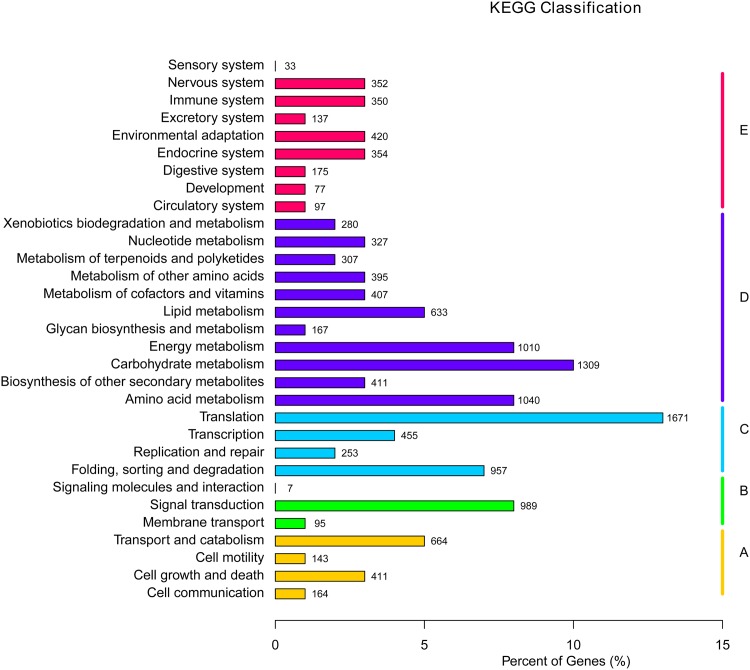
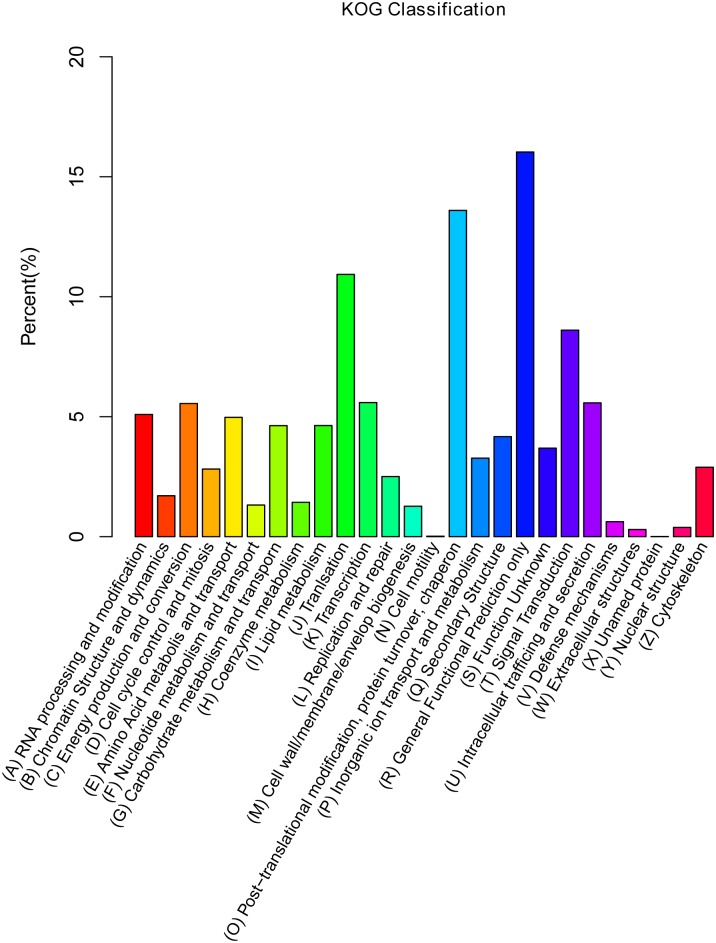
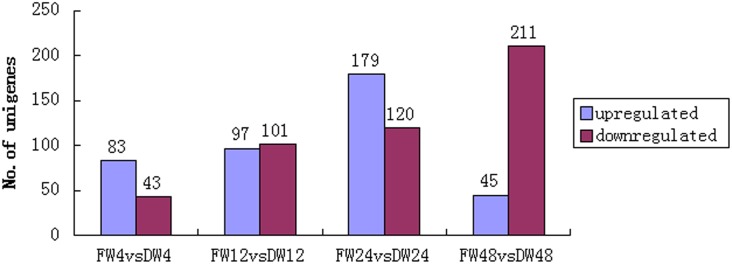
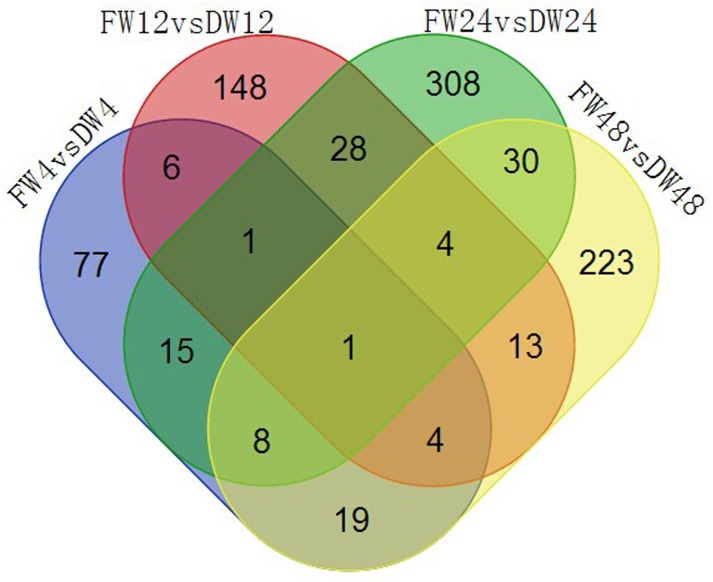
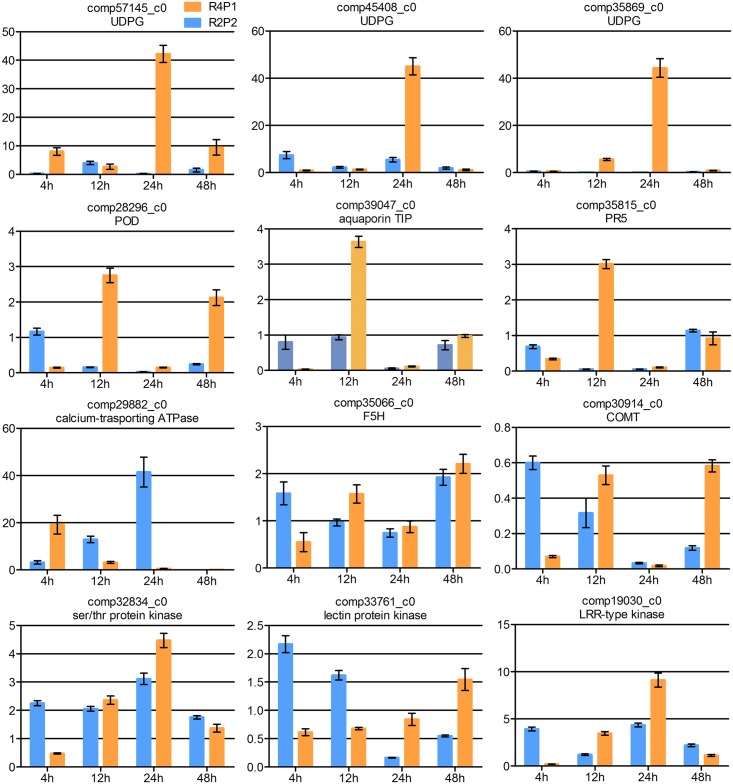
Fusarium wilt caused by Fusarium oxysporum f. sp. conglutinans (FOC) is a destructive disease of Brassica crops, which results in severe yield losses. There is little information available about the mechanism of disease resistance. To obtain an overview of the transcriptome profiles in roots of R4P1, a Brassica oleracea variety that is highly resistant to fusarium wilt, we compared the transcriptomes of samples inoculated with FOC and samples inoculated with distilled water. RNA-seq analysis generated more than 136 million 100-bp clean reads, which were assembled into 62,506 unigenes (mean size = 741 bp). Among them, 49,959 (79.92%) genes were identified based on sequence similarity searches, including SwissProt (29,050, 46.47%), Gene Ontology (GO) (33,767, 54.02%), Clusters of Orthologous Groups (KOG) (14,721, 23.55%) and Kyoto Encyclopedia of Genes and Genomes Pathway database (KEGG) (12,974, 20.76%) searches; digital gene expression analysis revealed 885 differentially expressed genes (DEGs) between infected and control samples at 4, 12, 24 and 48 hours after inoculation. The DEGs were assigned to 31 KEGG pathways. Early defense systems, including the MAPK signaling pathway, calcium signaling and salicylic acid-mediated hypersensitive response (SA-mediated HR) were activated after pathogen infection. SA-dependent systemic acquired resistance (SAR), ethylene (ET)- and jasmonic (JA)-mediated pathways and the lignin biosynthesis pathway play important roles in plant resistance. We also analyzed the expression of defense-related genes, such as genes encoding pathogenesis-related (PR) proteins, UDP-glycosyltransferase (UDPG), pleiotropic drug resistance, ATP-binding cassette transporters (PDR-ABC transporters), myrosinase, transcription factors and kinases, which were differentially expressed. The results of this study may contribute to efforts to identify and clone candidate genes associated with disease resistance and to uncover the molecular mechanism underlying FOC resistance in cabbage.
由尖孢镰刀菌甘蓝专化型(FOC)引起的枯萎病是十字花科作物的一种毁灭性病害,会导致严重的产量损失。关于抗病机制的信息很少。为了全面了解高抗枯萎病的甘蓝品种R4P1根系的转录组概况,我们比较了接种FOC的样本和接种蒸馏水的样本的转录组。RNA测序分析产生了超过1.36亿条100碱基对的 clean reads,这些 reads 被组装成62,506个单基因(平均大小 = 741 bp)。其中,基于序列相似性搜索鉴定出49,959个(79.92%)基因,包括瑞士蛋白质数据库(SwissProt)(29,050个,46.47%)、基因本体论(GO)(33,767个,54.02%)、直系同源簇(KOG)(14,721个,23.55%)和京都基因与基因组百科全书通路数据库(KEGG)(12,974个,20.76%)搜索;数字基因表达分析揭示了接种后4、12、24和48小时感染样本与对照样本之间有885个差异表达基因(DEG)。这些DEG被分配到31个KEGG通路。病原体感染后激活了早期防御系统,包括丝裂原活化蛋白激酶(MAPK)信号通路、钙信号和水杨酸介导的过敏反应(SA介导的HR)。SA依赖的系统获得性抗性(SAR)、乙烯(ET)和茉莉酸(JA)介导的途径以及木质素生物合成途径在植物抗性中起重要作用。我们还分析了防御相关基因的表达,如编码病程相关(PR)蛋白、UDP-糖基转移酶(UDPG)、多药耐药、ATP结合盒转运蛋白(PDR-ABC转运蛋白)、黑芥子酶、转录因子和激酶的基因,这些基因存在差异表达。本研究结果可能有助于鉴定和克隆与抗病性相关的候选基因,并揭示甘蓝对FOC抗性的分子机制。