Ma Rui, Sun Liwei, Chen Xuenan, Mei Bing, Chang Guijuan, Wang Manying, Zhao Daqing
Jilin Technology Innovation Center for Chinese Medicine Biotechnology, College of Chemistry and Biology, Beihua UniversityJilin, China; Ginseng Research Center, Changchun University of Chinese MedicineChangchun, China.
Jilin Technology Innovation Center for Chinese Medicine Biotechnology, College of Chemistry and Biology, Beihua University Jilin, China.
Front Plant Sci. 2016 Jan 26;7:1. doi: 10.3389/fpls.2016.00001. eCollection 2016.
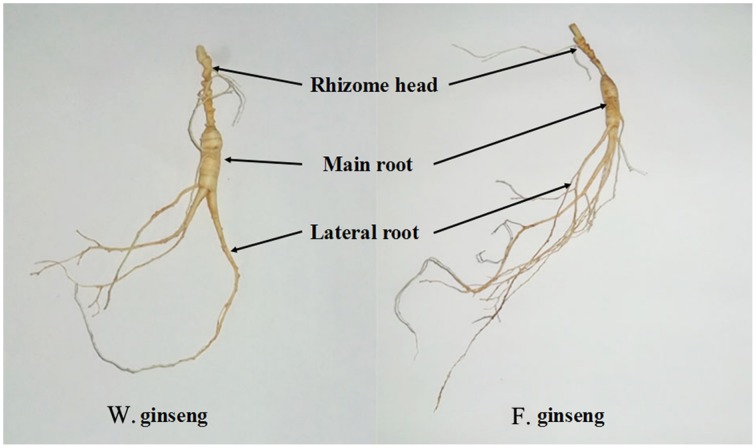
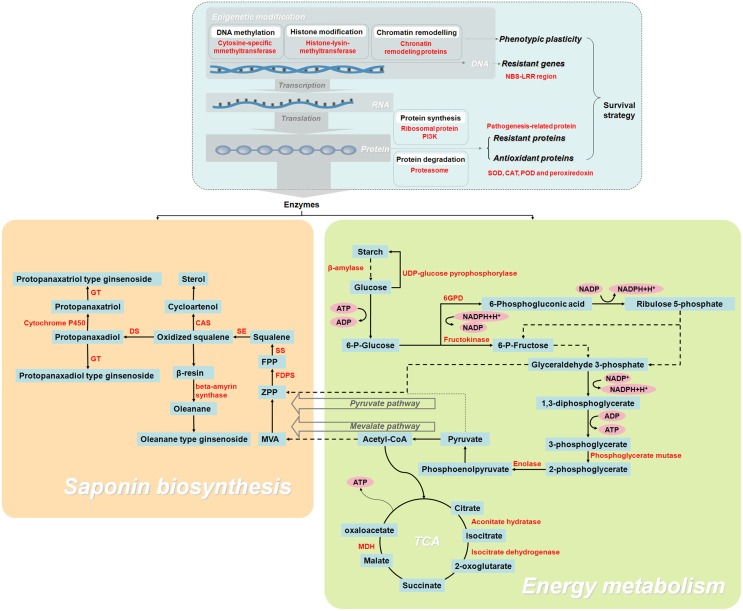
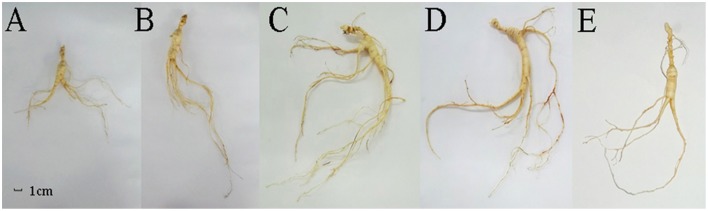
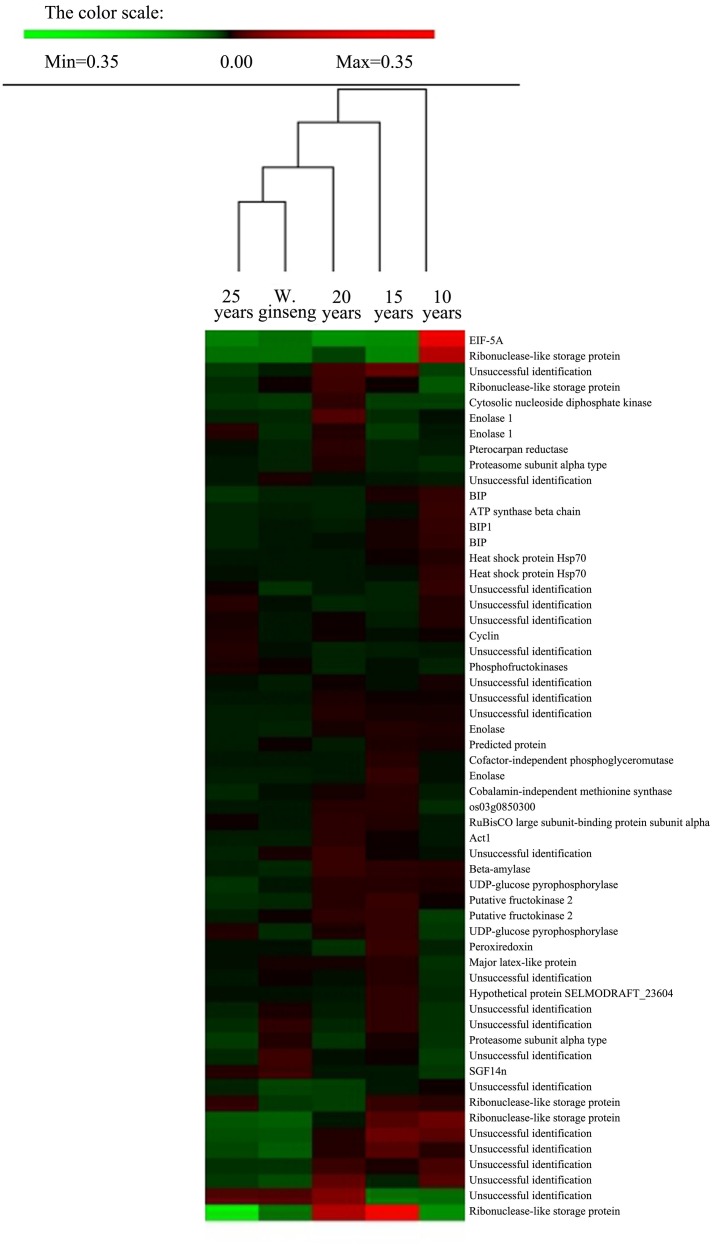
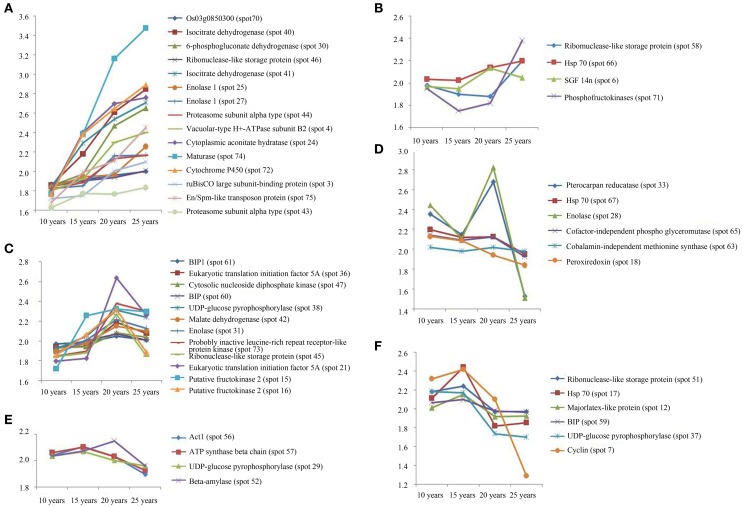
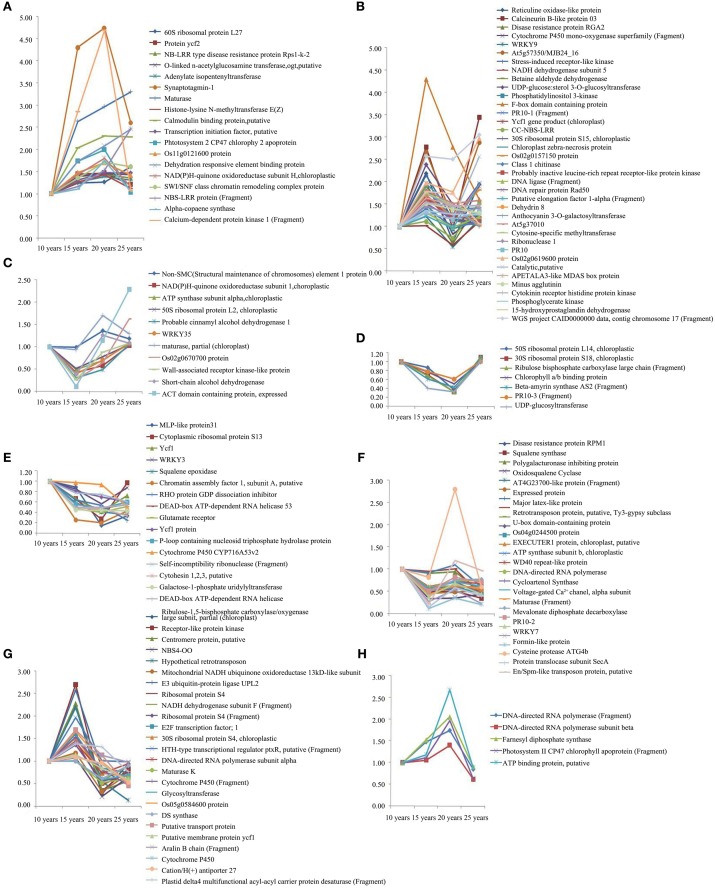
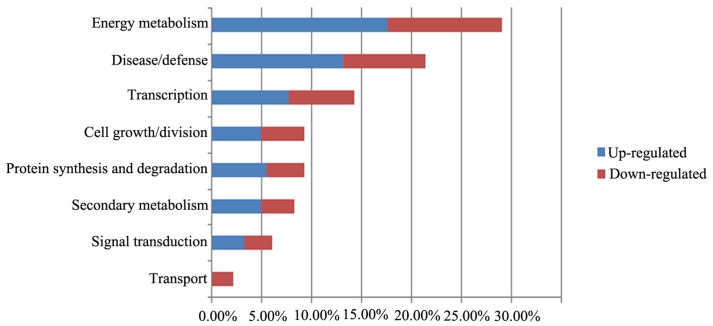
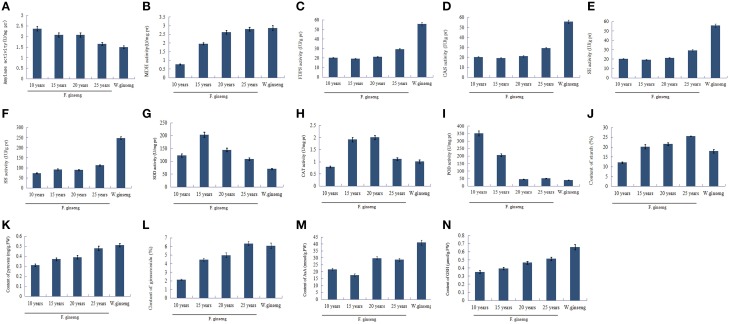
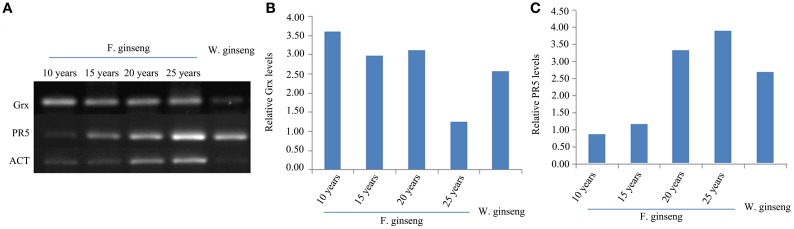
F. Ginseng (Panax ginseng) is planted in the forest to enhance the natural ginseng resources, which have an immense medicinal and economic value. The morphology of the cultivated plants becomes similar to that of wild growing ginseng (W. Ginseng) over the years. So far, there have been no studies highlighting the physiological or functional changes in F. Ginseng and its wild counterparts. In the present study, we used proteomic technologies (2DE and iTRAQ) coupled to mass spectrometry to compare W. Ginseng and F. Ginseng at various growth stages. Hierarchical cluster analysis based on protein abundance revealed that the protein expression profile of 25-year-old F. Ginseng was more like W. Ginseng than less 20-year-old F. Ginseng. We identified 192 differentially expressed protein spots in F. Ginseng. These protein spots increased with increase in growth years of F. Ginseng and were associated with proteins involved in energy metabolism, ginsenosides biosynthesis, and stress response. The mRNA, physiological, and metabolic analysis showed that the external morphology, protein expression profile, and ginsenoside synthesis ability of the F. Ginseng increased just like that of W. Ginseng with the increase in age. Our study represents the first characterization of the proteome of F. Ginseng during development and provides new insights into the metabolism and accumulation of ginsenosides.
F. 人参(Panax ginseng)种植于森林中以增加天然人参资源,天然人参具有巨大的药用和经济价值。多年来,栽培人参的形态变得与野生人参(W. 人参)相似。到目前为止,尚无研究突出显示F. 人参及其野生同类的生理或功能变化。在本研究中,我们使用蛋白质组学技术(二维电泳和同位素标记相对和绝对定量)结合质谱法来比较不同生长阶段的W. 人参和F. 人参。基于蛋白质丰度的层次聚类分析表明,25岁的F. 人参的蛋白质表达谱比20岁以下的F. 人参更像W. 人参。我们在F. 人参中鉴定出192个差异表达的蛋白质斑点。这些蛋白质斑点随着F. 人参生长年限的增加而增加,并且与参与能量代谢、人参皂苷生物合成和应激反应的蛋白质相关。mRNA、生理和代谢分析表明,F. 人参的外部形态、蛋白质表达谱和人参皂苷合成能力随着年龄的增长而像W. 人参一样增加。我们的研究首次对F. 人参发育过程中的蛋白质组进行了表征,并为人参皂苷的代谢和积累提供了新的见解。