Li Xiaoying, Cheng Xianhui, Liao Baosheng, Xu Jiang, Han Xu, Zhang Jinbo, Lin Zhiwei, Hu Lianghai
Key Laboratory for Molecular Enzymology and Engineering, The Ministry of Education, National Engineering Laboratory of AIDS Vaccine, School of Life Sciences, Jilin University, Changchun, China.
Institute of Chinese Materia Medica, China Academy of Chinese Medical Sciences, Beijing, China.
J Ginseng Res. 2021 Jan;45(1):58-65. doi: 10.1016/j.jgr.2020.01.009. Epub 2020 Apr 6.
, as one of the most widely used herbal medicines worldwide, has been studied comprehensively in terms of the chemical components and pharmacology. The proteins from ginseng are also of great importance for both nutrition value and the mechanism of secondary metabolites. However, the proteomic studies are less reported in the absence of the genome information. With the completion of ginseng genome sequencing, the proteome profiling has become available for the functional study of ginseng protein components.
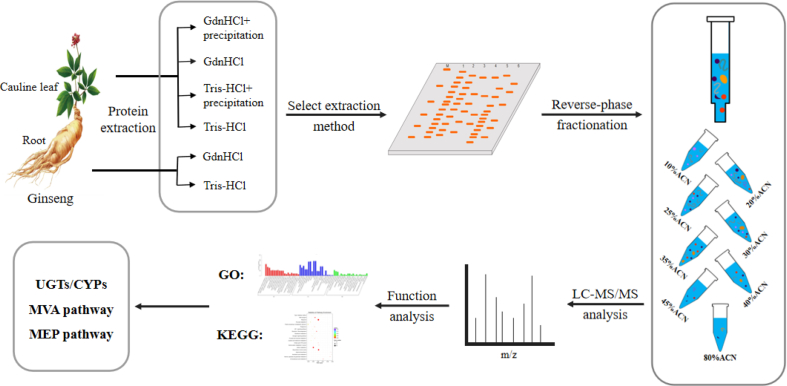
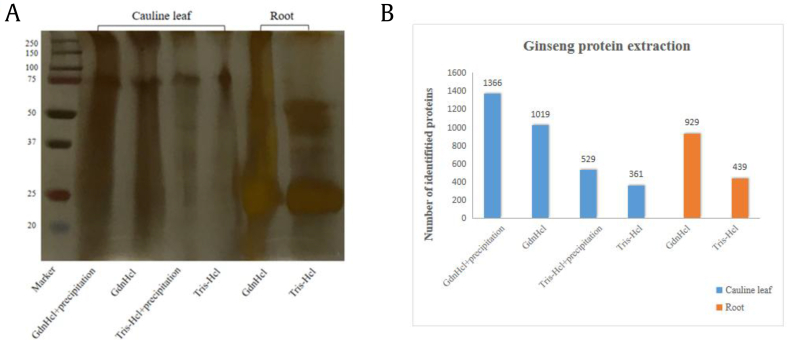
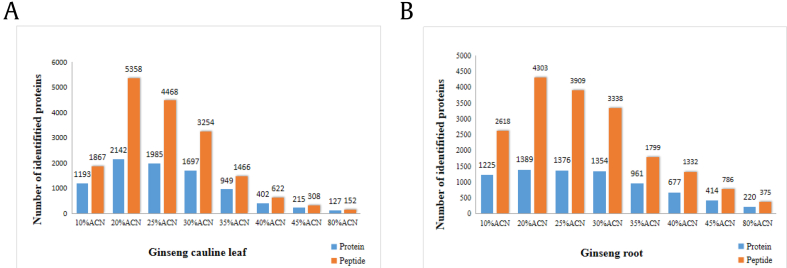
We optimized the protein extraction process systematically by using SDS-PAGE and one-dimensional liquid chromatography mass spectrometry. The extracted proteins were then analyzed by two-dimensional chromatography separation and cutting-edge mass spectrometry technique.
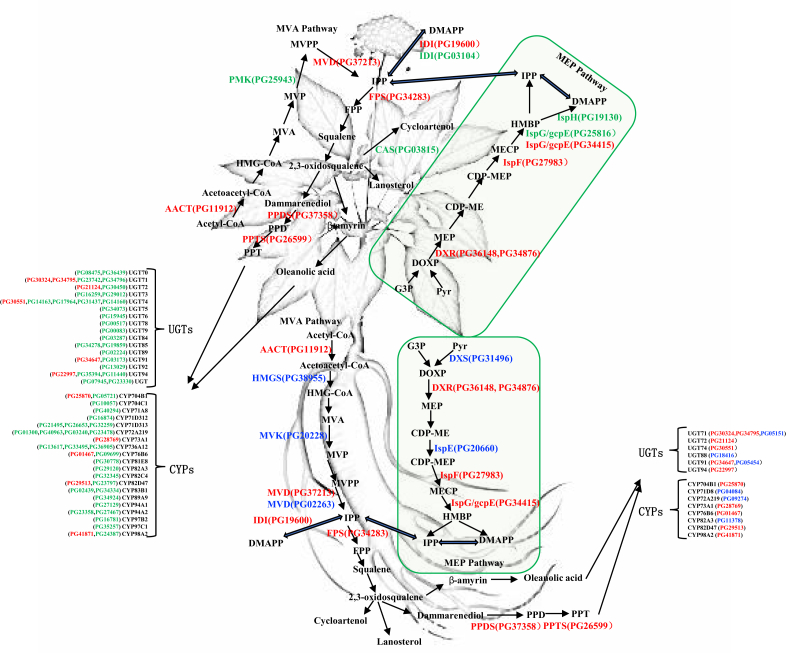
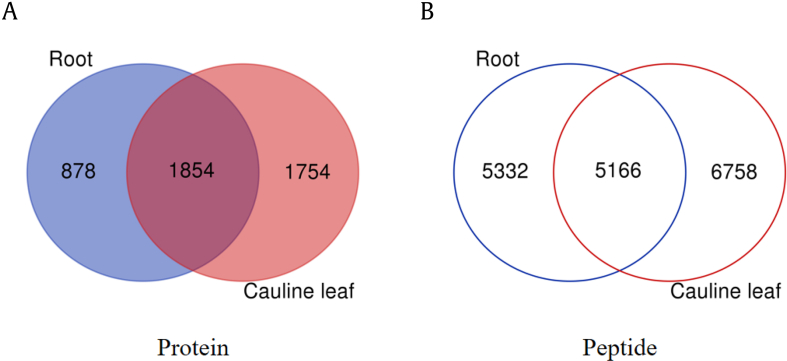
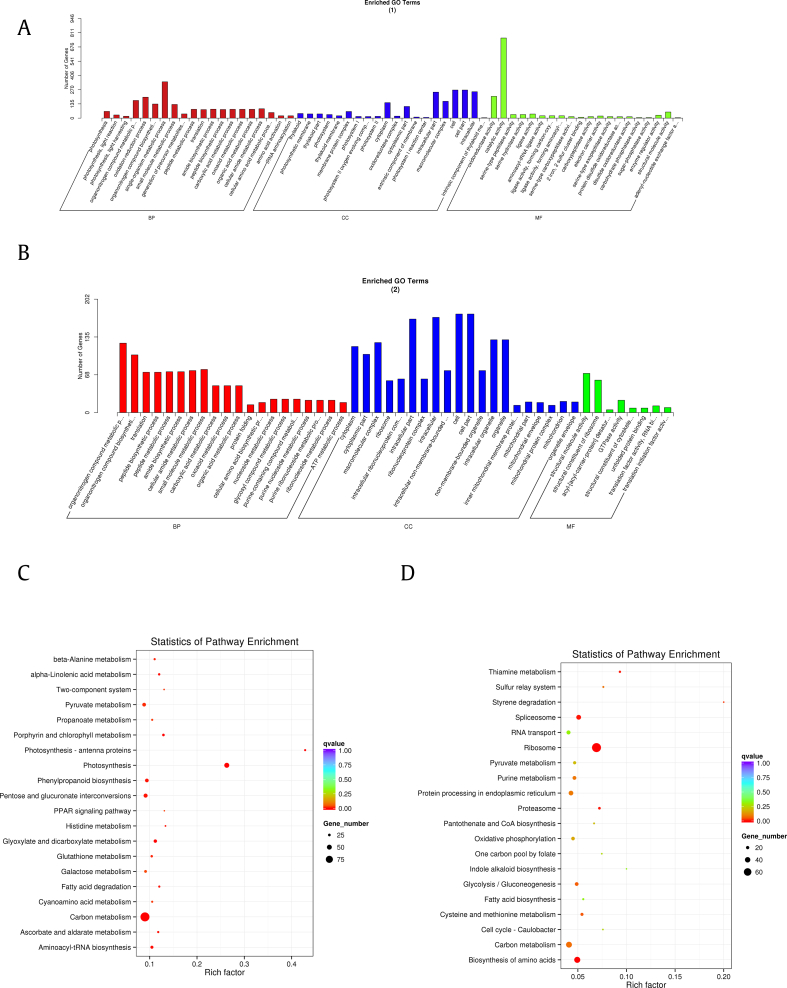
A total of 2,732 and 3,608 proteins were identified from ginseng root and cauline leaf, respectively, which was the largest data set reported so far. Only around 50% protein overlapped between the cauline leaf and root tissue parts because of the function assignment for plant growing. Further gene ontology and KEGG pathway revealed the distinguish difference between ginseng root and leaf, which accounts for the photosynthesis and metabolic process. With in-deep analysis of functional proteins related to ginsenoside synthesis, we interestingly found the cytochrome P450 and UDP-glycosyltransferase expression extensively in cauline leaf but not in the root, indicating that the post glucoside synthesis of ginsenosides might be carried out when growing and then transported to the root at withering.
The systematically proteome analysis of will provide us comprehensive understanding of ginsenoside synthesis and guidance for artificial cultivation.
人参作为全球使用最广泛的草药之一,已在化学成分和药理学方面进行了全面研究。人参中的蛋白质对于营养价值和次生代谢产物机制也非常重要。然而,在缺乏基因组信息的情况下,蛋白质组学研究报道较少。随着人参基因组测序的完成,蛋白质组图谱已可用于人参蛋白质成分的功能研究。
我们通过SDS-PAGE和一维液相色谱质谱系统地优化了蛋白质提取过程。然后对提取的蛋白质进行二维色谱分离和前沿质谱技术分析。
从人参根和茎生叶中分别鉴定出2732种和3608种蛋白质,这是迄今为止报道的最大数据集。由于植物生长的功能分配,茎生叶和根组织部分之间只有约50%的蛋白质重叠。进一步的基因本体论和KEGG途径揭示了人参根和叶之间的明显差异,这与光合作用和代谢过程有关。通过对与人参皂苷合成相关的功能蛋白的深入分析,我们有趣地发现细胞色素P450和UDP-糖基转移酶在茎生叶中广泛表达,而在根中不表达,这表明人参皂苷的后糖苷合成可能在生长时进行,然后在枯萎时运输到根中。
人参的系统蛋白质组分析将为我们提供对人参皂苷合成的全面理解,并为人工栽培提供指导。