Leask Calum F, Harvey Juliet A, Skelton Dawn A, Chastin Sebastien Fm
Institute of Applied Health Research, School of Health & Life Sciences, Glasgow Caledonian University, Glasgow, G4 0BA UK.
Eur Rev Aging Phys Act. 2015 Oct 7;12:4. doi: 10.1186/s11556-015-0146-7. eCollection 2015.
Older adults are the most sedentary segment of the population. Little information is available about the context of sedentary behaviour to inform guidelines and intervention. There is a dearth of information about when, where to intervene and which specific behaviours intervention should target. The aim of this exploratory study was to obtain objective information about what older adults do when sedentary, where and when they are sedentary and in what social context.
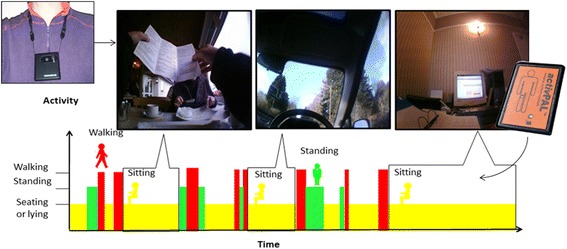
The study was a cross-sectional data collection. Older adults (Mean age = 73.25, SD ± 5.48, median = 72, IQR = 11) volunteers wore activPAL monitors and a Vicon Revue timelapse camera between 1 and 7 days. Periods of sedentary behaviour were identified using the activPAL and the context extracted from the pictures taken during these periods. Analysis of context was conducted using the Sedentary Behaviour International Taxonomy classification system.
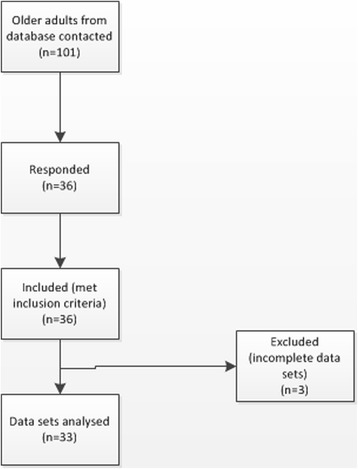
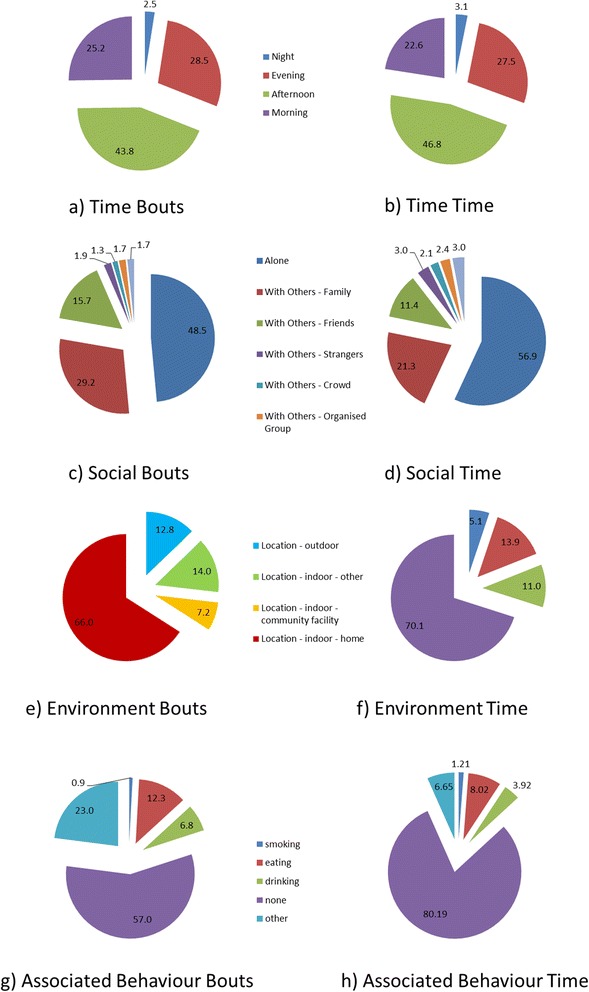
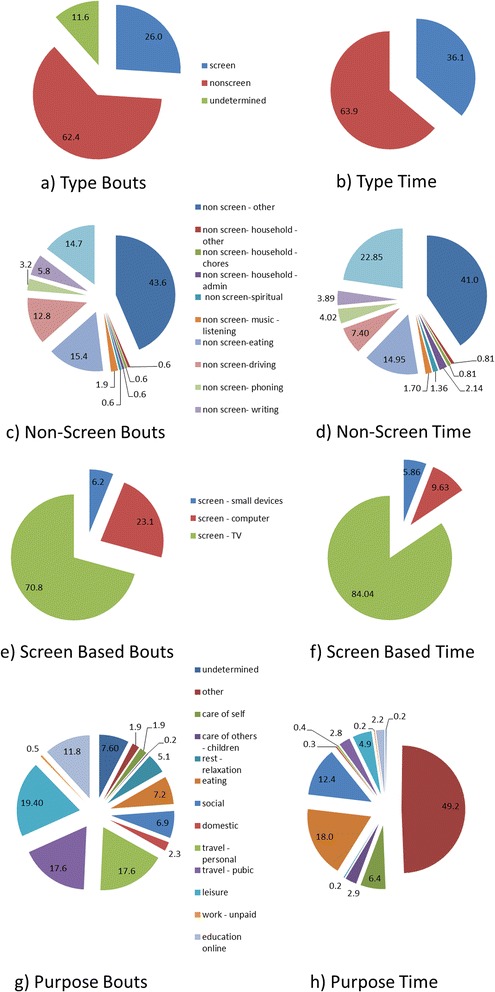
In total, 52 days from 36 participants were available for analysis. Participants spent 70.1 % of sedentary time at home, 56.9 % of sedentary time on their own and 46.8 % occurred in the afternoon. Seated social activities were infrequent (6.9 % of sedentary bouts) but prolonged (18 % of sedentary time). Participants appeared to frequently have vacant sitting time (41 % of non-screen sedentary time) and screen sitting was prevalent (36 % of total sedentary time).
This study provides valuable information to inform future interventions to reduce sedentary behaviour. Interventions should consider targeting the home environment and focus on the afternoon sitting time, though this needs confirmation in a larger study. Tackling social isolation may also be a target to reduce sedentary time.
老年人是人群中久坐时间最长的群体。关于久坐行为的背景信息较少,难以据此制定指南和干预措施。目前缺乏关于何时、何处进行干预以及干预应针对哪些具体行为的信息。这项探索性研究的目的是获取有关老年人久坐时做什么、在何处以及何时久坐以及处于何种社会背景下的客观信息。
该研究为横断面数据收集。年龄较大的成年人(平均年龄 = 73.25,标准差±5.48,中位数 = 72,四分位距 = 11)志愿者佩戴 activPAL 监测器和 Vicon Revue 延时相机 1 至 7 天。使用 activPAL 确定久坐行为时间段,并从这些时间段拍摄的照片中提取背景信息。使用久坐行为国际分类系统对背景进行分析。
总共对 36 名参与者的 52 天数据进行了分析。参与者 70.1%的久坐时间是在家中,56.9%的久坐时间是独自度过,46.8%的久坐时间发生在下午。坐着进行的社交活动很少见(占久坐时段的 6.9%)但持续时间较长(占久坐时间的 18%)。参与者似乎经常有空闲的坐着时间(占非屏幕久坐时间的 41%),且看屏幕坐着的情况很普遍(占总久坐时间的 36%)。
本研究为未来减少久坐行为的干预措施提供了有价值的信息。干预措施应考虑针对家庭环境,并关注下午的久坐时间,不过这需要在更大规模的研究中得到证实。解决社会隔离问题也可能是减少久坐时间的一个目标。