Paradis Alexandre, Leblanc David, Dumais Nancy
Département de Biologie, Faculté des Sciences, Université de Sherbrooke, Sherbrooke, QC, Canada J1 K 2R1.
MethodsX. 2015 Dec 11;3:25-34. doi: 10.1016/j.mex.2015.11.009. eCollection 2016.
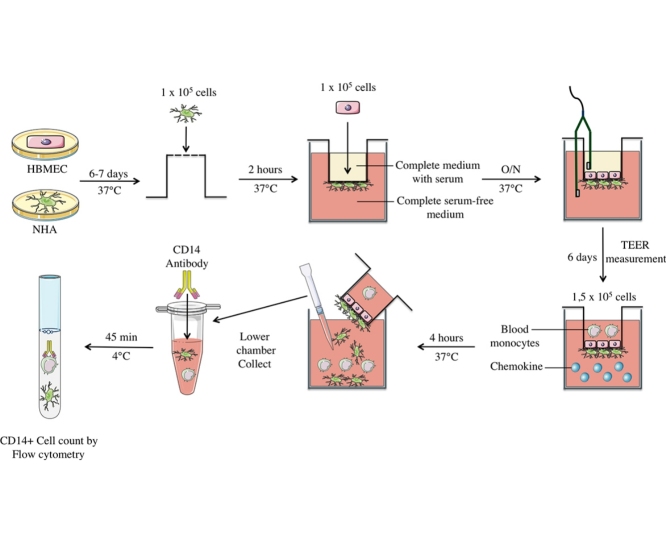
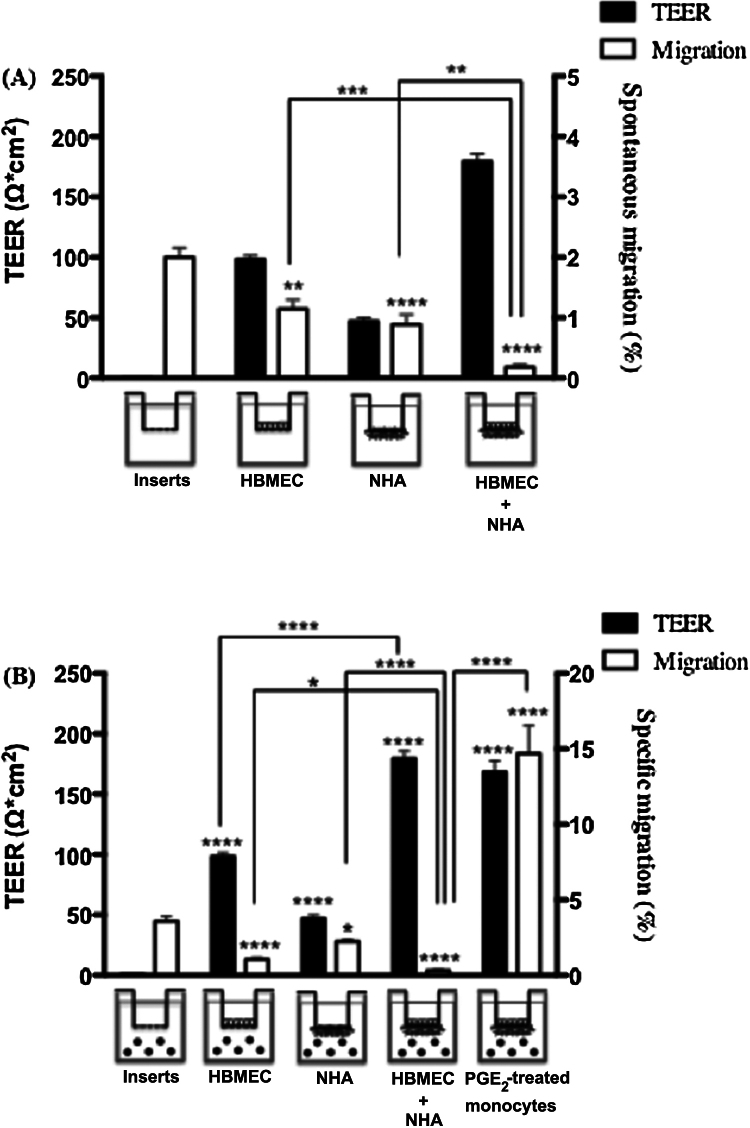
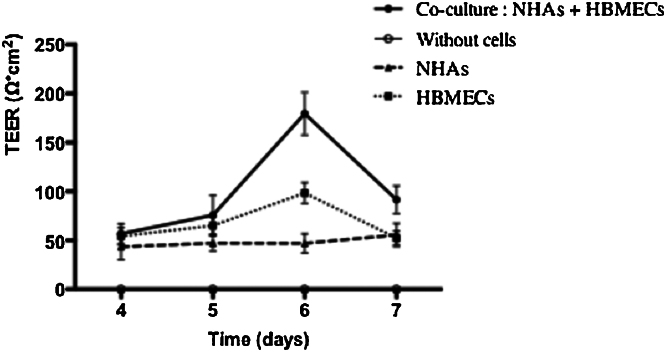
The blood-brain barrier (BBB) is a selectively permeable barrier that separates the circulating blood from the extracellular fluid of the brain and is an essential component in brain homeostasis. In vitro BBB models are valuable supporting tools that can precede and complement animal and human studies of the development and progression of the central nervous system diseases. At present, mono-, co-, and tri-culture models that use porcine, murine, or human cells have been developed. We have optimized a two-dimensional model of the human BBB using primary human brain microvascular endothelial cells and normal human astrocytes. We have validated the effectiveness of our model with transmigration assays of human blood monocytes toward CCL19, a natural ligand of the chemokine receptor CCR7. This model offers the following advantages:•It is simple, convenient, and requires small quantities of material, reagents, and primary cells.•It can be used to monitor cell migration through the BBB.•It can be used to assess brain capillary permeability in the presence of xenobiotic, pro-inflammatory, or other substances.
血脑屏障(BBB)是一种选择性渗透屏障,它将循环血液与脑的细胞外液分隔开,是脑内环境稳定的重要组成部分。体外血脑屏障模型是有价值的辅助工具,可先于并补充对中枢神经系统疾病发生和发展的动物及人体研究。目前,已开发出使用猪、鼠或人细胞的单培养、共培养和三培养模型。我们使用原代人脑微血管内皮细胞和正常人星形胶质细胞优化了一种二维人血脑屏障模型。我们通过人血单核细胞向趋化因子受体CCR7的天然配体CCL19的迁移试验验证了我们模型的有效性。该模型具有以下优点:
• 它简单、方便,所需材料、试剂和原代细胞数量少。
• 它可用于监测细胞通过血脑屏障的迁移。
• 它可用于评估在存在外源性物质、促炎物质或其他物质的情况下脑毛细血管的通透性。