Vo Hoang Tung, Cho Jae Youl, Choi Yong-Eui, Choi Yong-Soon, Jeong Yeon-Ho
Department of Medical Biotechnology, College of Biomedical Sciences, Kangwon National University, Chuncheon, Korea.
Department of Genetic Engineering, Sungkyunkwan University, Suwon, Korea.
J Ginseng Res. 2015 Oct;39(4):304-13. doi: 10.1016/j.jgr.2015.02.003. Epub 2015 Mar 7.
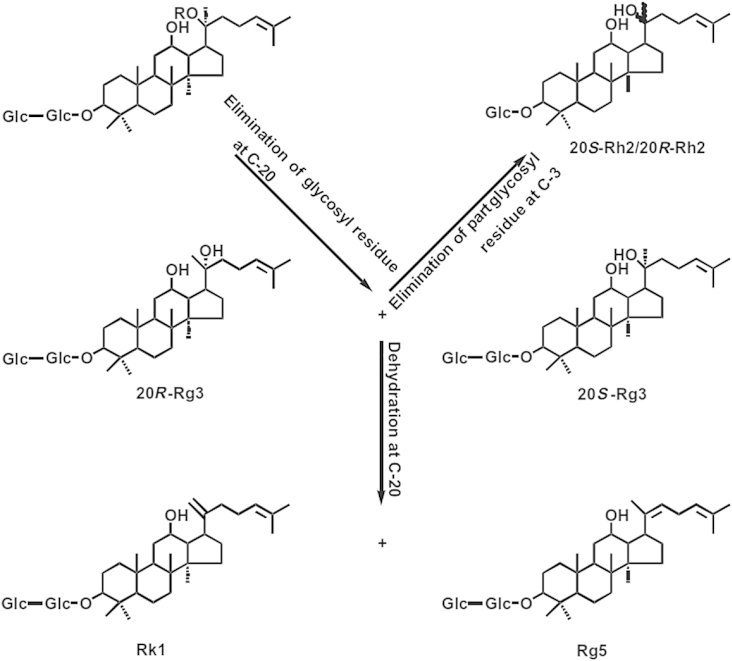
Ginsenoside Rg3 is a promising anticancer agent. It is usually produced by heat treatment of ginseng, in which ginsenoside Rb1 is the major ginsenoside. A kinetic study was conducted to optimize ginsenoside Rg3 production by the heat treatment of ginsenoside Rb1.
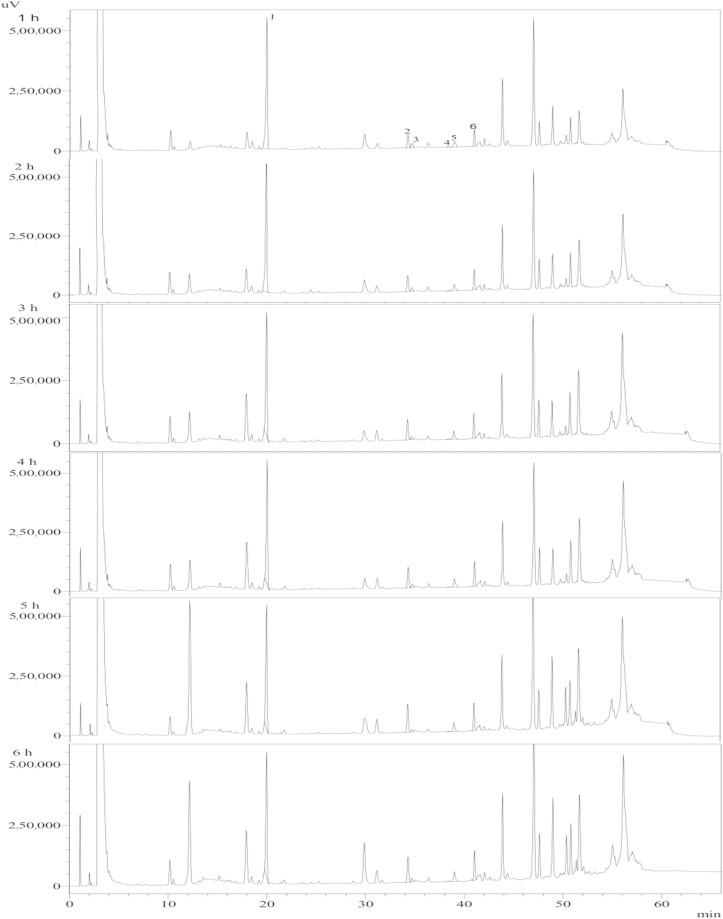
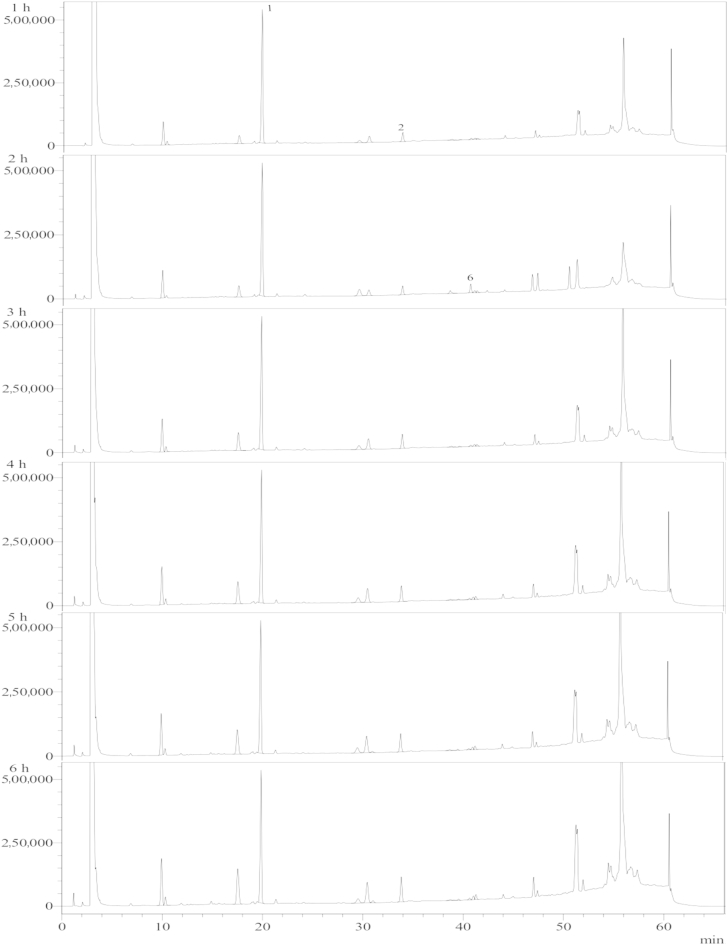
Ginsenoside Rb1 was heated using an isothermal machine at 80°C and 100°C and analyzed using HPLC. The kinetic parameters were calculated from the experimental results. The activation energy was estimated and used to simulate the process. The optimized parameters of ginsenoside Rg3 production are suggested based on the simulation.
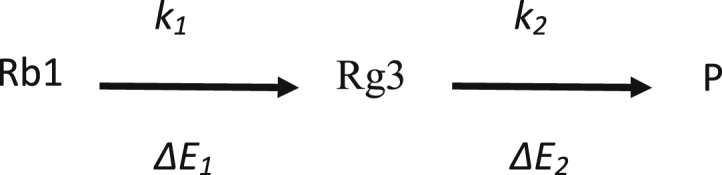
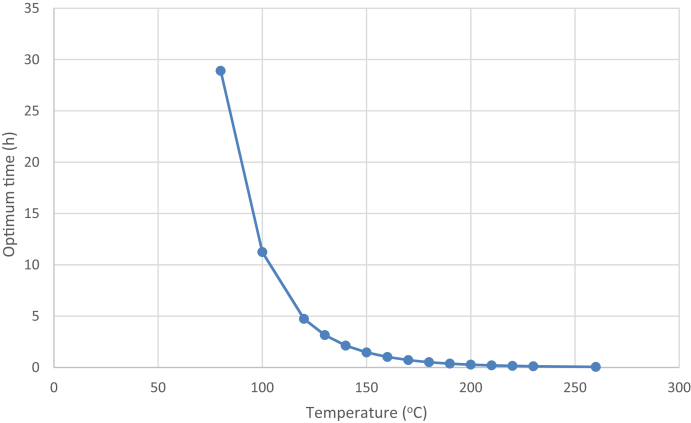
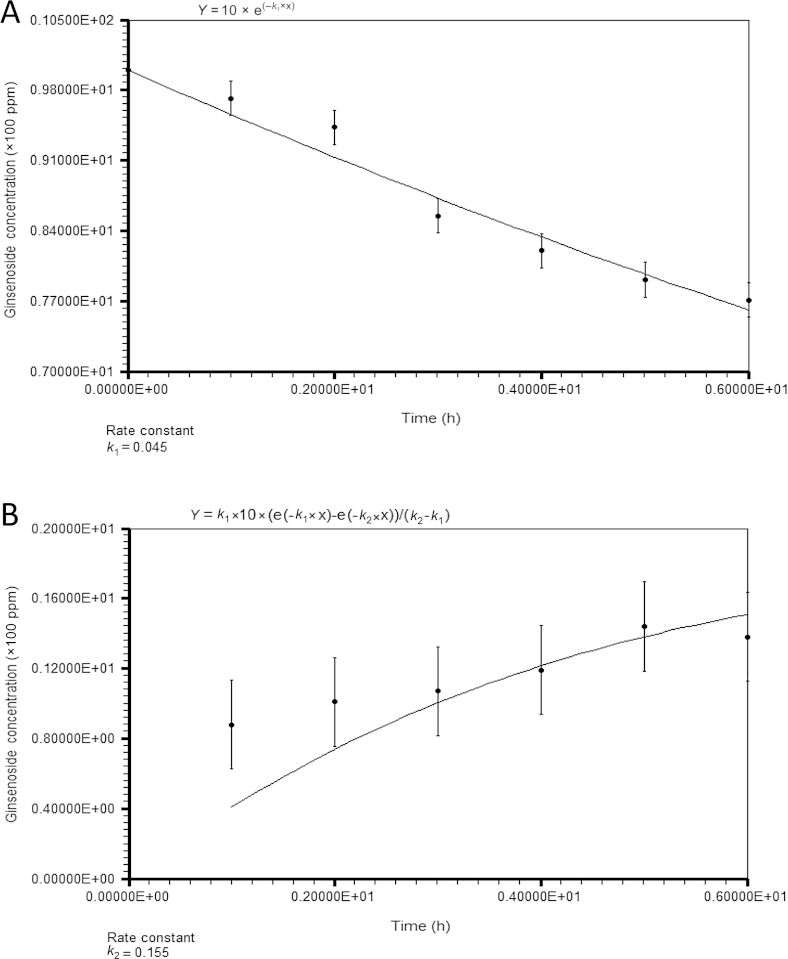
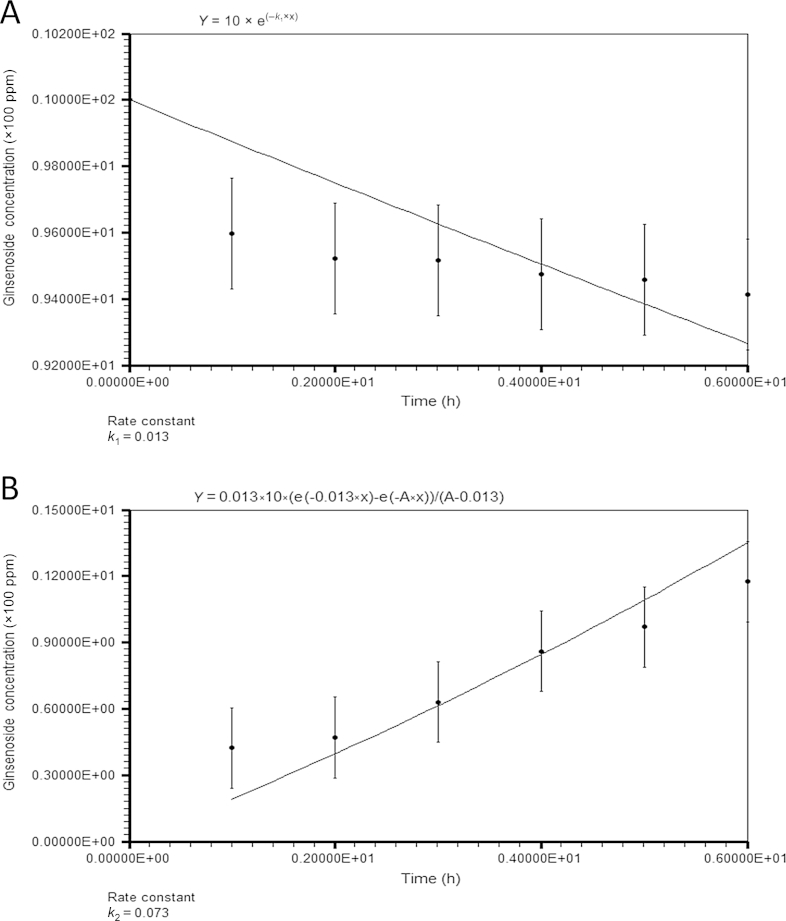
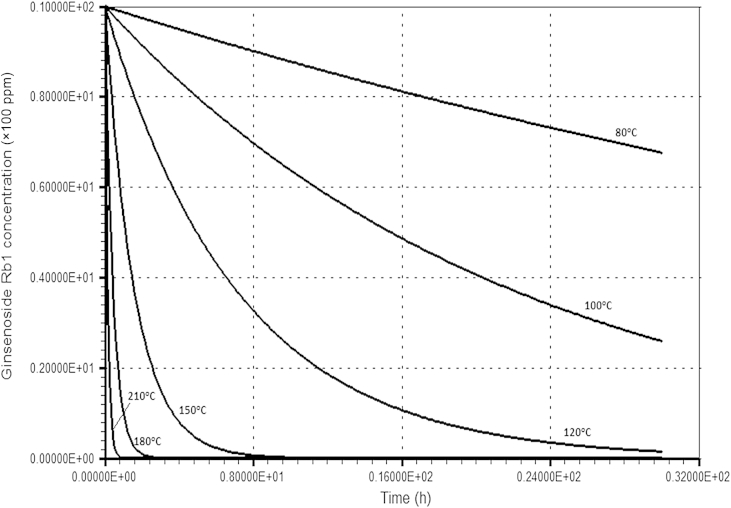
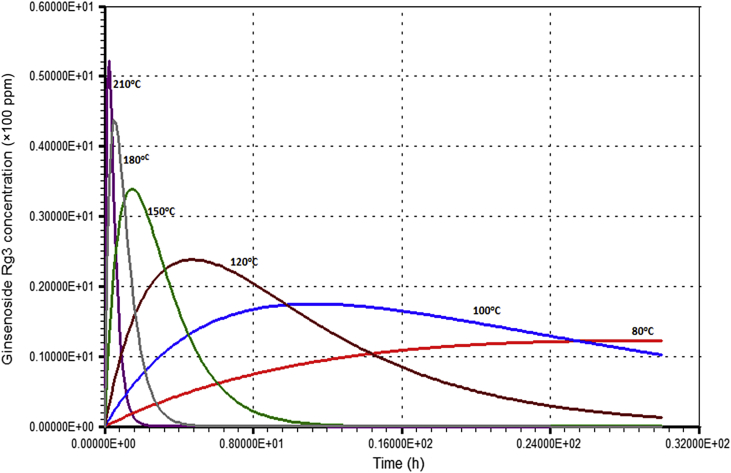
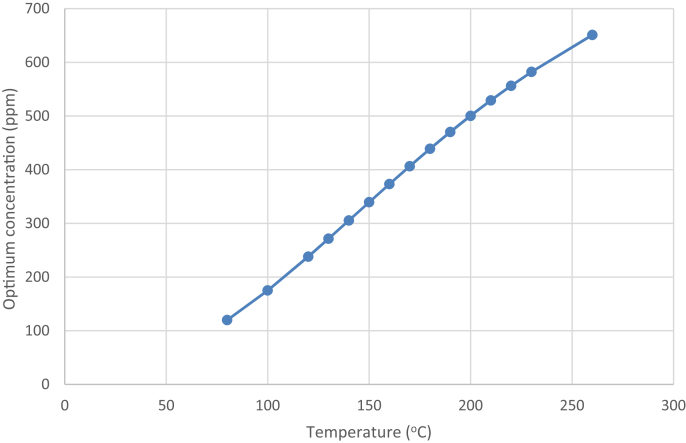
The rate constants were 0.013 h(-1) and 0.073 h(-1) for the degradation of ginsenosides Rb1 and Rg3 at 80°C, respectively. The corresponding rate constants at 100°C were 0.045 h(-1) and 0.155 h(-1). The estimated activation energies of degradation of ginsenosides Rb1 and Rg3 were 69.2 kJ/mol and 40.9 kJ/mol, respectively. The rate constants at different temperatures were evaluated using the estimated activation energies, and the kinetic profiles of ginsenosides Rb1 and Rg3 at each temperature were simulated based on the proposed kinetic model of consecutive reaction. The optimum strategies for producing ginsenoside Rg3 from ginsenoside Rb1 are suggested based on the simulation. With increased temperature, a high concentration of ginsenoside Rg3 is formed rapidly. However, the concentration decreases quickly after the reaching the maximal concentration value.
The optimum temperature for producing ginsenoside Rg3 should be the highest temperature technically feasible below 180°C, in consideration of the cooling time. The optimum reaction time for heat treatment is 30 min.
人参皂苷Rg3是一种很有前景的抗癌药物。它通常通过人参的热处理来生产,其中人参皂苷Rb1是主要的人参皂苷。进行了一项动力学研究,以优化通过人参皂苷Rb1的热处理来生产人参皂苷Rg3的工艺。
使用等温机器在80°C和100°C下加热人参皂苷Rb1,并采用高效液相色谱法进行分析。根据实验结果计算动力学参数。估算活化能并用于模拟该过程。基于模拟结果提出了生产人参皂苷Rg3的优化参数。
在80°C下,人参皂苷Rb1和Rg3降解的速率常数分别为0.013 h⁻¹和0.073 h⁻¹。在100°C下相应的速率常数分别为0.045 h⁻¹和0.155 h⁻¹。人参皂苷Rb1和Rg3降解的估算活化能分别为69.2 kJ/mol和40.9 kJ/mol。利用估算出的活化能评估了不同温度下的速率常数,并基于所提出的连串反应动力学模型模拟了各温度下人 参皂苷Rb1和Rg3的动力学曲线。基于模拟结果提出了从人参皂苷Rb1生产人参皂苷Rg3的最佳策略。随着温度升高,人参皂苷Rg3的高浓度迅速形成。然而,达到最大浓度值后其浓度迅速下降。
考虑到冷却时间,生产人参皂苷Rg3的最佳温度应为技术上可行的低于180°C的最高温度。热处理的最佳反应时间为30分钟。