Khandaker Morshed, Riahinezhad Shahram, Sultana Fariha, Vaughan Melville B, Knight Joshua, Morris Tracy L
Department of Engineering & Physics, University of Central Oklahoma, Edmond, OK, USA; Center for Interdisciplinary Biomedical Education and Research, University of Central Oklahoma, Edmond, OK, USA.
Department of Engineering & Physics, University of Central Oklahoma, Edmond, OK, USA.
Int J Nanomedicine. 2016 Feb 4;11:585-94. doi: 10.2147/IJN.S89376. eCollection 2016.
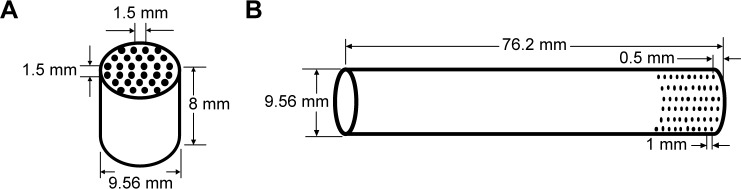
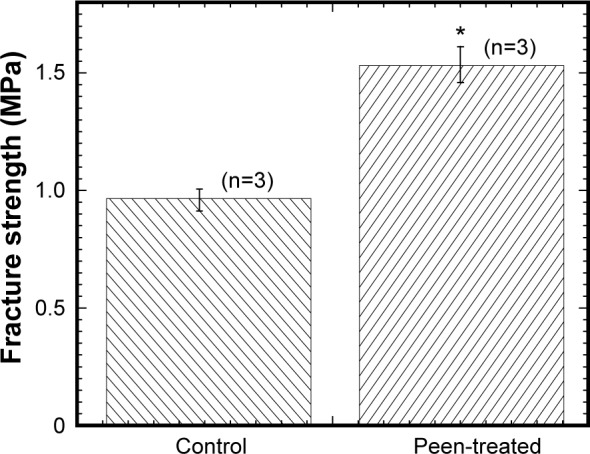
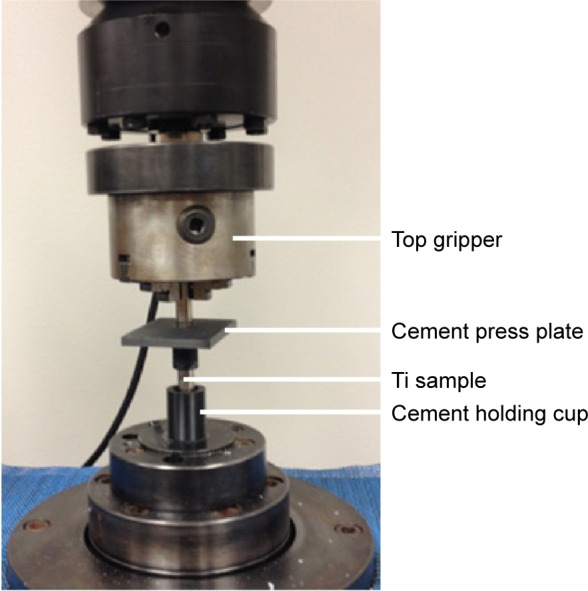
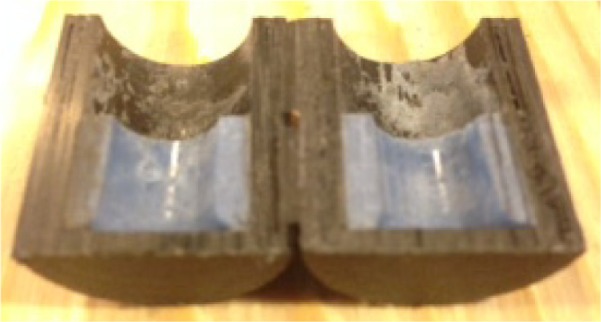
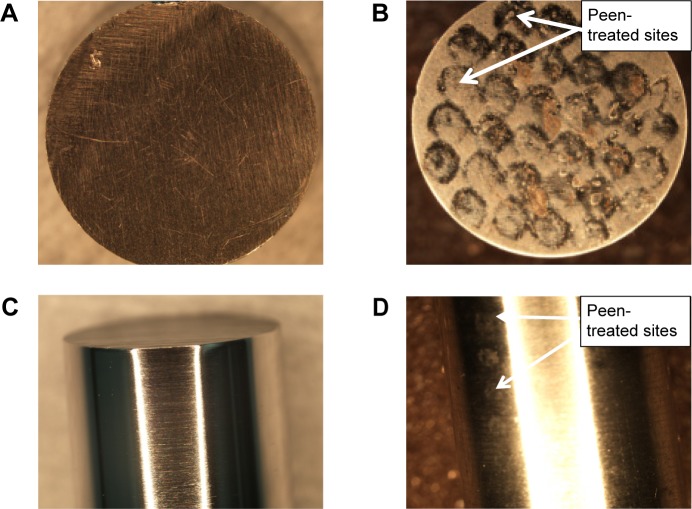
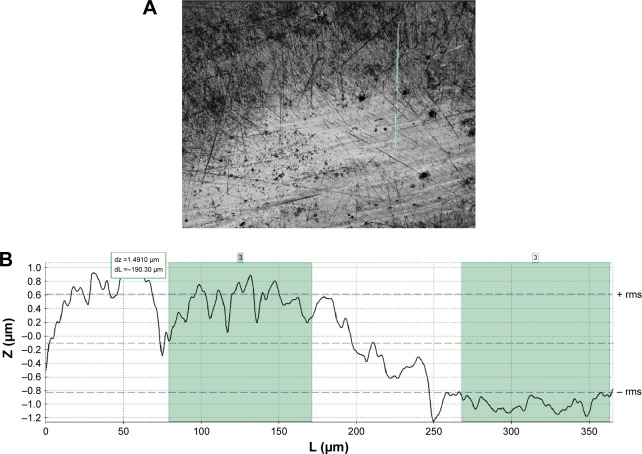
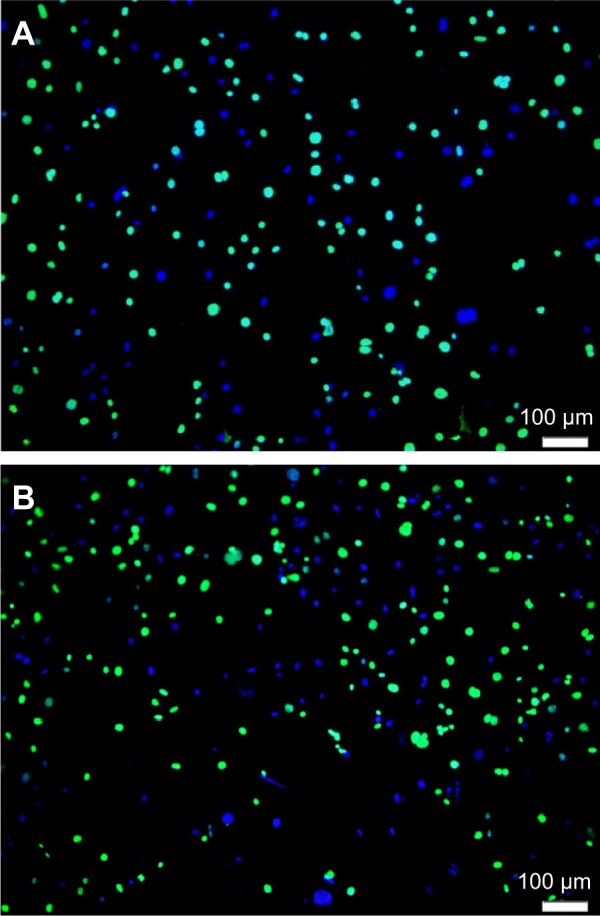
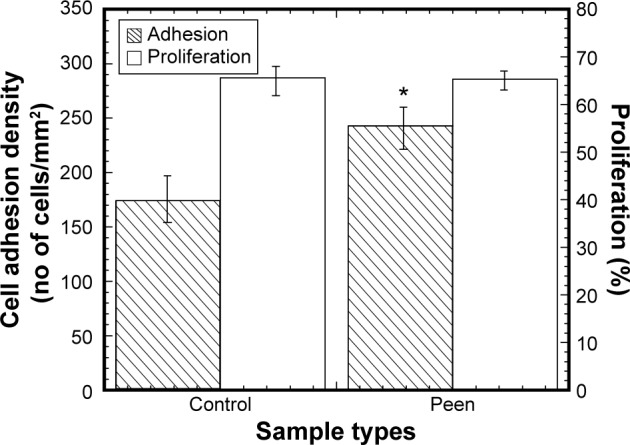
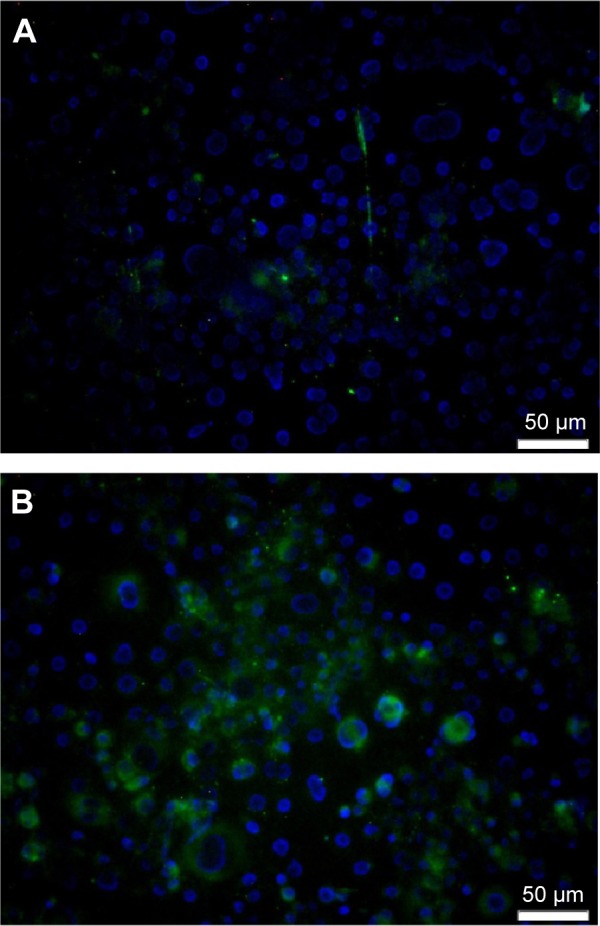
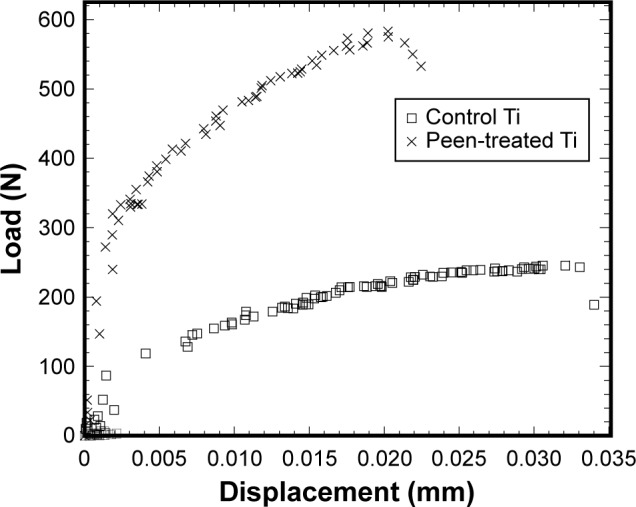
Implant failure due to poor integration of the implant with the surrounding biomaterial is a common problem in various orthopedic and orthodontic surgeries. Implant fixation mostly depends upon the implant surface topography. Micron to nanosize circular-shaped groove architecture with adequate surface roughness can enhance the mechanical interlock and osseointegration of an implant with the host tissue and solve its poor fixation problem. Such groove architecture can be created on a titanium (Ti) alloy implant by laser peening treatment. Laser peening produces deep, residual compressive stresses in the surfaces of metal parts, delivering increased fatigue life and damage tolerance. The scientific novelty of this study is the controlled deposition of circular-shaped rough spot groove using laser peening technique and understanding the effect of the treatment techniques for improving the implant surface properties. The hypothesis of this study was that implant surface grooves created by controlled laser peen treatment can improve the mechanical and biological responses of the implant with the adjoining biomaterial. The objective of this study was to measure how the controlled laser-peened groove architecture on Ti influences its osteoblast cell functions and bonding strength with bone cement. This study determined the surface roughness and morphology of the peen-treated Ti. In addition, this study compared the osteoblast cell functions (adhesion, proliferation, and differentiation) between control and peen-treated Ti samples. Finally, this study measured the fracture strength between each kind of Ti samples and bone cement under static loading. This study found that laser peen treatment on Ti significantly changed the surface architecture of the Ti, which led to enhanced osteoblast cell adhesion and differentiation on Ti implants and fracture strength of Ti-bone cement interfaces compared with values of untreated Ti samples. Therefore, the laser peen treatment method has the potential to improve the biomechanical functions of Ti implants.
由于植入物与周围生物材料的整合不佳而导致的植入失败是各种骨科和正畸手术中常见的问题。植入物的固定主要取决于植入物的表面形貌。具有适当表面粗糙度的微米到纳米尺寸的圆形凹槽结构可以增强植入物与宿主组织的机械互锁和骨整合,并解决其固定不佳的问题。这种凹槽结构可以通过激光喷丸处理在钛(Ti)合金植入物上形成。激光喷丸在金属部件表面产生深的残余压应力,从而提高疲劳寿命和损伤容限。本研究的科学新颖之处在于使用激光喷丸技术可控地沉积圆形粗糙点凹槽,并了解处理技术对改善植入物表面性能的影响。本研究的假设是,通过可控激光喷丸处理创建的植入物表面凹槽可以改善植入物与相邻生物材料的机械和生物学反应。本研究的目的是测量Ti上可控激光喷丸凹槽结构如何影响其成骨细胞功能以及与骨水泥的结合强度。本研究确定了喷丸处理后Ti的表面粗糙度和形貌。此外,本研究比较了对照和喷丸处理的Ti样品之间的成骨细胞功能(粘附、增殖和分化)。最后,本研究测量了每种Ti样品与骨水泥在静态加载下的断裂强度。本研究发现,对Ti进行激光喷丸处理显著改变了Ti的表面结构,与未处理的Ti样品相比,这导致Ti植入物上的成骨细胞粘附和分化增强,以及Ti-骨水泥界面的断裂强度提高。因此,激光喷丸处理方法有可能改善Ti植入物的生物力学功能。