Mannan Malik M Naeem, Kim Shinjung, Jeong Myung Yung, Kamran M Ahmad
Department of Cogno-Mechatronics Engineering, Pusan National University, 2 Busandaehak-ro 63beon-gil Geumjeong-gu, Busan 609-735, Korea.
Sensors (Basel). 2016 Feb 19;16(2):241. doi: 10.3390/s16020241.
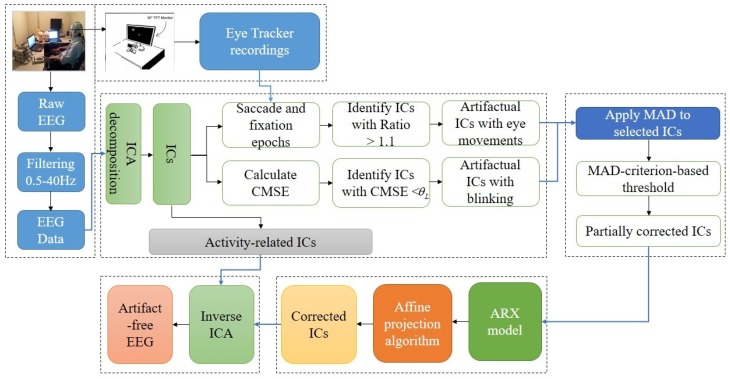
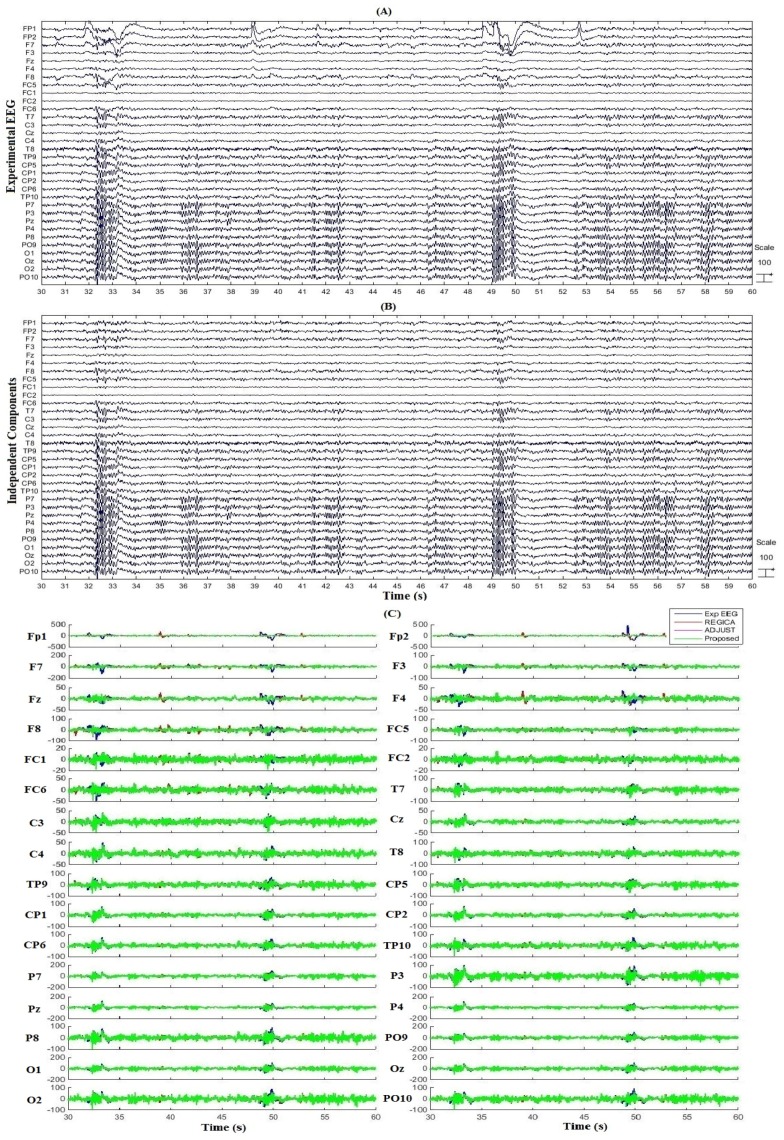
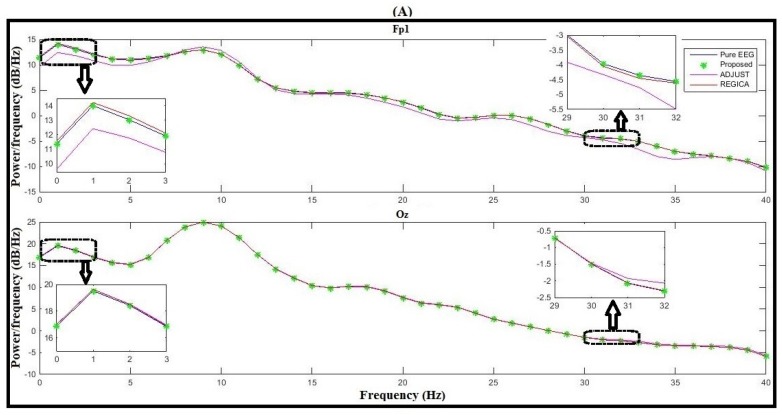
Contamination of eye movement and blink artifacts in Electroencephalogram (EEG) recording makes the analysis of EEG data more difficult and could result in mislead findings. Efficient removal of these artifacts from EEG data is an essential step in improving classification accuracy to develop the brain-computer interface (BCI). In this paper, we proposed an automatic framework based on independent component analysis (ICA) and system identification to identify and remove ocular artifacts from EEG data by using hybrid EEG and eye tracker system. The performance of the proposed algorithm is illustrated using experimental and standard EEG datasets. The proposed algorithm not only removes the ocular artifacts from artifactual zone but also preserves the neuronal activity related EEG signals in non-artifactual zone. The comparison with the two state-of-the-art techniques namely ADJUST based ICA and REGICA reveals the significant improved performance of the proposed algorithm for removing eye movement and blink artifacts from EEG data. Additionally, results demonstrate that the proposed algorithm can achieve lower relative error and higher mutual information values between corrected EEG and artifact-free EEG data.
脑电图(EEG)记录中眼动和眨眼伪迹的污染会使EEG数据分析变得更加困难,并可能导致误导性的结果。从EEG数据中有效去除这些伪迹是提高分类准确率以开发脑机接口(BCI)的关键步骤。在本文中,我们提出了一种基于独立成分分析(ICA)和系统识别的自动框架,通过使用混合EEG和眼动追踪系统从EEG数据中识别并去除眼部伪迹。使用实验性和标准EEG数据集说明了所提出算法的性能。所提出的算法不仅能从伪迹区域去除眼部伪迹,还能保留非伪迹区域中与神经元活动相关的EEG信号。与两种最先进的技术(即基于ADJUST的ICA和REGICA)的比较表明,所提出的算法在从EEG数据中去除眼动和眨眼伪迹方面具有显著提高的性能。此外,结果表明,所提出的算法在经校正的EEG和无伪迹EEG数据之间可以实现更低的相对误差和更高的互信息值。