Go Jun, Kim Ji Eun, Koh Eun Kyoung, Song Sung Hwa, Sung Ji Eun, Lee Hyun Ah, Lee Young Hee, Lim Yong, Hong Jin Tae, Hwang Dae Youn
Department of Biomaterials Science, College of Natural Resources and Life Science/Life and Industry Convergence Research Institute, Pusan National University, Miryang 627-706, Korea.
Department of Organic Material Science and Engineering, Pusan National University, Busan 609-735, Korea.
Nutrients. 2016 Feb 23;8(3):107. doi: 10.3390/nu8030107.
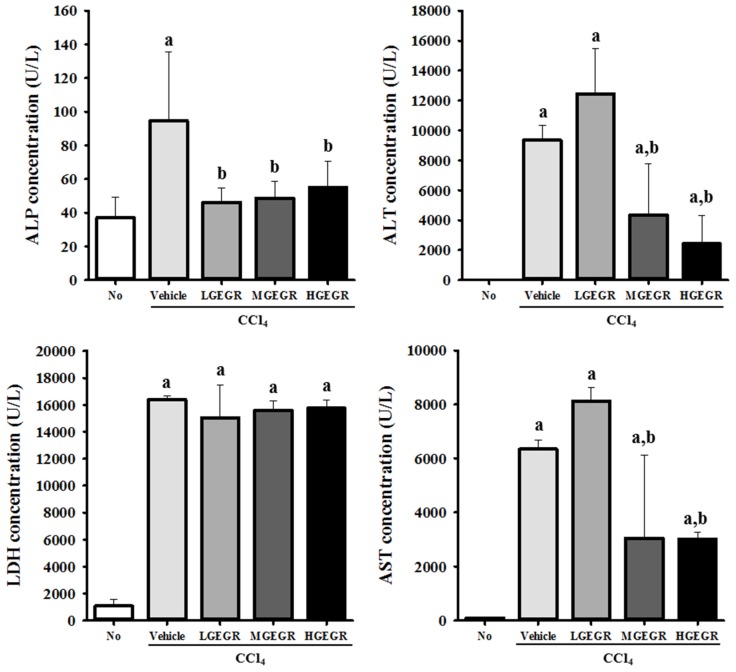
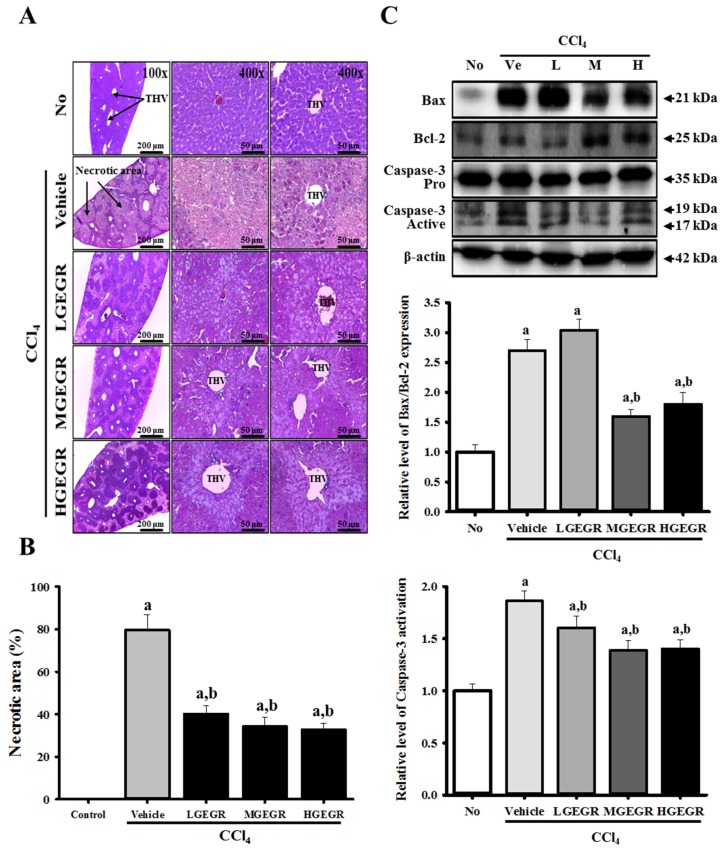
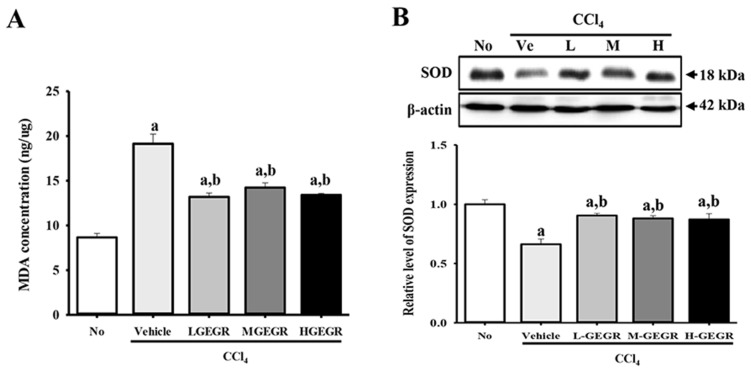
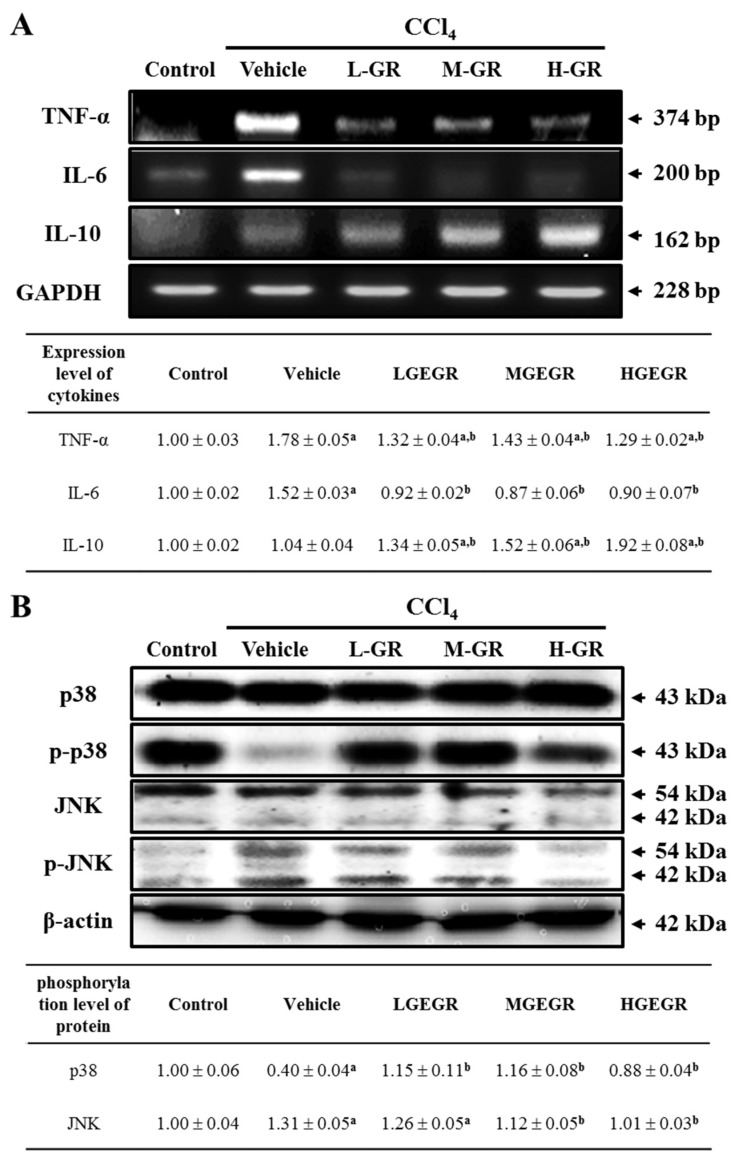
To investigate the toxicity, protective effects, and action mechanism of gallotannin-enriched extracts isolated from Galla Rhois (GEGR) against carbon tetrachloride (CCl₄)-induced hepatotoxicity in Institute for Cancer Research (ICR) mice, alterations in serum biochemical indicators, histopathological structure, antioxidative status, hepatic apoptosis-related proteins, and liver fibrosis regulating factors were measured in mice pretreated with GEGR for five days before CCl₄ injection. The GEGR/CCl₄ treated group showed decreased levels of three serum marker enzymes (ALP, AST, and ALT) representing liver toxicity, although LDH levels remained constant. Necrotic area indicating hepatic cell death significantly inhibited, while malondialdehyde (MDA) concentration and superoxide dismutase (SOD) expression were dramatically recovered in the GEGR preadministrated group. In mechanism analyses of GEGR, the formation of active caspase-3 and enhancement of Bax/Bcl-2 expression was effectively inhibited in the GEGR/CCl₄ treated group. The level of pro-inflammatory cytokines, TNF-α and IL-6, as well as the phosphorylation of p38 and JNK in the TNF-α downstream signaling pathway was rapidly recovered in the GEGR/CCl₄ treated group, while anti-inflammatory cytokine (IL-10) increased slightly in the same group. Furthermore, the GEGR/CCl₄ treated group showed a significant decrease in collagen accumulation results from alleviation of MMP-2 expression, TGF-β1 secretion and the phosphorylation of Smad2/3. Taken together, these results suggest that GEGR may induce remarkable protective effects against hepatic injury induced by CCl₄ treatment through upregulation of the anti-inflammatory and antioxidant system.
为研究五倍子富含没食子单宁提取物(GEGR)对四氯化碳(CCl₄)诱导的癌症研究所(ICR)小鼠肝毒性的毒性、保护作用及作用机制,在注射CCl₄前用GEGR预处理小鼠5天,检测血清生化指标、组织病理学结构、抗氧化状态、肝脏凋亡相关蛋白及肝纤维化调节因子的变化。GEGR/CCl₄处理组中,代表肝毒性的三种血清标志物酶(碱性磷酸酶、天冬氨酸转氨酶和丙氨酸转氨酶)水平降低,尽管乳酸脱氢酶水平保持不变。GEGR预处理组中,指示肝细胞死亡的坏死面积显著受到抑制,丙二醛(MDA)浓度和超氧化物歧化酶(SOD)表达显著恢复。在GEGR的机制分析中,GEGR/CCl₄处理组中活性半胱天冬酶-3的形成及Bax/Bcl-2表达的增强被有效抑制。GEGR/CCl₄处理组中促炎细胞因子肿瘤坏死因子-α(TNF-α)和白细胞介素-6(IL-6)水平以及TNF-α下游信号通路中p38和JNK的磷酸化迅速恢复,而同一组中抗炎细胞因子(IL-10)略有增加。此外,GEGR/CCl₄处理组中,由于基质金属蛋白酶-2(MMP-2)表达、转化生长因子-β1(TGF-β1)分泌及Smad2/3磷酸化的减轻,胶原蛋白积累显著减少。综上所述,这些结果表明GEGR可能通过上调抗炎和抗氧化系统对CCl₄诱导的肝损伤产生显著的保护作用。