Dunlop Katharine A, Woodside Blake, Downar Jonathan
Institute of Medical Sciences, University of TorontoToronto, ON, Canada; MRI-Guided rTMS Clinic, University Health NetworkToronto, ON, Canada.
Institute of Medical Sciences, University of TorontoToronto, ON, Canada; Department of Psychiatry, University Health NetworkToronto, ON, Canada; Department of Psychiatry, University of TorontoToronto, ON, Canada; Eating Disorders Program, University Health NetworkToronto, ON, Canada.
Front Neurosci. 2016 Feb 16;10:30. doi: 10.3389/fnins.2016.00030. eCollection 2016.
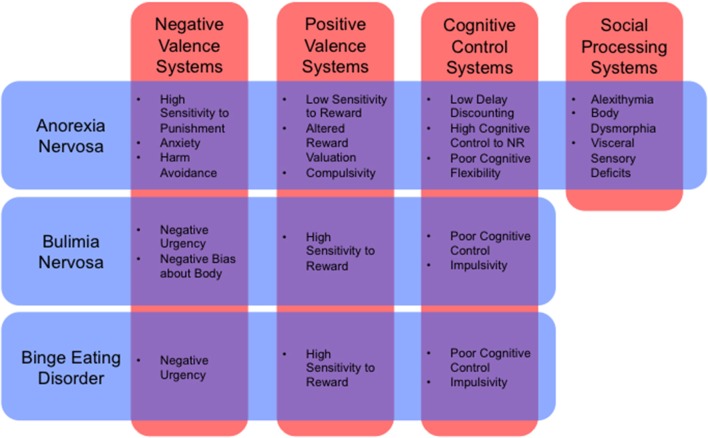
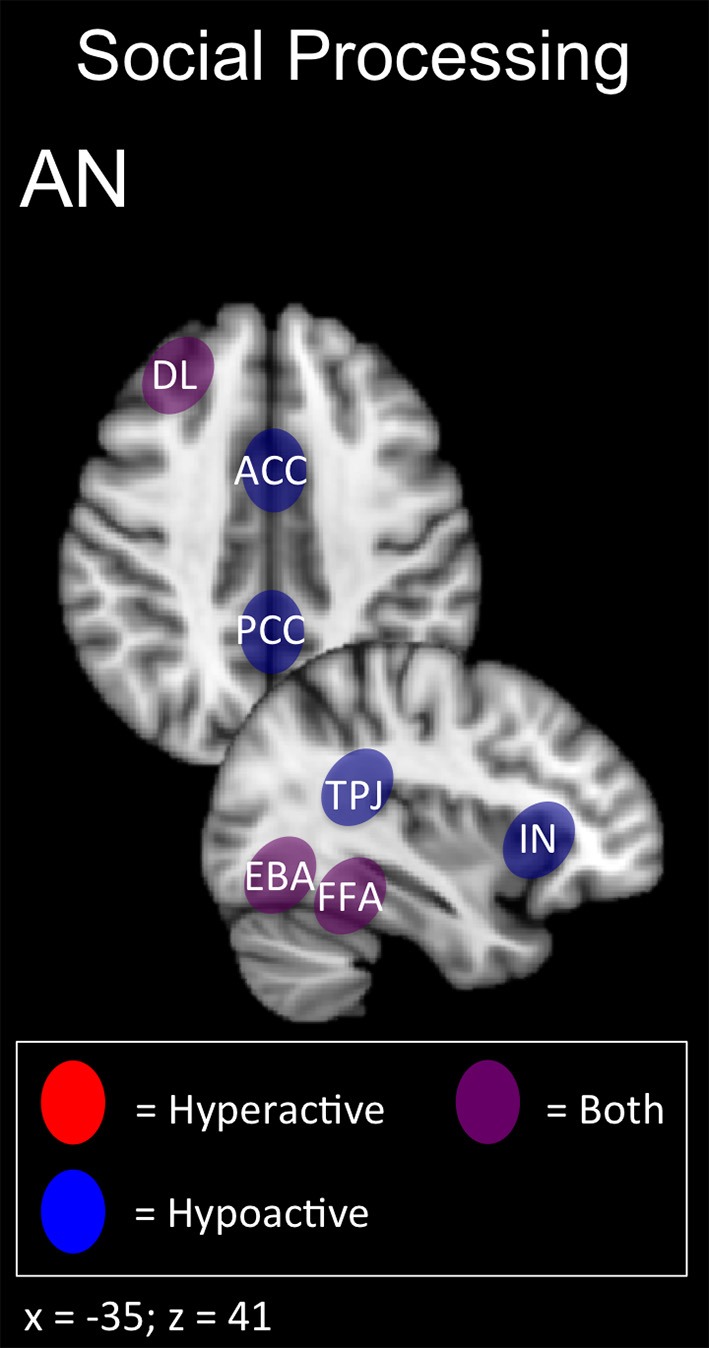
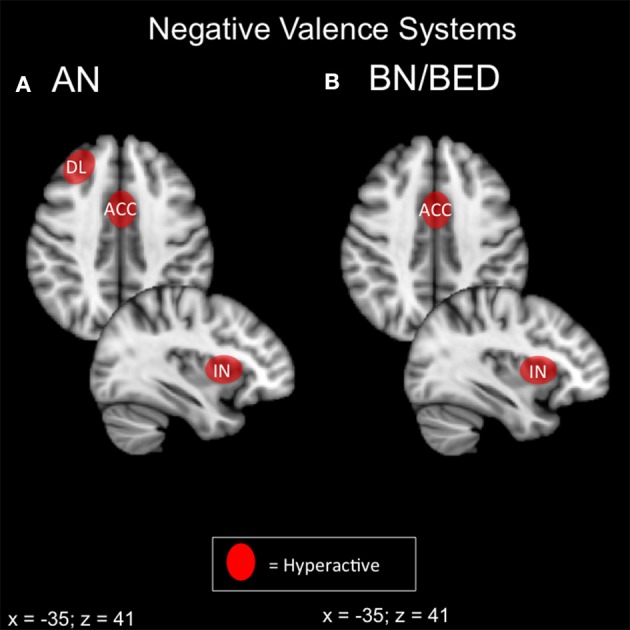
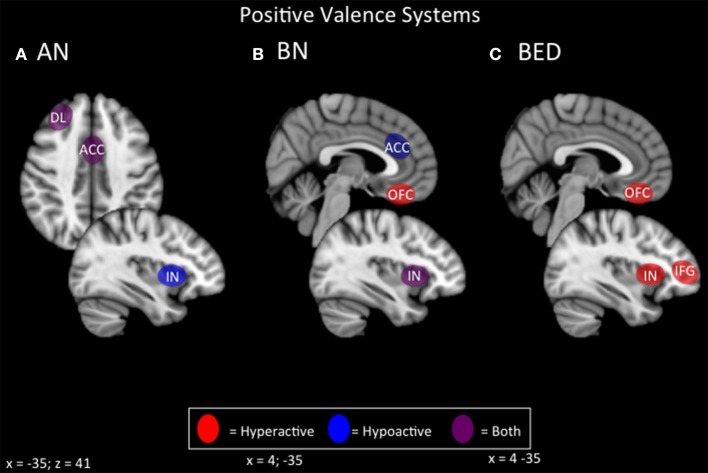
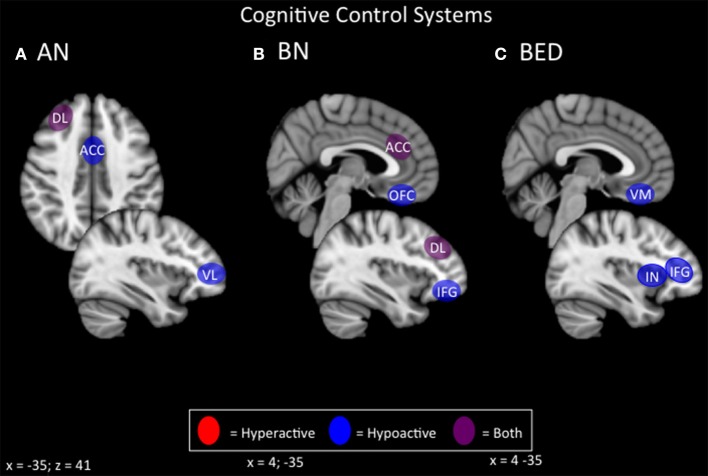
The term "eating disorders" (ED) encompasses a wide variety of disordered eating and compensatory behaviors, and so the term is associated with considerable clinical and phenotypic heterogeneity. This heterogeneity makes optimizing treatment techniques difficult. One class of treatments is non-invasive brain stimulation (NIBS). NIBS, including repetitive transcranial magnetic stimulation (rTMS) and transcranial direct current stimulation (tDCS), are accessible forms of neuromodulation that alter the cortical excitability of a target brain region. It is crucial for NIBS to be successful that the target is well selected for the patient population in question. Targets may best be selected by stepping back from conventional DSM-5 diagnostic criteria to identify neural substrates of more basic phenotypes, including behavior related to rewards and punishment, cognitive control, and social processes. These phenotypic dimensions have been recently laid out by the Research Domain Criteria (RDoC) initiative. Consequently, this review is intended to identify potential dimensions as outlined by the RDoC and the underlying behavioral and neurobiological targets associated with ED. This review will also identify candidate targets for NIBS based on these dimensions and review the available literature on rTMS and tDCS in ED. This review systematically reviews abnormal neural circuitry in ED within the RDoC framework, and also systematically reviews the available literature investigating NIBS as a treatment for ED.
“饮食失调”(ED)一词涵盖了各种各样的饮食紊乱和代偿行为,因此该术语与相当大的临床和表型异质性相关联。这种异质性使得优化治疗技术变得困难。一类治疗方法是非侵入性脑刺激(NIBS)。NIBS包括重复经颅磁刺激(rTMS)和经颅直流电刺激(tDCS),是可改变目标脑区皮质兴奋性的神经调节的可及形式。对于NIBS的成功而言,为相关患者群体精心选择靶点至关重要。最佳选择靶点的方法可能是从传统的《精神疾病诊断与统计手册》第五版(DSM-5)诊断标准中退一步,以识别更基本表型的神经基质,包括与奖励和惩罚、认知控制及社会过程相关的行为。这些表型维度最近已由研究领域标准(RDoC)计划列出。因此,本综述旨在识别RDoC概述的潜在维度以及与饮食失调相关的潜在行为和神经生物学靶点。本综述还将基于这些维度识别NIBS的候选靶点,并综述饮食失调中rTMS和tDCS的现有文献。本综述在RDoC框架内系统地回顾了饮食失调中的异常神经回路,还系统地回顾了将NIBS作为饮食失调治疗方法进行研究的现有文献。