Leopoldo A S, Lima-Leopoldo A P, Nascimento A F, Luvizotto R A M, Sugizaki M M, Campos D H S, da Silva D C T, Padovani C R, Cicogna A C
Departamento de Desportos, Centro de Educação Física e Esportes, Universidade Federal do Espírito Santo, Vitória, ES, Brasil.
Instituto de Ciências da Saúde, Universidade Federal do Mato Grosso, Sinop, MT, Brasil.
Braz J Med Biol Res. 2016;49(4):e5028. doi: 10.1590/1414-431X20155028. Epub 2016 Feb 23.
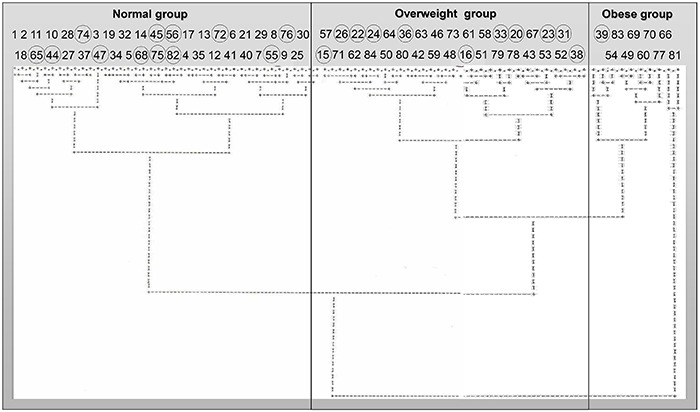
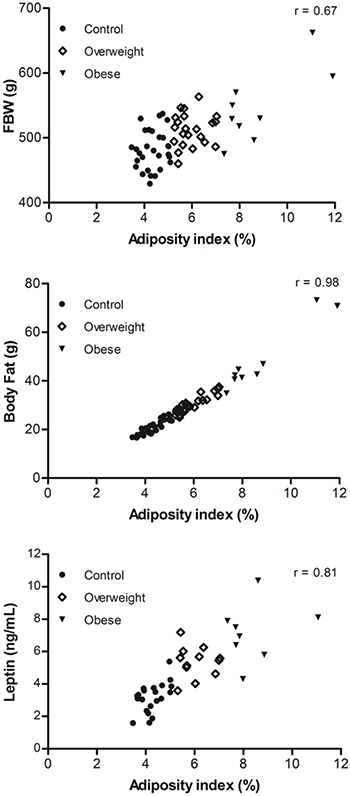
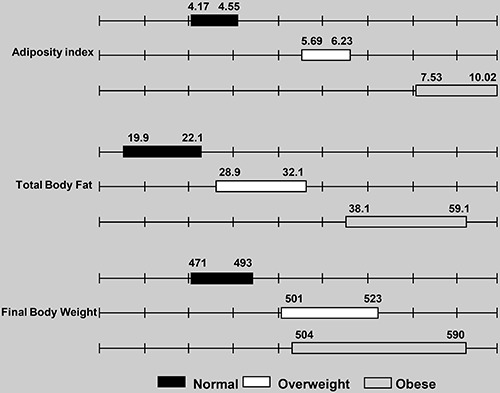
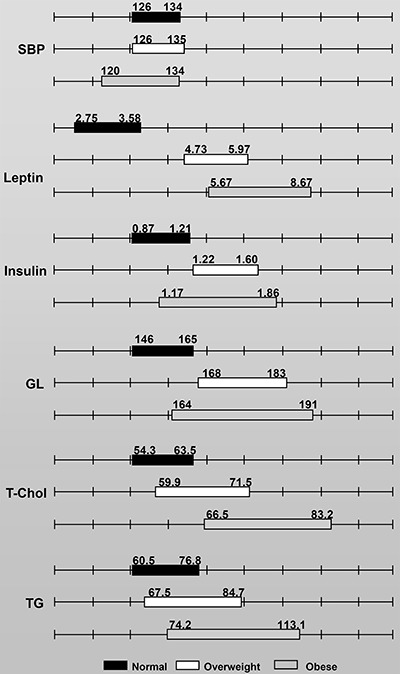
In experimental studies, several parameters, such as body weight, body mass index, adiposity index, and dual-energy X-ray absorptiometry, have commonly been used to demonstrate increased adiposity and investigate the mechanisms underlying obesity and sedentary lifestyles. However, these investigations have not classified the degree of adiposity nor defined adiposity categories for rats, such as normal, overweight, and obese. The aim of the study was to characterize the degree of adiposity in rats fed a high-fat diet using cluster analysis and to create adiposity intervals in an experimental model of obesity. Thirty-day-old male Wistar rats were fed a normal (n=41) or a high-fat (n=43) diet for 15 weeks. Obesity was defined based on the adiposity index; and the degree of adiposity was evaluated using cluster analysis. Cluster analysis allowed the rats to be classified into two groups (overweight and obese). The obese group displayed significantly higher total body fat and a higher adiposity index compared with those of the overweight group. No differences in systolic blood pressure or nonesterified fatty acid, glucose, total cholesterol, or triglyceride levels were observed between the obese and overweight groups. The adiposity index of the obese group was positively correlated with final body weight, total body fat, and leptin levels. Despite the classification of sedentary rats into overweight and obese groups, it was not possible to identify differences in the comorbidities between the two groups.
在实验研究中,体重、体重指数、肥胖指数和双能X线吸收法等几个参数通常被用于证明肥胖程度增加,并研究肥胖和久坐生活方式的潜在机制。然而,这些研究并未对大鼠的肥胖程度进行分类,也未定义肥胖类别,如正常、超重和肥胖。本研究的目的是使用聚类分析来表征高脂饮食喂养大鼠的肥胖程度,并在肥胖实验模型中创建肥胖区间。30日龄雄性Wistar大鼠分别给予正常饮食(n = 41)或高脂饮食(n = 43)15周。根据肥胖指数定义肥胖,并使用聚类分析评估肥胖程度。聚类分析可将大鼠分为两组(超重和肥胖)。与超重组相比,肥胖组的全身脂肪和肥胖指数显著更高。肥胖组和超重组之间的收缩压、非酯化脂肪酸、葡萄糖、总胆固醇或甘油三酯水平均未观察到差异。肥胖组的肥胖指数与最终体重、全身脂肪和瘦素水平呈正相关。尽管将久坐大鼠分为超重和肥胖组,但无法确定两组之间合并症的差异。