Skalickova Sylvie, Nejdl Lukas, Kudr Jiri, Ruttkay-Nedecky Branislav, Jimenez Ana Maria Jimenez, Kopel Pavel, Kremplova Monika, Masarik Michal, Stiborova Marie, Eckschlager Tomas, Adam Vojtech, Kizek Rene
Department of Chemistry and Biochemistry, Faculty of Agronomy, Mendel University in Brno, Zemedelska 1, CZ-613 00 Brno, Czech Republic.
Central European Institute of Technology, Brno University of Technology, Technicka 3058/10, CZ-616 00 Brno, Czech Republic.
Sensors (Basel). 2016 Feb 25;16(3):290. doi: 10.3390/s16030290.
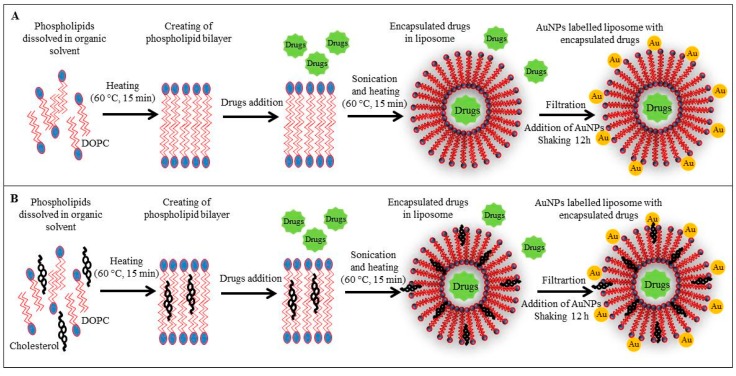
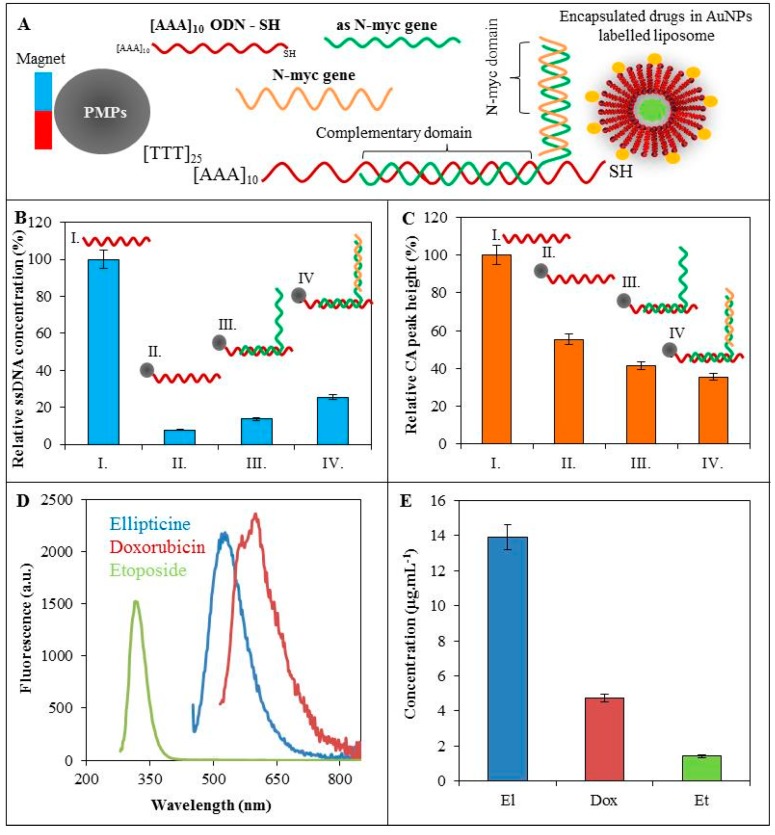
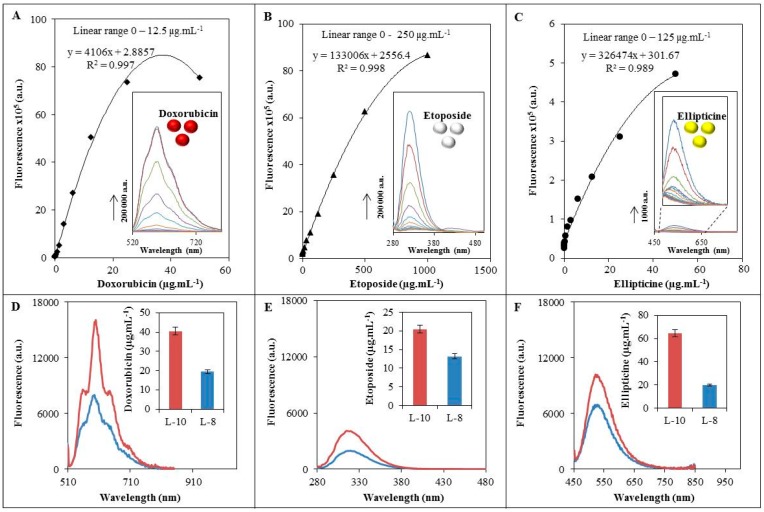
Liposome-based drug delivery systems hold great potential for cancer therapy. The aim of this study was to design a nanodevice for targeted anchoring of liposomes (with and without cholesterol) with encapsulated anticancer drugs and antisense N-myc gene oligonucleotide attached to its surface. To meet this main aim, liposomes with encapsulated doxorubicin, ellipticine and etoposide were prepared. They were further characterized by measuring their fluorescence intensity, whereas the encapsulation efficiency was estimated to be 16%. The hybridization process of individual oligonucleotides forming the nanoconstruct was investigated spectrophotometrically and electrochemically. The concentrations of ellipticine, doxorubicin and etoposide attached to the nanoconstruct in gold nanoparticle-modified liposomes were found to be 14, 5 and 2 µg·mL(-1), respectively. The study succeeded in demonstrating that liposomes are suitable for the transport of anticancer drugs and the antisense oligonucleotide, which can block the expression of the N-myc gene.
基于脂质体的药物递送系统在癌症治疗方面具有巨大潜力。本研究的目的是设计一种纳米装置,用于将包裹有抗癌药物的脂质体(含或不含胆固醇)靶向锚定,并在其表面连接反义N-myc基因寡核苷酸。为实现这一主要目标,制备了包裹阿霉素、玫瑰树碱和依托泊苷的脂质体。通过测量其荧光强度对它们进行进一步表征,而包封效率估计为16%。采用分光光度法和电化学方法研究了形成纳米结构的单个寡核苷酸的杂交过程。发现金纳米颗粒修饰的脂质体纳米结构上附着的玫瑰树碱、阿霉素和依托泊苷的浓度分别为14、5和2 μg·mL(-1)。该研究成功证明脂质体适用于抗癌药物和反义寡核苷酸的运输,反义寡核苷酸可阻断N-myc基因的表达。