da Costa Lanna Jamile Corrêa, Fernandes Marcus Emanuel Barroncas
Laboratory of Mangrove Ecology, Institute of Coastal Studies, Federal University of Pará, Bragança, Brazil.
PLoS Negl Trop Dis. 2016 Feb 29;10(2):e0004474. doi: 10.1371/journal.pntd.0004474. eCollection 2016 Feb.
The occurrence of outbreaks of human rabies transmitted by Desmodus rotundus in Brazil in 2004 and 2005 reinforced the need for further research into this zoonosis. Studies of knowledge and practices related to the disease will help to define strategies for the avoidance of new cases, through the identification of gaps that may affect the preventive practices.
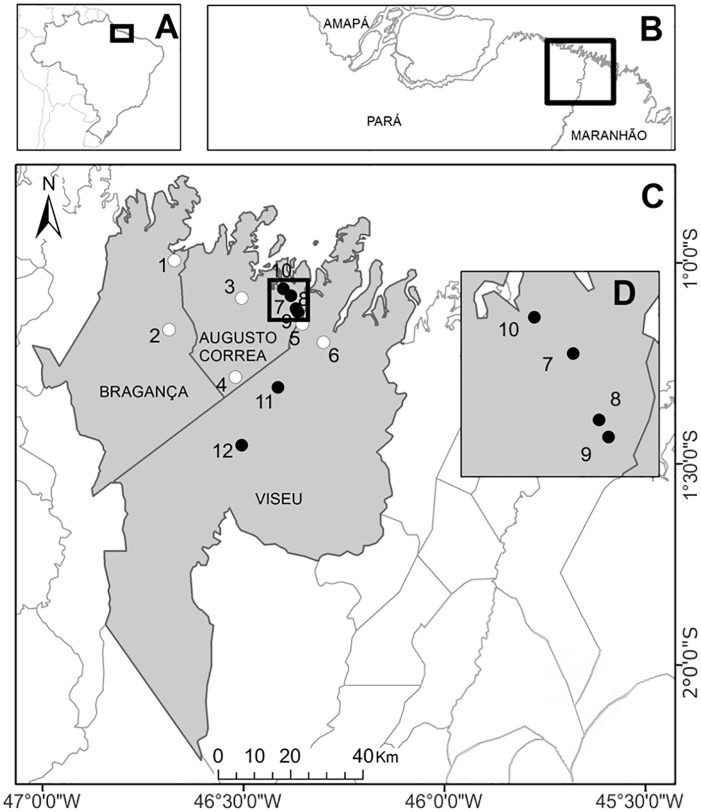
METHODOLOGY/PRINCIPAL FINDINGS: A semi-structured questionnaire was applied to 681 residents of twelve communities of northeastern Pará state involved in the 2004 and 2005 outbreaks mentioned above. The objective was to evaluate the local knowledge and practices related to the disease. We found a highly significant difference (p<0.0001) in the knowledge of rabies among education levels, indicating that education is a primary determinant of knowledge on this disease. More than half of the respondents (63%) recognized the seriousness of the zoonosis, and 50% were aware of the importance of bats for its transmission, although few individuals (11%) were familiar with the symptoms, and only 40% knew methods of prevention. Even so, 70% of pet owners maintained their animals vaccinated, and 52% of the respondents bitten by bats had received post-exposure vaccination. Most of the respondents (57%) reported being familiarized with rabies through informal discussions, and only a few (23%) mentioned public health agents as the source of their information.
CONCLUSION/SIGNIFICANCE: We identified many gaps in the knowledge and practices of the respondents regarding rabies. This may be the result of the reduced participation of public health agents in the transfer of details about the disease. The lack of knowledge may be a direct determinant in the occurrence of new outbreaks. Given these findings, there is a clear need for specific educational initiatives involving the local population and the public health entities, with the primary aim of contributing to the prevention of rabies.
2004年和2005年在巴西发生的由吸血蝙蝠传播的人间狂犬病疫情,凸显了对这种人畜共患病进行进一步研究的必要性。对与该疾病相关的知识和实践进行研究,将有助于通过识别可能影响预防措施的差距来确定避免新病例的策略。
方法/主要发现:对帕拉州东北部12个社区的681名居民进行了半结构化问卷调查,这些社区涉及上述2004年和2005年的疫情。目的是评估当地与该疾病相关的知识和实践。我们发现不同教育水平人群对狂犬病的了解存在极显著差异(p<0.0001),这表明教育是影响该疾病知识水平的主要因素。超过一半的受访者(63%)认识到这种人畜共患病的严重性,50%的人意识到蝙蝠在其传播中的重要性,尽管很少有人(11%)熟悉症状,只有40%的人知道预防方法。即便如此,70%的宠物主人为其动物接种了疫苗,52%被蝙蝠咬伤的受访者接受了暴露后疫苗接种。大多数受访者(57%)报告通过非正式讨论了解狂犬病,只有少数人(23%)提到公共卫生机构是他们信息的来源。
结论/意义:我们发现受访者在狂犬病知识和实践方面存在许多差距。这可能是由于公共卫生机构在传播该疾病详细信息方面参与度降低所致。知识的缺乏可能是新疫情发生的直接决定因素。鉴于这些发现,显然需要开展涉及当地居民和公共卫生实体的具体教育举措,主要目的是促进狂犬病的预防。