Gao Anran, Lu Na, Wang Yuelin, Li Tie
Science and Technology on Micro-system Laboratory, Shanghai Institute of Microsystem and Information Technology, Chinese Academy of Sciences, Shanghai 200050, China.
Sci Rep. 2016 Mar 2;6:22554. doi: 10.1038/srep22554.
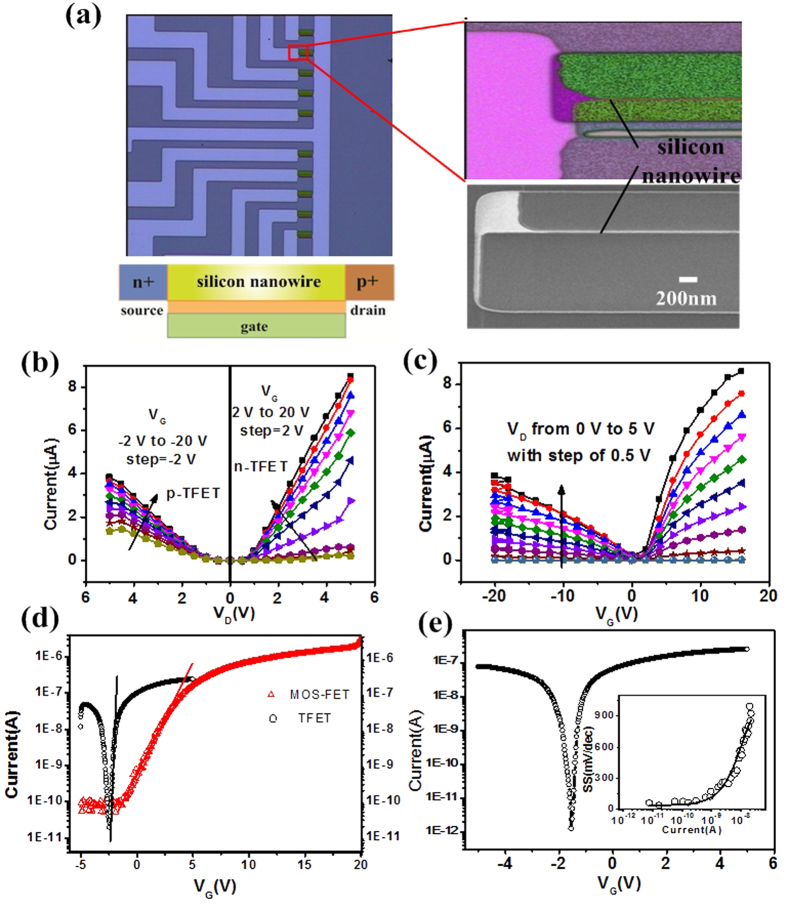
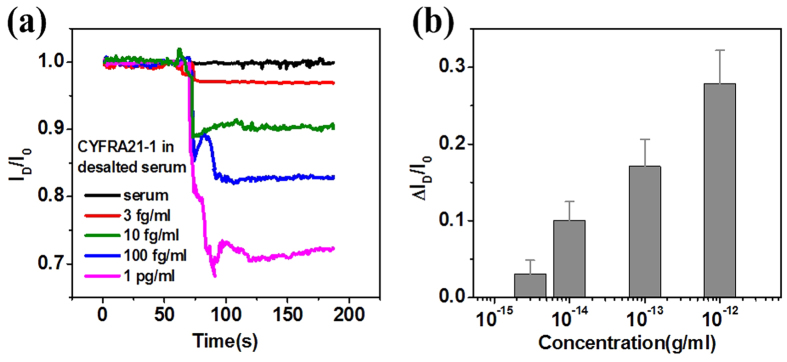
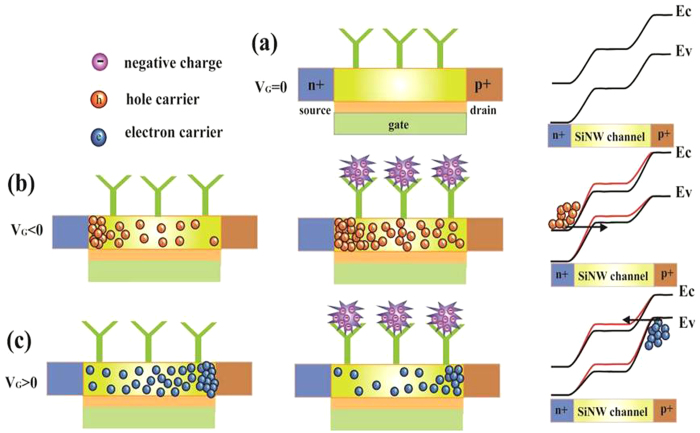
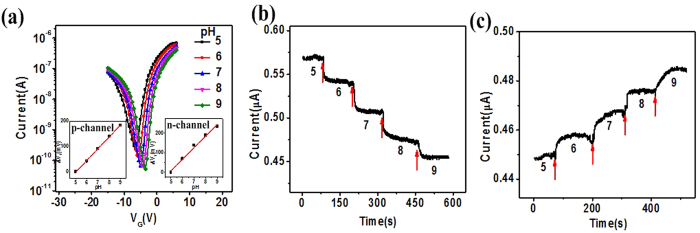
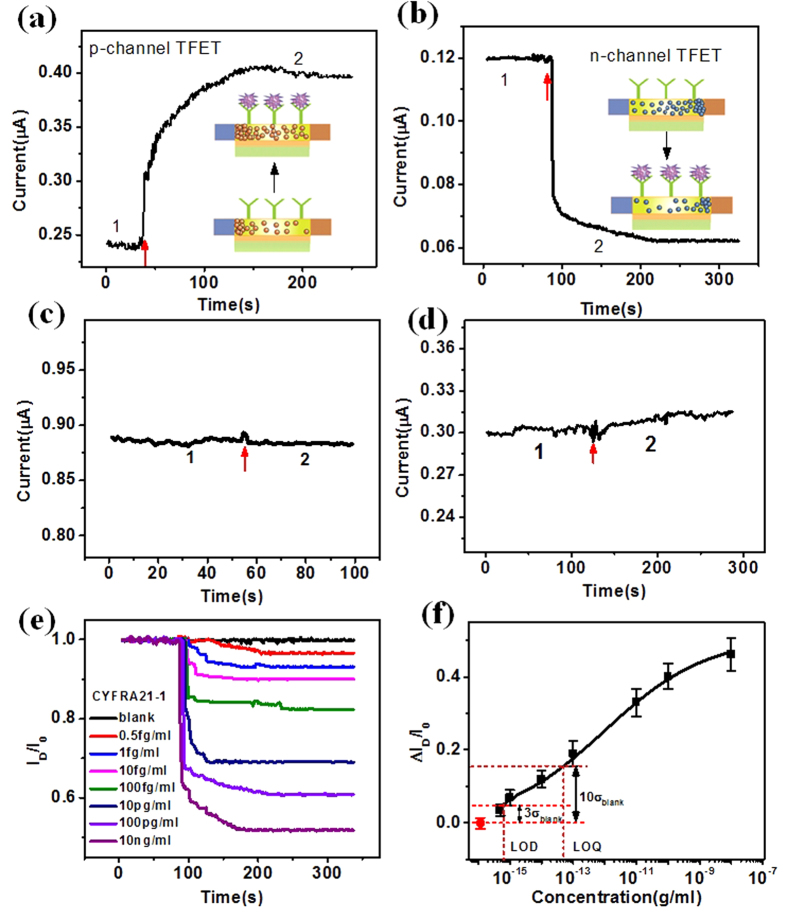
For point-of-care (POC) applications, robust, ultrasensitive, small, rapid, low-power, and low-cost sensors are highly desirable. Here, we present a novel biosensor based on a complementary metal oxide semiconductor (CMOS)-compatible silicon nanowire tunneling field-effect transistor (SiNW-TFET). They were fabricated "top-down" with a low-cost anisotropic self-stop etching technique. Notably, the SiNW-TFET device provided strong anti-interference capacity by applying the inherent ambipolarity via both pH and CYFRA21-1 sensing. This offered a more robust and portable general protocol. The specific label-free detection of CYFRA21-1 down to 0.5 fgml(-1) or ~12.5 aM was achieved using a highly responsive SiNW-TFET device with a minimum sub-threshold slope (SS) of 37 mVdec(-1). Furthermore, real-time measurements highlighted the ability to use clinically relevant samples such as serum. The developed high performance diagnostic system is expected to provide a generic platform for numerous POC applications.
对于即时检测(POC)应用而言,坚固耐用、超灵敏、小型、快速、低功耗且低成本的传感器是非常理想的。在此,我们展示了一种基于互补金属氧化物半导体(CMOS)兼容的硅纳米线隧穿场效应晶体管(SiNW-TFET)的新型生物传感器。它们采用低成本的各向异性自停止蚀刻技术“自上而下”制造。值得注意的是,SiNW-TFET 器件通过在 pH 和细胞角蛋白 19 片段 21-1(CYFRA21-1)传感中应用固有的双极性提供了强大的抗干扰能力。这提供了一种更坚固且便携的通用方案。使用具有 37 mVdec(-1) 的最小亚阈值斜率(SS)的高响应性 SiNW-TFET 器件实现了对 CYFRA21-1 的特异性无标记检测,检测下限低至 0.5 fgml(-1) 或约 12.5 aM。此外,实时测量突出了使用血清等临床相关样本的能力。所开发的高性能诊断系统有望为众多 POC 应用提供一个通用平台。