Kirchdoerfer Robert N, Cottrell Christopher A, Wang Nianshuang, Pallesen Jesper, Yassine Hadi M, Turner Hannah L, Corbett Kizzmekia S, Graham Barney S, McLellan Jason S, Ward Andrew B
Department of Integrative Structural and Computational Biology, The Scripps Research Institute, 10550 North Torrey Pines Road, La Jolla, California 92037, USA.
Department of Biochemistry, Geisel School of Medicine at Dartmouth, Hanover, New Hampshire 03755, USA.
Nature. 2016 Mar 3;531(7592):118-21. doi: 10.1038/nature17200.
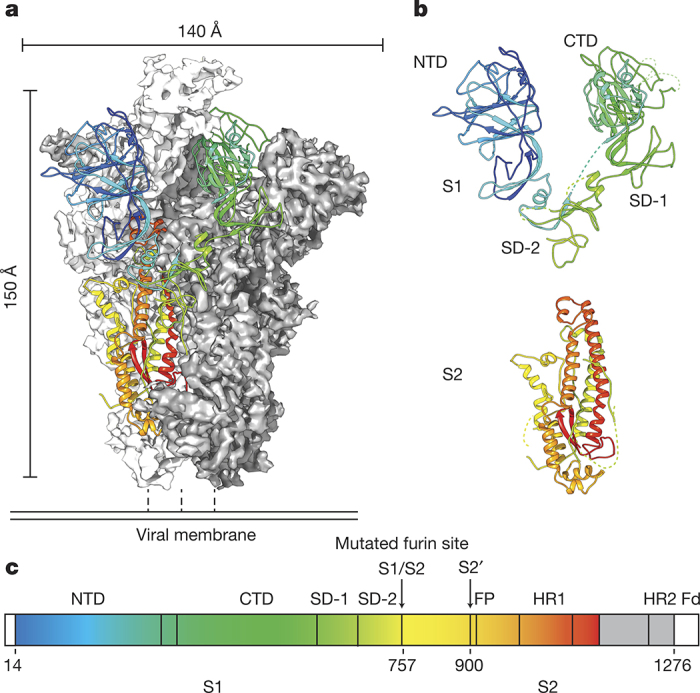
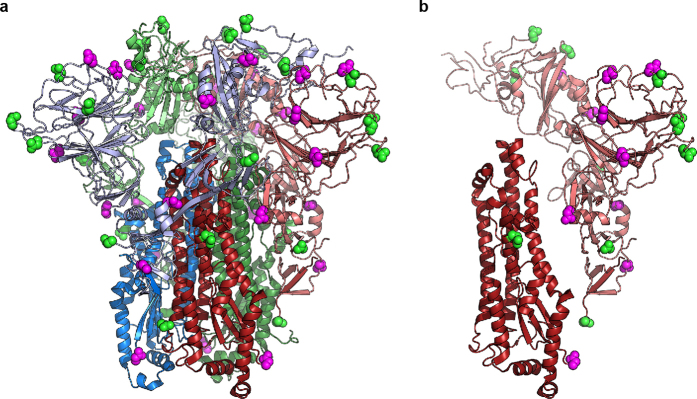
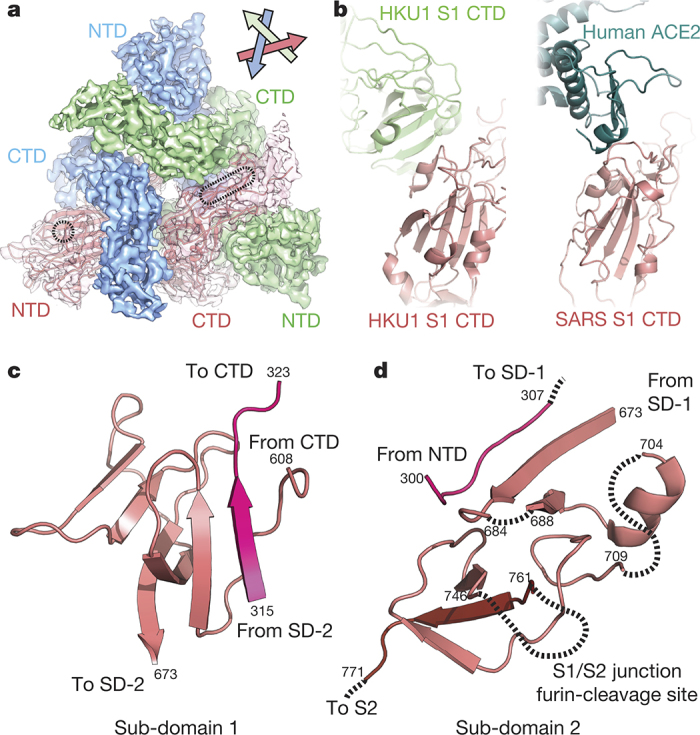
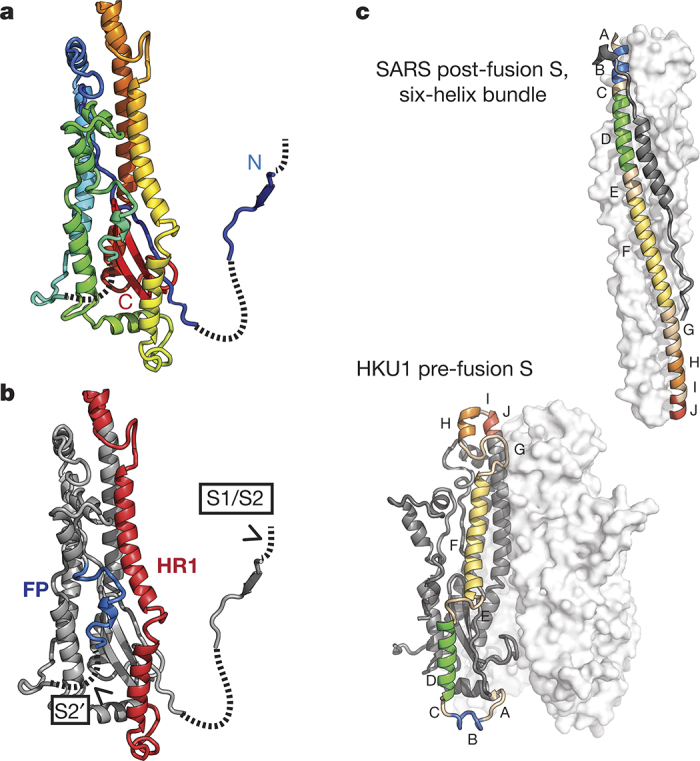
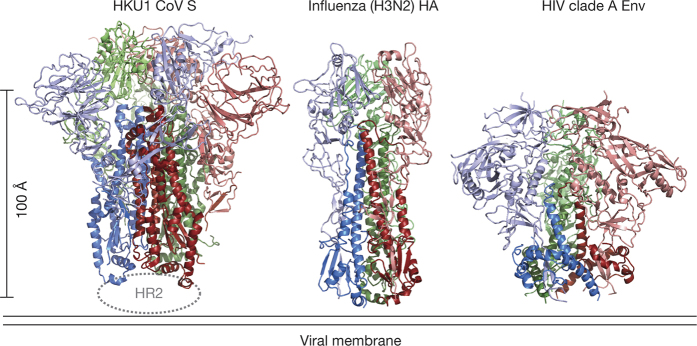
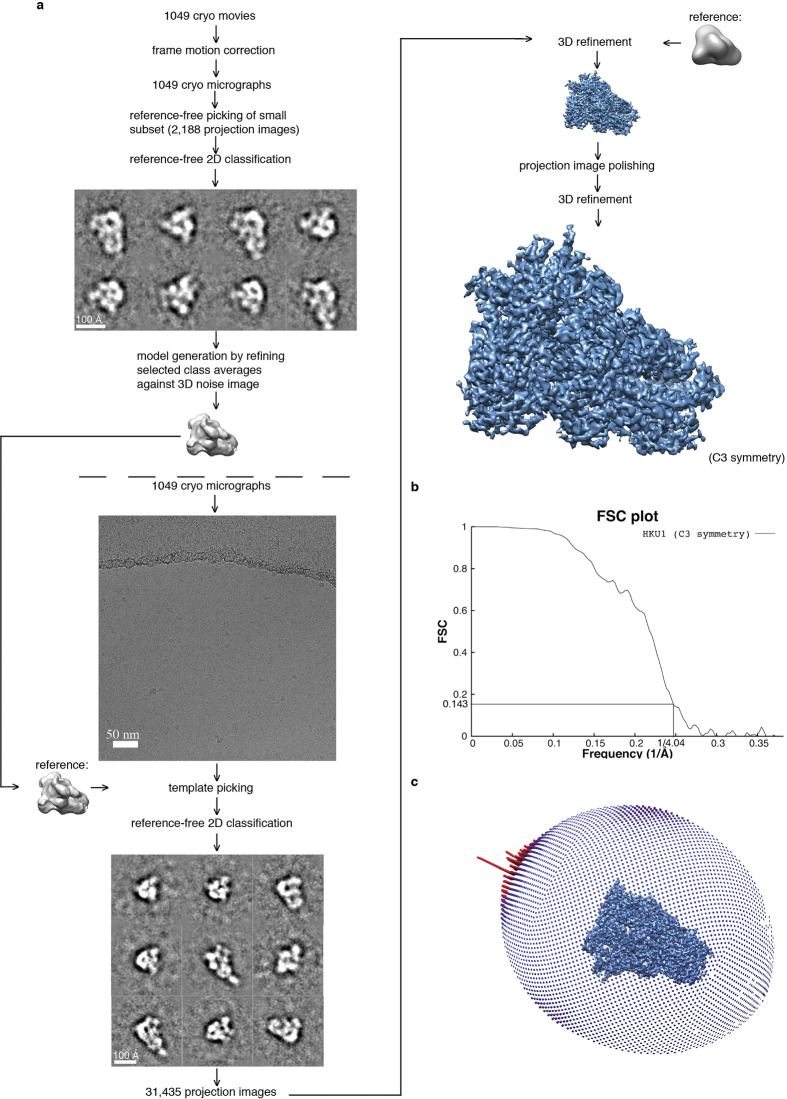
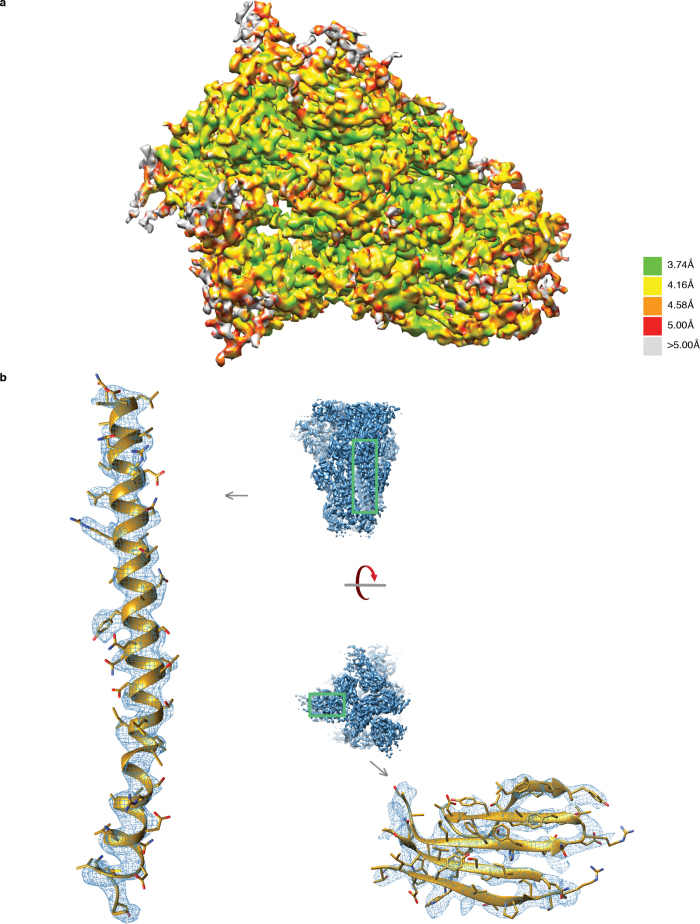
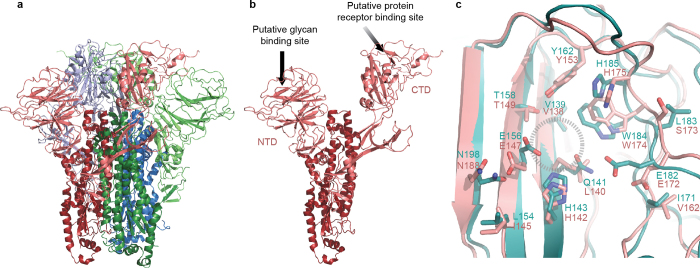
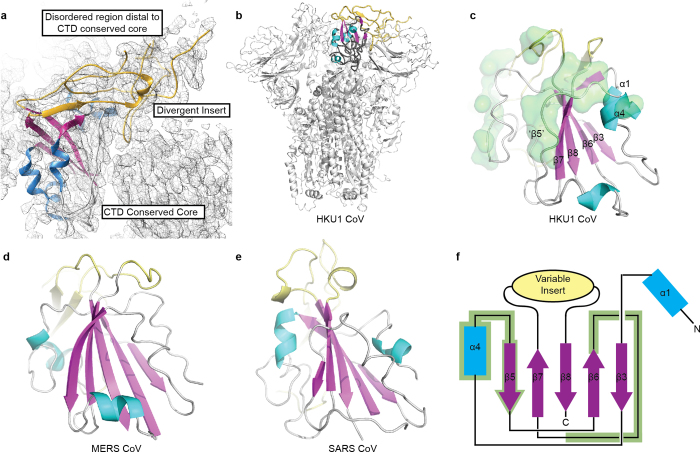
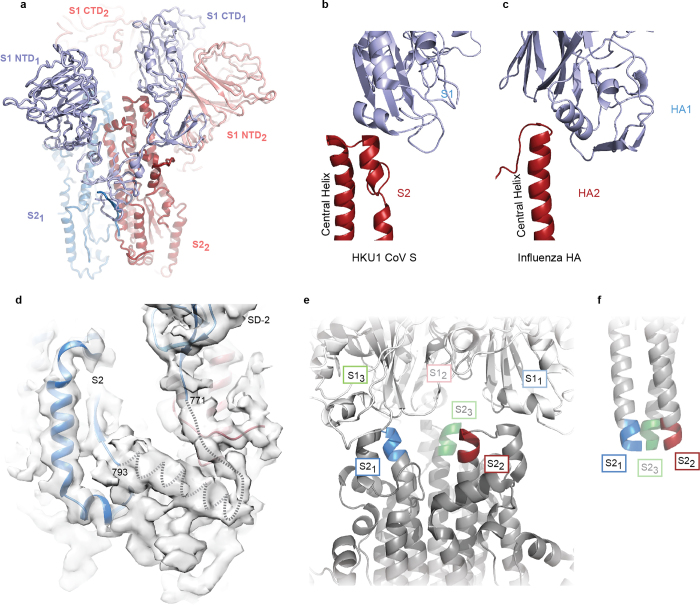
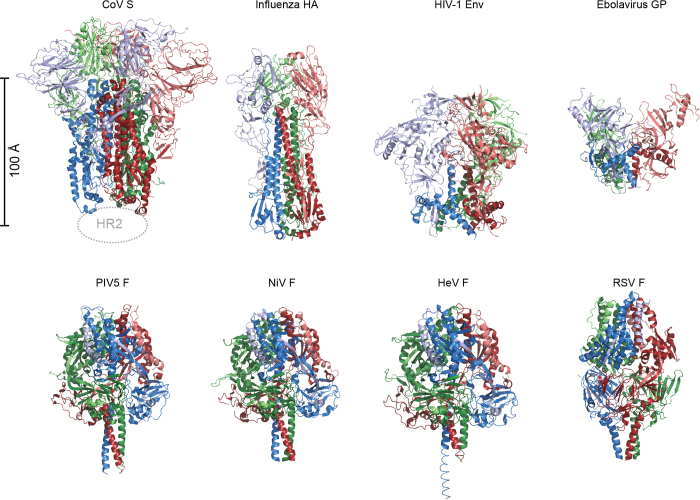
HKU1 is a human betacoronavirus that causes mild yet prevalent respiratory disease, and is related to the zoonotic SARS and MERS betacoronaviruses, which have high fatality rates and pandemic potential. Cell tropism and host range is determined in part by the coronavirus spike (S) protein, which binds cellular receptors and mediates membrane fusion. As the largest known class I fusion protein, its size and extensive glycosylation have hindered structural studies of the full ectodomain, thus preventing a molecular understanding of its function and limiting development of effective interventions. Here we present the 4.0 Å resolution structure of the trimeric HKU1 S protein determined using single-particle cryo-electron microscopy. In the pre-fusion conformation, the receptor-binding subunits, S1, rest above the fusion-mediating subunits, S2, preventing their conformational rearrangement. Surprisingly, the S1 C-terminal domains are interdigitated and form extensive quaternary interactions that occlude surfaces known in other coronaviruses to bind protein receptors. These features, along with the location of the two protease sites known to be important for coronavirus entry, provide a structural basis to support a model of membrane fusion mediated by progressive S protein destabilization through receptor binding and proteolytic cleavage. These studies should also serve as a foundation for the structure-based design of betacoronavirus vaccine immunogens.
HKU1是一种人类β冠状病毒,可引起轻微但普遍的呼吸道疾病,并且与具有高致死率和大流行潜力的人畜共患的严重急性呼吸综合征(SARS)和中东呼吸综合征(MERS)β冠状病毒相关。细胞嗜性和宿主范围部分由冠状病毒刺突(S)蛋白决定,该蛋白结合细胞受体并介导膜融合。作为已知最大的I类融合蛋白,其大小和广泛的糖基化阻碍了对完整胞外域的结构研究,从而妨碍了对其功能的分子理解,并限制了有效干预措施的开发。在此,我们展示了使用单颗粒冷冻电子显微镜测定的三聚体HKU1 S蛋白的4.0埃分辨率结构。在融合前构象中,受体结合亚基S1位于融合介导亚基S2上方,阻止其构象重排。令人惊讶的是,S1 C末端结构域相互交错并形成广泛的四级相互作用,从而封闭了其他冠状病毒中已知的与蛋白质受体结合的表面。这些特征,连同已知对冠状病毒进入很重要的两个蛋白酶位点的位置,为支持一种通过受体结合和蛋白水解切割使S蛋白逐步不稳定从而介导膜融合的模型提供了结构基础。这些研究也应为基于结构的β冠状病毒疫苗免疫原设计奠定基础。