Rowlands Megan A, Scheinost Dustin, Lacadie Cheryl, Vohr Betty, Li Fangyong, Schneider Karen C, Todd Constable R, Ment Laura R
Pediatrics, Yale School of Medicine, New Haven, CT, USA.
Radiology and Biomedical Imaging, Yale School of Medicine, New Haven, CT, USA.
Neuroimage Clin. 2016 Jan 21;11:149-157. doi: 10.1016/j.nicl.2016.01.016. eCollection 2016.
Preterm (PT) children show early cognitive and language deficits and display altered cortical connectivity for language compared to term (T) children. Developmentally, functional connectivity networks become more segregated and integrated, through the weakening of short-range and strengthening of long-range connections.
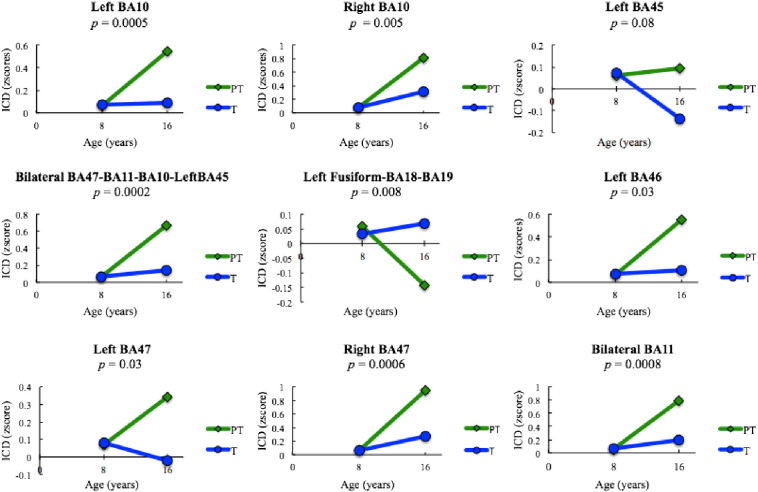
Longitudinal intrinsic connectivity distribution (ICD) values were assessed in PT (n = 13) compared to T children (n = 12) at ages 8 vs. 16 using a Linear Mixed Effects model. Connectivity values in regions generated by the group × age interaction analysis were then correlated to scores on full IQ (FSIQ), verbal IQ (VIQ), verbal comprehension IQ (VCIQ), performance IQ (PIQ), Peabody picture vocabulary test-revised (PPVT-R), and Rapid Naming Composite (RDRL_Cmp).
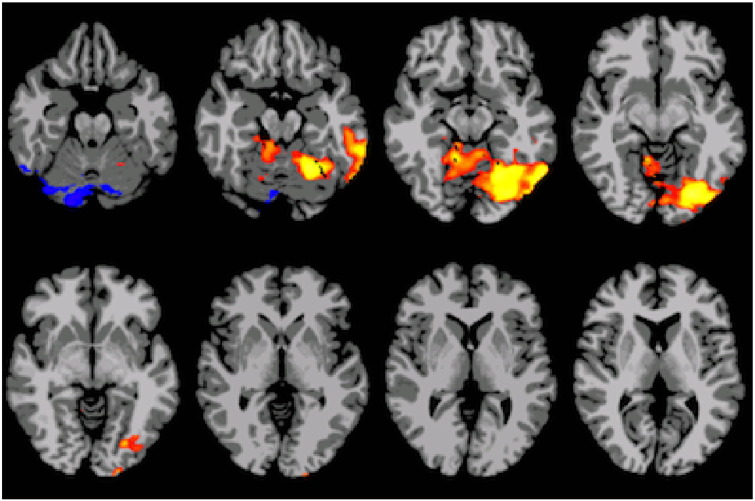
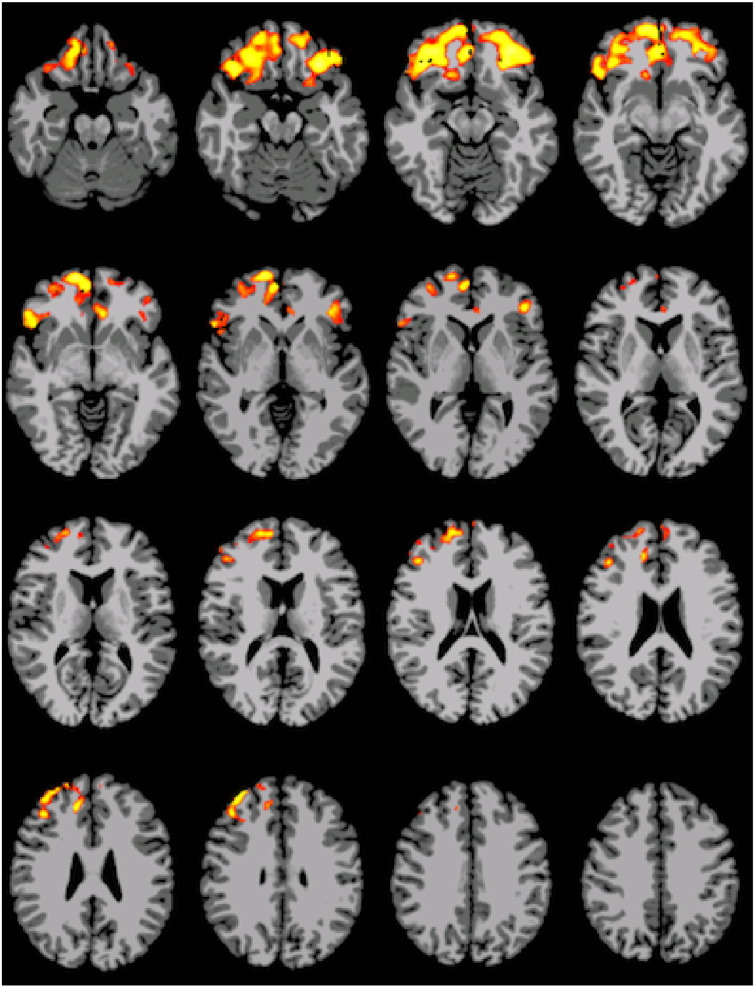
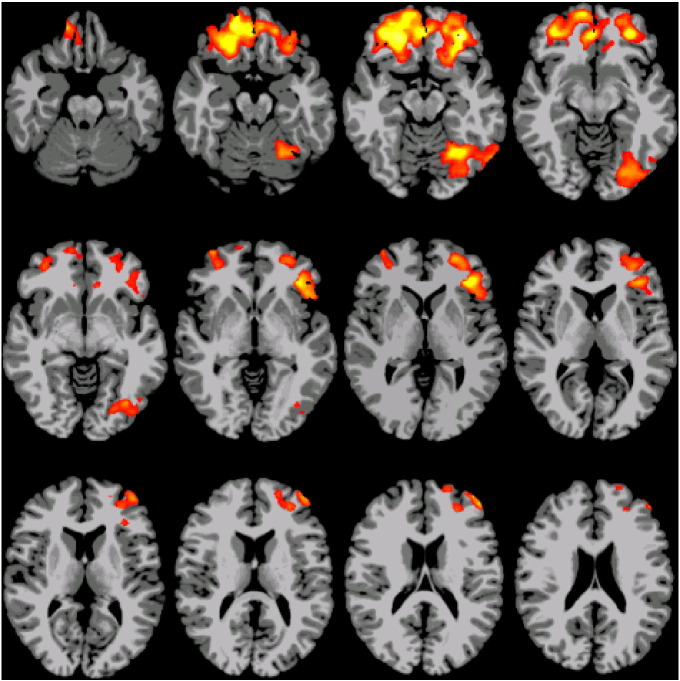
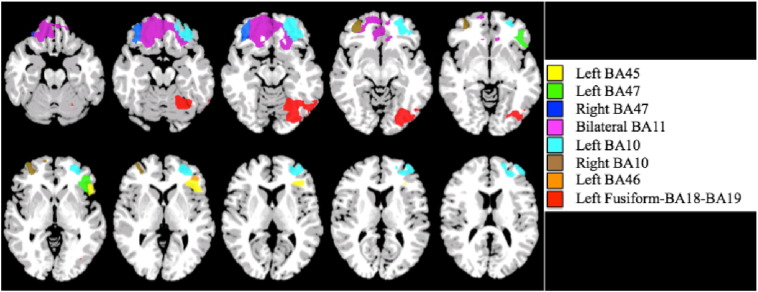
Nine regions were generated by the group × age interaction analysis. PT connectivity significantly increased over time in all but two regions, and they ultimately displayed greater relative connectivity at age 16 than Ts in all areas except the left occipito-temporal cortex (OTC). PTs underwent significant connectivity reductions in the left OTC, which corresponded with worse performance on FSIQ, VIQ, and PIQ. These findings differed from Ts, who did not undergo any significant changes in connectivity over time.
These findings suggest that the developmental alterations in connectivity in PT children at adolescence are both pervasive and widespread. The persistent and worsening cognitive and language deficits noted in the PT subjects may be attributed to the loss of connections in the left OTC.
与足月儿(T)相比,早产儿(PT)表现出早期认知和语言缺陷,并且在语言方面显示出皮质连接的改变。在发育过程中,功能连接网络通过短程连接的减弱和长程连接的增强而变得更加分离和整合。
使用线性混合效应模型,在8岁和16岁时评估了13名PT儿童与12名T儿童的纵向内在连接分布(ICD)值。然后将组×年龄交互分析产生的区域中的连接值与全智商(FSIQ)、言语智商(VIQ)、言语理解智商(VCIQ)、操作智商(PIQ)、皮博迪图片词汇测试修订版(PPVT-R)和快速命名综合测试(RDRL_Cmp)的分数进行相关性分析。
组×年龄交互分析产生了9个区域。除两个区域外,PT的连接性随时间显著增加,并且在16岁时,除左枕颞叶皮质(OTC)外,他们在所有区域最终显示出比T儿童更高的相对连接性。PT儿童的左OTC连接性显著降低,这与FSIQ、VIQ和PIQ表现较差相对应。这些发现与T儿童不同,T儿童的连接性随时间没有任何显著变化。
这些发现表明,青春期PT儿童连接性的发育改变既普遍又广泛。PT受试者中持续且恶化的认知和语言缺陷可能归因于左OTC连接的丧失。