Yuan Beilei, Gu Hao, Xu Bo, Tang Qiuqin, Wu Wei, Ji Xiaoli, Xia Yankai, Hu Lingqing, Chen Daozhen, Wang Xinru
State Key Laboratory of Reproductive Medicine, Institute of Toxicology, Nanjing Medical University, Nanjing 211166, China.
Key Laboratory of Modern Toxicology of Ministry of Education, School of Public Health, Nanjing Medical University, Nanjing 211166, China.
Int J Environ Res Public Health. 2016 Mar 1;13(3):271. doi: 10.3390/ijerph13030271.
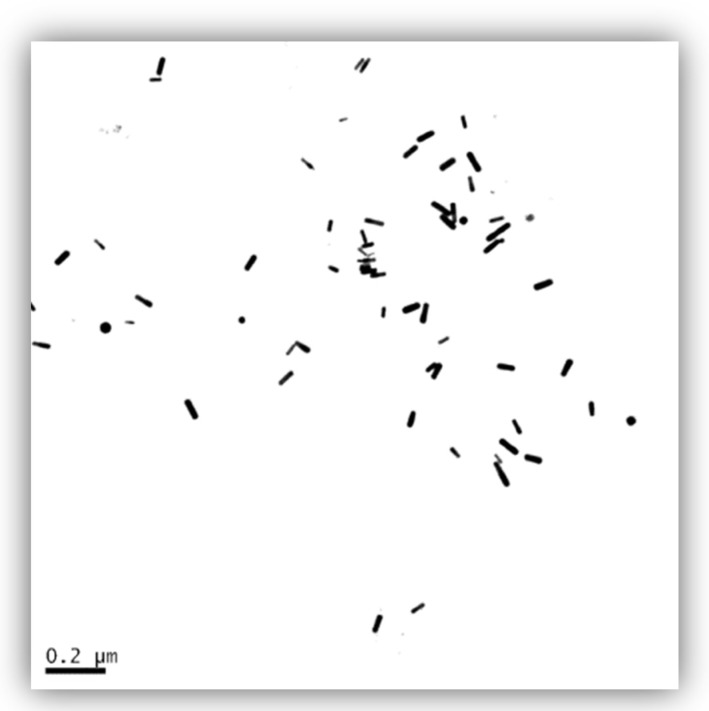
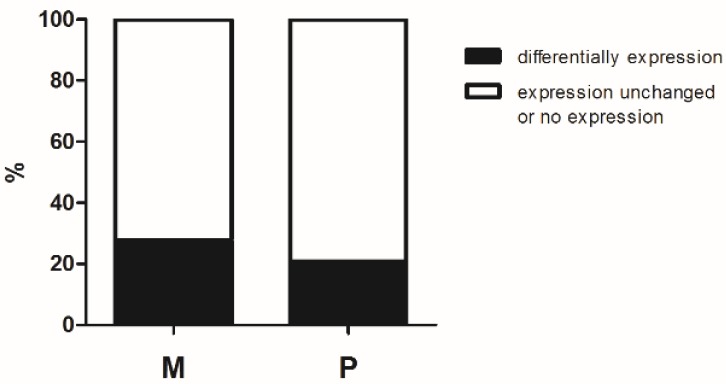
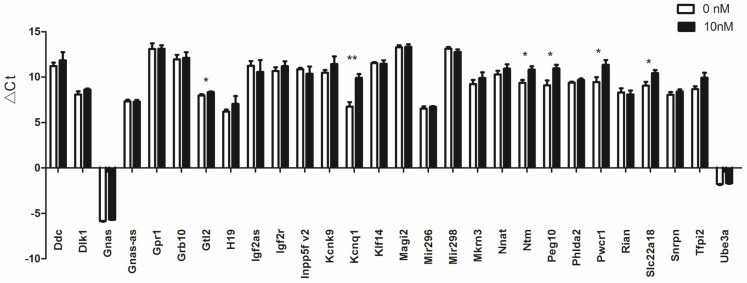
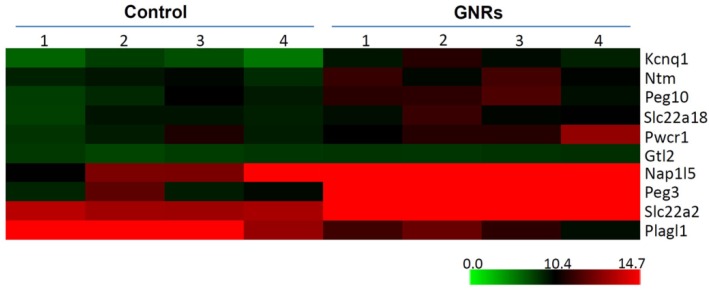
Gold nanorods (GNRs) are among the most commonly used nanomaterials. However, thus far, little is known about their harmful effects on male reproduction. Studies from our laboratory have demonstrated that GNRs could decrease glycine synthesis, membrane permeability, mitochondrial membrane potential and disrupt blood-testis barrier factors in TM-4 Sertoli cells. Imprinted genes play important roles in male reproduction and have been identified as susceptible loci to environmental insults by chemicals because they are functionally haploid. In this original study, we investigated the extent to which imprinted genes become deregulated in TM-4 Sertoli cells when treated with low dose of GNRs. The expression levels of 44 imprinted genes were analyzed by quantitative real-time PCR in TM-4 Sertoli cells after a low dose of (10 nM) GNRs treatment for 24 h. We found significantly diminished expression of Kcnq1, Ntm, Peg10, Slc22a2, Pwcr1, Gtl2, Nap1l5, Peg3 and Slc22a2, while Plagl1 was significantly overexpressed. Additionally, four (Kcnq1, Slc22a18, Pwcr1 and Peg3) of 10 abnormally expressed imprinted genes were found to be located on chromosome 7. However, no significant difference of imprinted miRNA genes was observed between the GNRs treated group and controls. Our study suggested that aberrant expression of imprinted genes might be an underlying mechanism for the GNRs-induced reproductive toxicity in TM-4 Sertoli cells.
金纳米棒(GNRs)是最常用的纳米材料之一。然而,到目前为止,人们对其对雄性生殖的有害影响知之甚少。我们实验室的研究表明,GNRs可降低TM-4支持细胞中的甘氨酸合成、膜通透性、线粒体膜电位,并破坏血睾屏障因子。印记基因在雄性生殖中起重要作用,并且由于其功能单倍体性质,已被确定为对化学物质环境损伤敏感的基因座。在这项原创研究中,我们调查了低剂量GNRs处理后,TM-4支持细胞中印记基因失调的程度。在低剂量(10 nM)GNRs处理24小时后,通过定量实时PCR分析TM-4支持细胞中44个印记基因的表达水平。我们发现Kcnq1、Ntm、Peg10、Slc22a2、Pwcr1、Gtl2、Nap1l5、Peg3和Slc22a2的表达显著降低,而Plagl1显著过表达。此外,在10个异常表达的印记基因中,有4个(Kcnq1、Slc22a18、Pwcr1和Peg3)位于7号染色体上。然而,在GNRs处理组和对照组之间未观察到印记miRNA基因的显著差异。我们的研究表明,印记基因的异常表达可能是GNRs诱导TM-4支持细胞生殖毒性的潜在机制。