Ph Kamerling Cornelis, Ziegenhein Peter, Sterzing Florian, Oelfke Uwe
Joint Department of Physics, The Institute of Cancer Research and The Royal Marsden NHS Foundation Trust, London, SM2 5NG, UK.
Phys Med Biol. 2016 Mar 21;61(6):2471-84. doi: 10.1088/0031-9155/61/6/2471. Epub 2016 Mar 7.
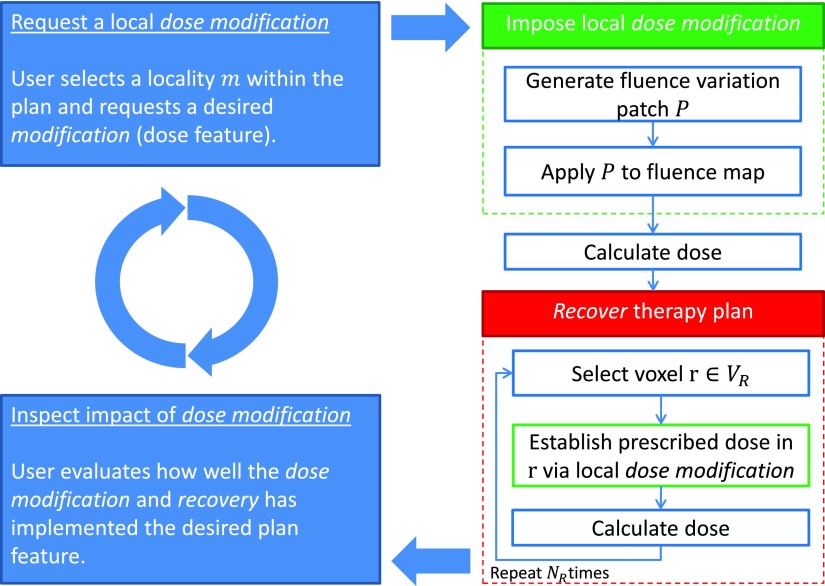
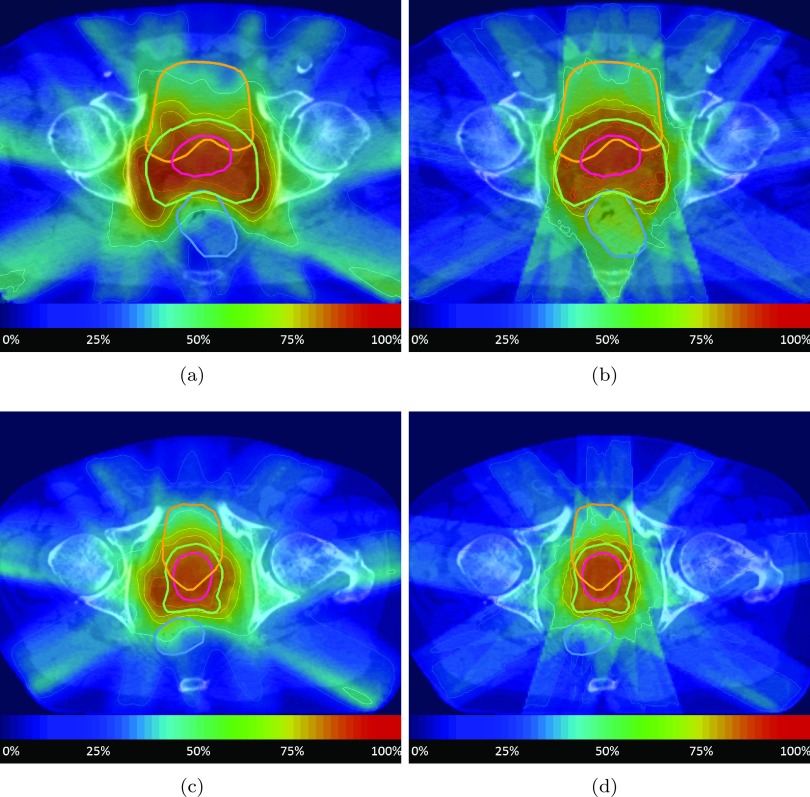
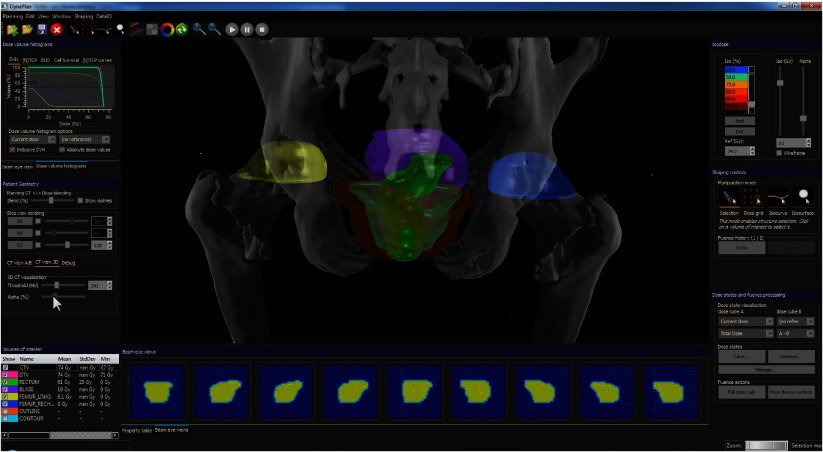
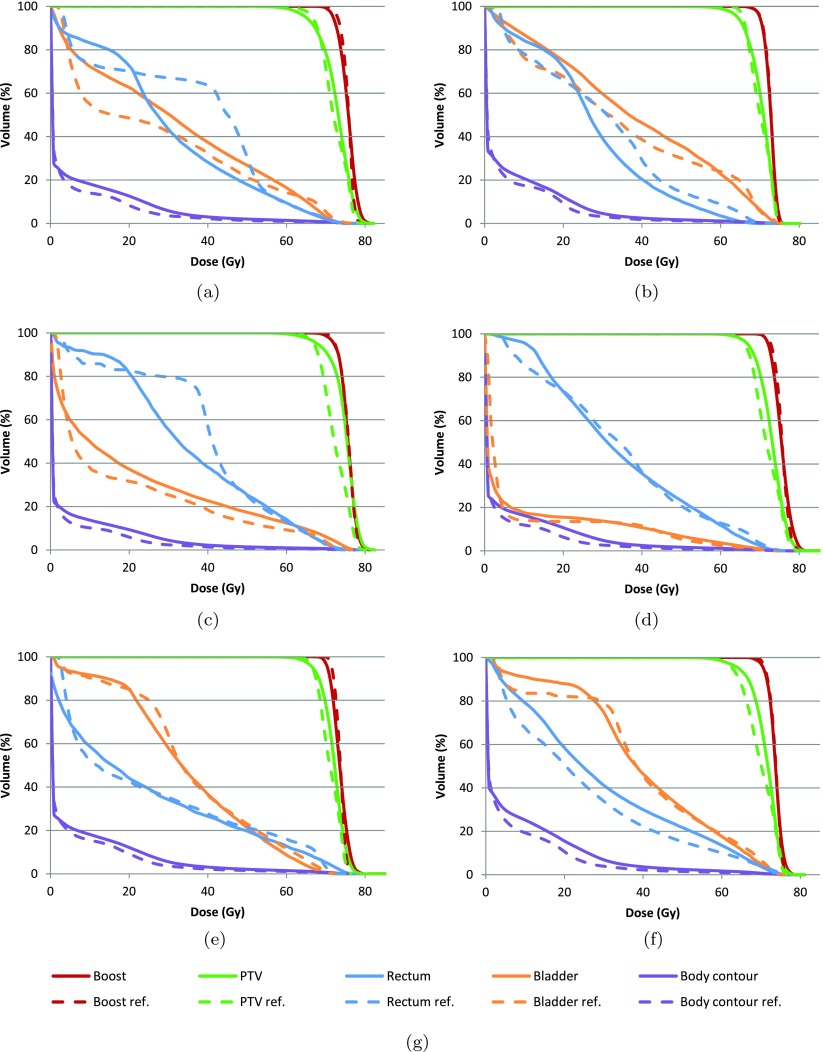
Recently we introduced interactive dose shaping (IDS) as a new IMRT planning strategy. This planning concept is based on a hierarchical sequence of local dose modification and recovery operations. The purpose of this work is to provide a feasibility study for the IDS planning strategy based on a small set of six prostate patients. The IDS planning paradigm aims to perform interactive local dose adaptations of an IMRT plan without compromising already established valuable dose features in real-time. Various IDS tools were developed in our in-house treatment planning software Dynaplan and were utilized to create IMRT treatment plans for six patients with an adeno-carcinoma of the prostate. The sequenced IDS treatment plans were compared to conventionally optimized clinically approved plans (9 beams, co-planar). For each patient, several IDS plans were created, with different trade-offs between organ sparing and target coverage. The reference dose distributions were imported into Dynaplan. For each patient, the IDS treatment plan with a similar or better trade-off between target coverage and OAR sparing was selected for plan evaluation, guided by a physician. For this initial study we were able to generate treatment plans for prostate geometries in 15-45 min. Individual local dose adaptations could be performed in less than one second. The average differences compared to the reference plans were for the mean dose: 0.0 Gy (boost) and 1.2 Gy (PTV), for D98% : -1.1 Gy and for D2% : 1.1 Gy (both target volumes). The dose-volume quality indicators were well below the Quantec constraints. However, we also observed limitations of our currently implemented approach. Most prominent was an increase of the non-tumor integral dose by 16.4% on average, demonstrating that further developments of our planning strategy are required.
最近,我们引入了交互式剂量塑形(IDS)作为一种新的调强放疗(IMRT)计划策略。该计划概念基于局部剂量修改和恢复操作的分层序列。本研究的目的是基于一小群六名前列腺癌患者对IDS计划策略进行可行性研究。IDS计划范式旨在实时进行IMRT计划的交互式局部剂量调整,同时不损害已确立的有价值的剂量特征。我们在内部治疗计划软件Dynaplan中开发了各种IDS工具,并用于为六名前列腺腺癌患者创建IMRT治疗计划。将序列化的IDS治疗计划与传统优化的临床批准计划(9束,共面)进行比较。对于每位患者,创建了几个IDS计划,在器官保护和靶区覆盖之间进行了不同的权衡。将参考剂量分布导入Dynaplan。对于每位患者,在医生的指导下,选择在靶区覆盖和危及器官保护之间具有相似或更好权衡的IDS治疗计划进行计划评估。对于这项初步研究,我们能够在15 - 45分钟内生成前列腺几何形状的治疗计划。单个局部剂量调整可在不到一秒的时间内完成。与参考计划相比的平均差异为:平均剂量:0.0 Gy(推量)和1.2 Gy(计划靶体积),D98%为 - 1.1 Gy,D2%为1.1 Gy(均为靶区体积)。剂量 - 体积质量指标远低于Quantec约束。然而,我们也观察到了当前实施方法的局限性。最突出的是平均非肿瘤积分剂量增加了16.4%,这表明我们的计划策略需要进一步改进。