Tsevegmid Khaliunaa, Neumann Peter, Yañez Orlando
Institute of Bee Health, Vetsuisse Faculty, University of Bern, Bern, Switzerland.
Mongolian State University of Agriculture, Ulaanbaatar, Mongolia.
PLoS One. 2016 Mar 9;11(3):e0151164. doi: 10.1371/journal.pone.0151164. eCollection 2016.
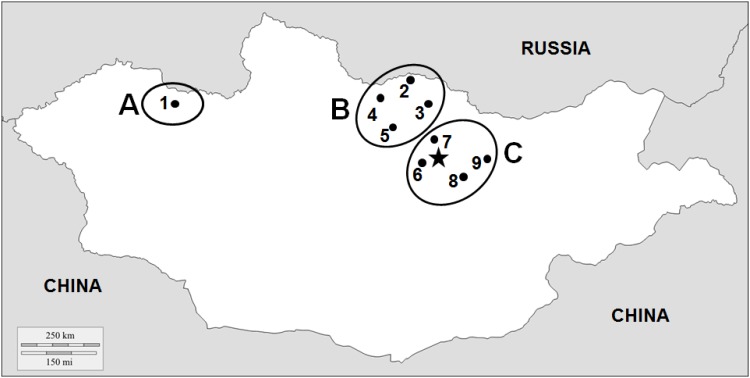
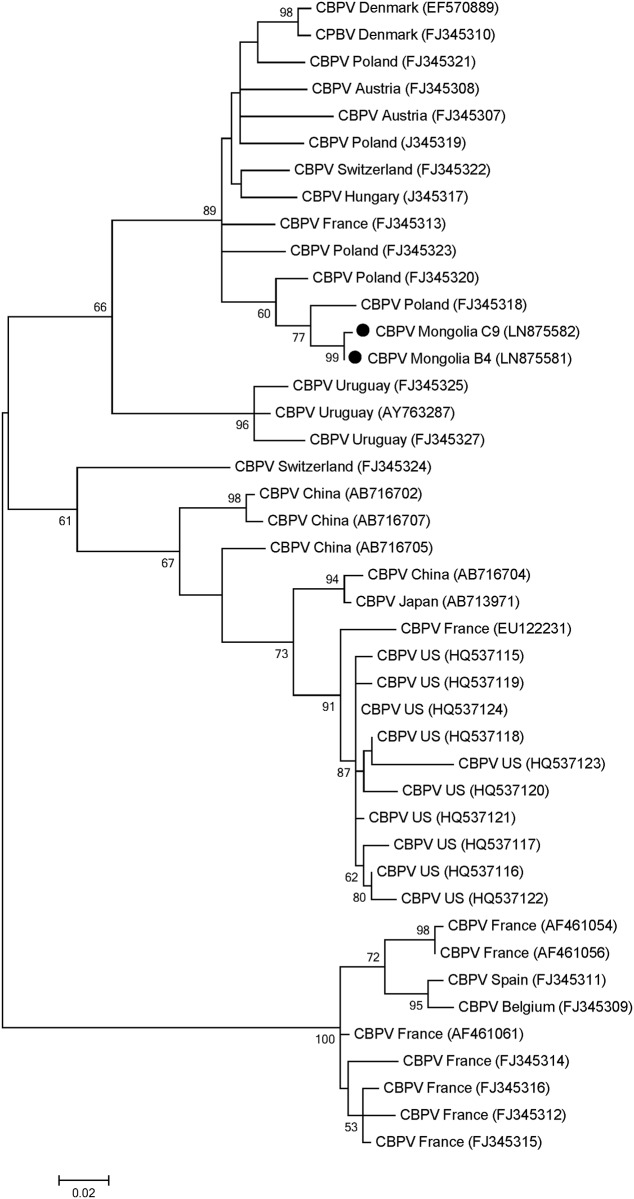
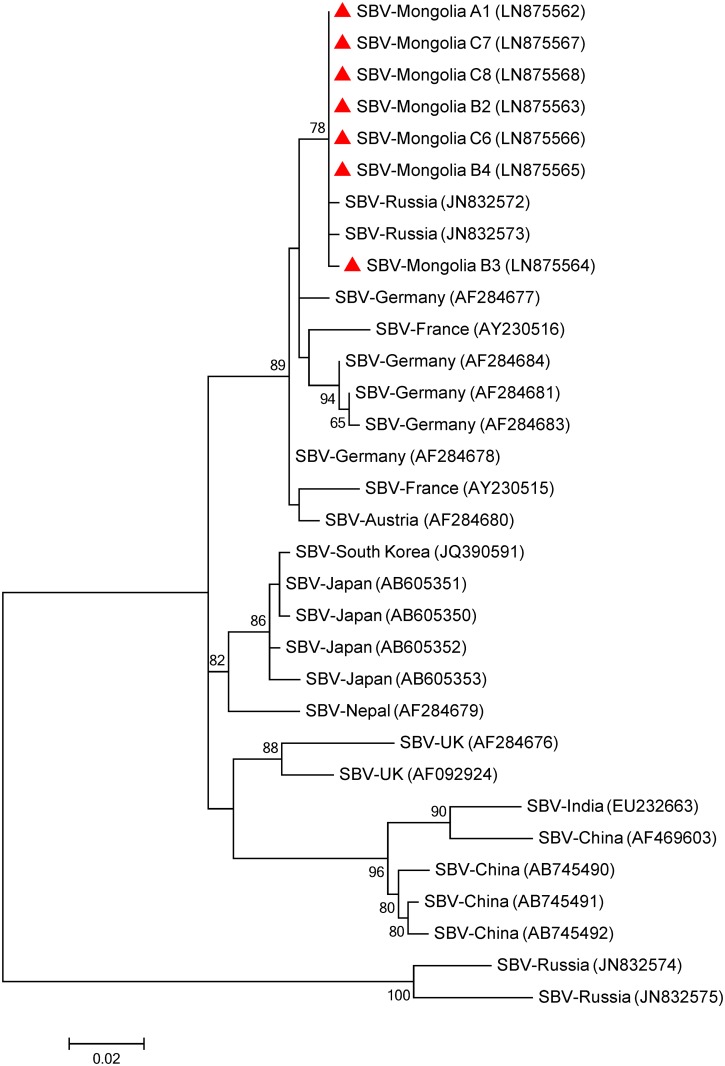
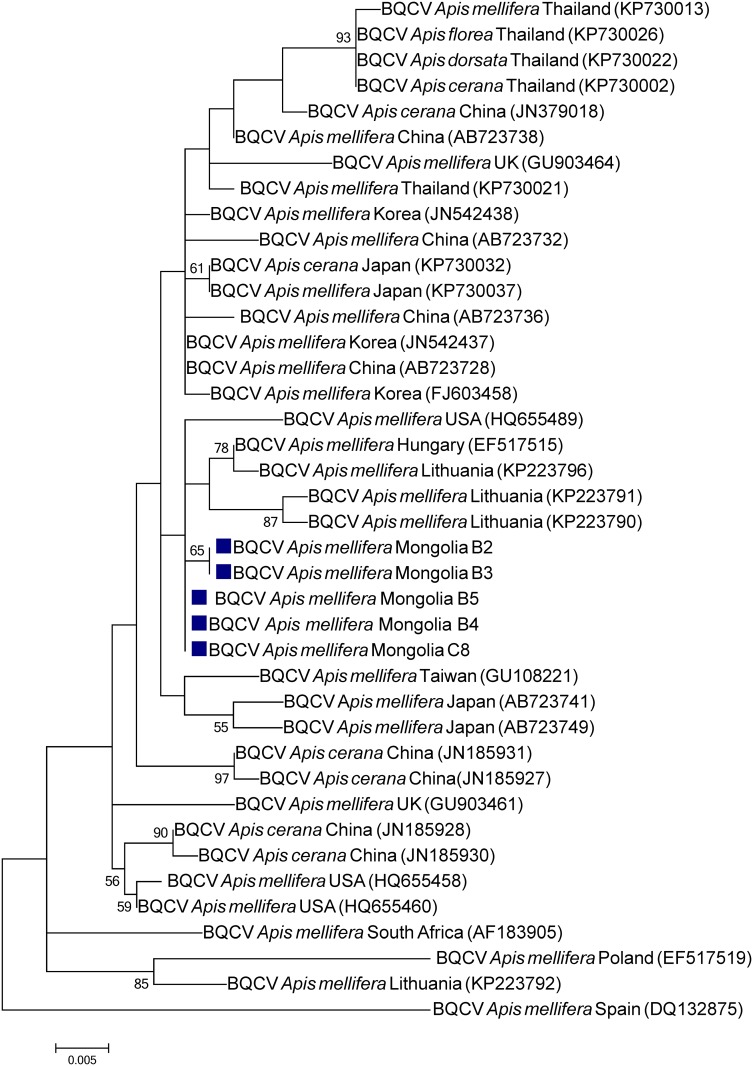
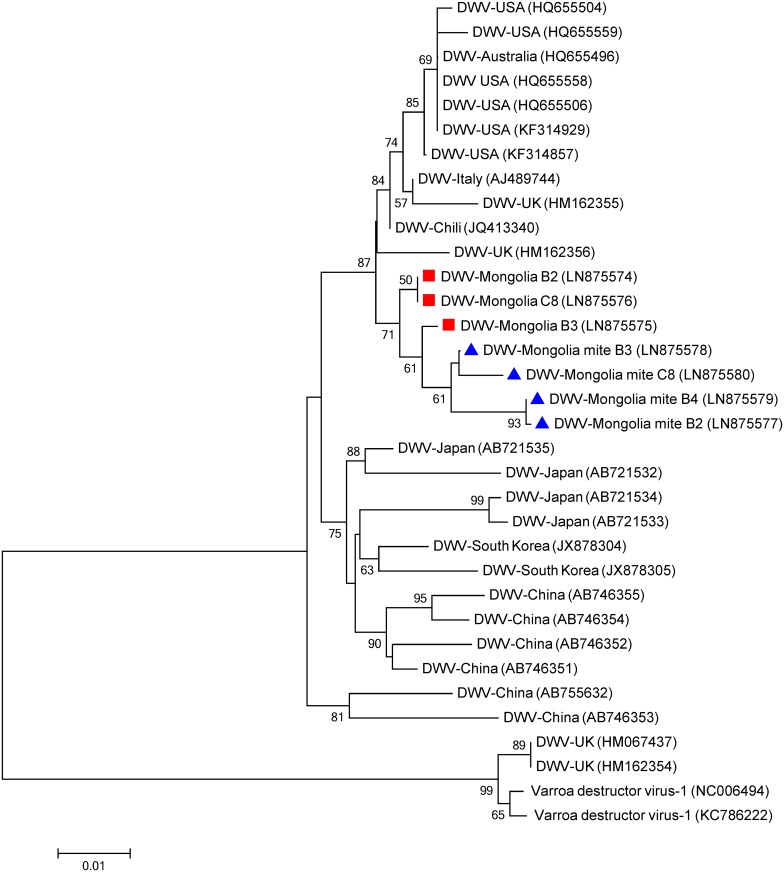
Parasites and pathogens are apparent key factors for the detrimental health of managed European honey bee subspecies, Apis mellifera. Apicultural trade is arguably the main factor for the almost global distribution of most honey bee diseases, thereby increasing chances for multiple infestations/infections of regions, apiaries, colonies and even individual bees. This imposes difficulties to evaluate the effects of pathogens in isolation, thereby creating demand to survey remote areas. Here, we conducted the first comprehensive survey for 14 honey bee pathogens in Mongolia (N = 3 regions, N = 9 locations, N = 151 colonies), where honey bee colonies depend on humans to overwinter. In Mongolia, honey bees, Apis spp., are not native and colonies of European A. mellifera subspecies have been introduced ~60 years ago. Despite the high detection power and large sample size across Mongolian regions with beekeeping, the mite Acarapis woodi, the bacteria Melissococcus plutonius and Paenibacillus larvae, the microsporidian Nosema apis, Acute bee paralysis virus, Kashmir bee virus, Israeli acute paralysis virus and Lake Sinai virus strain 2 were not detected, suggesting that they are either very rare or absent. The mite Varroa destructor, Nosema ceranae and four viruses (Sacbrood virus, Black queen cell virus, Deformed wing virus (DWV) and Chronic bee paralysis virus) were found with different prevalence. Despite the positive correlation between the prevalence of V. destructor mites and DWV, some areas had only mites, but not DWV, which is most likely due to the exceptional isolation of apiaries (up to 600 km). Phylogenetic analyses of the detected viruses reveal their clustering and European origin, thereby supporting the role of trade for pathogen spread and the isolation of Mongolia from South-Asian countries. In conclusion, this survey reveals the distinctive honey bee pathosphere of Mongolia, which offers opportunities for exciting future research.
寄生虫和病原体显然是导致欧洲蜜蜂管理亚种西方蜜蜂健康受损的关键因素。养蜂贸易可以说是大多数蜜蜂疾病几乎全球传播的主要因素,从而增加了地区、蜂场、蜂群甚至个体蜜蜂遭受多重侵染/感染的几率。这给单独评估病原体的影响带来了困难,因此产生了对偏远地区进行调查的需求。在此,我们首次对蒙古的14种蜜蜂病原体进行了全面调查(N = 3个地区,N = 9个地点,N = 151个蜂群),在蒙古,蜂群依靠人类越冬。在蒙古,蜜蜂属的蜜蜂并非本土物种,欧洲西方蜜蜂亚种的蜂群大约在60年前被引入。尽管在蒙古有养蜂的地区检测能力强且样本量大,但未检测到武氏蜂盾螨、蜂房球菌、幼虫芽孢杆菌、微孢子虫蜜蜂微孢子虫、急性蜜蜂麻痹病毒、克什米尔蜜蜂病毒、以色列急性麻痹病毒和西奈湖病毒2型,这表明它们要么非常罕见,要么不存在。发现狄斯瓦螨、东方蜜蜂微孢子虫和四种病毒(囊状幼虫病毒、黑蜂王台病毒、残翅病毒和慢性蜜蜂麻痹病毒)的流行率各不相同。尽管狄斯瓦螨的流行率与残翅病毒呈正相关,但有些地区只有螨虫,没有残翅病毒,这很可能是由于蜂场之间的特殊隔离(相距可达600公里)。对检测到的病毒进行的系统发育分析揭示了它们的聚类情况和欧洲起源,从而支持了贸易在病原体传播中的作用以及蒙古与南亚国家的隔离。总之,这项调查揭示了蒙古独特的蜜蜂病害圈,为未来令人兴奋的研究提供了机会。