Bisby James A, Horner Aidan J, Hørlyck Lone D, Burgess Neil
UCL Institute of Cognitive Neuroscience, University College London, London, WC1N 3AZ UCL Institute of Neurology, University College London, London, WC1N 3BG, UK
UCL Institute of Cognitive Neuroscience, University College London, London, WC1N 3AZ UCL Institute of Neurology, University College London, London, WC1N 3BG, UK.
Soc Cogn Affect Neurosci. 2016 Jun;11(6):981-90. doi: 10.1093/scan/nsw028. Epub 2016 Mar 12.
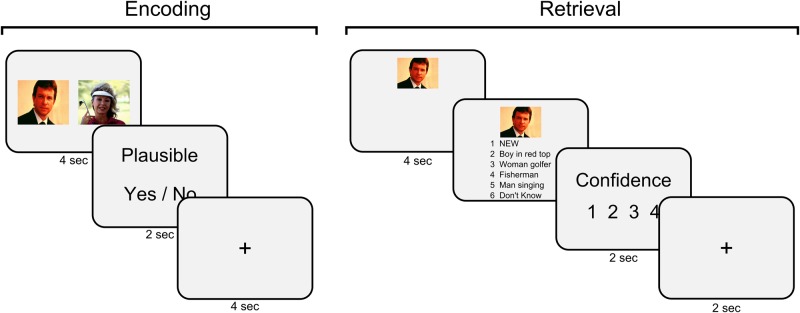
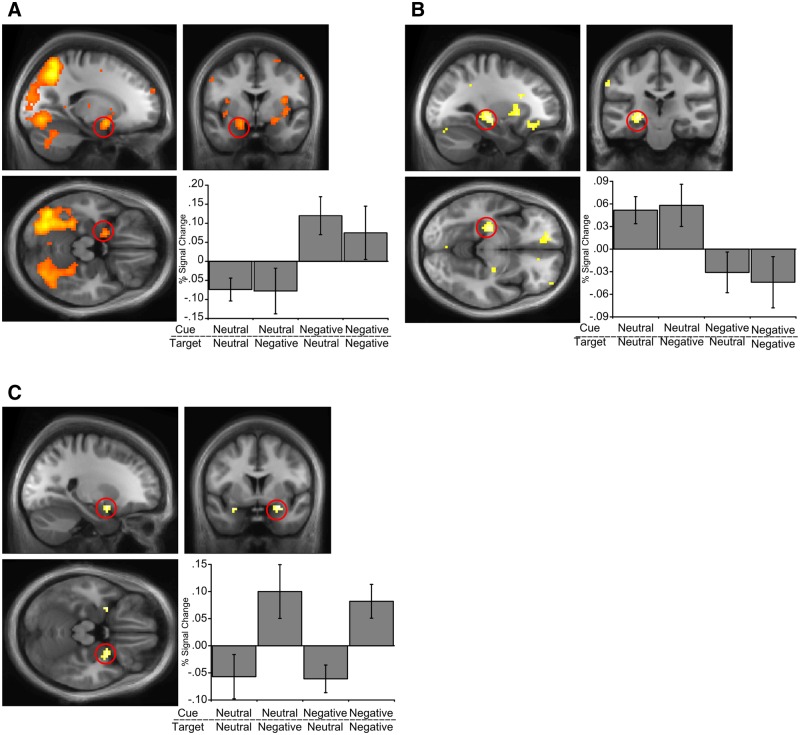
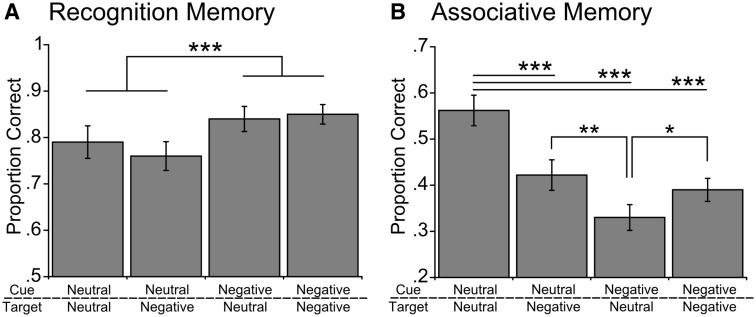
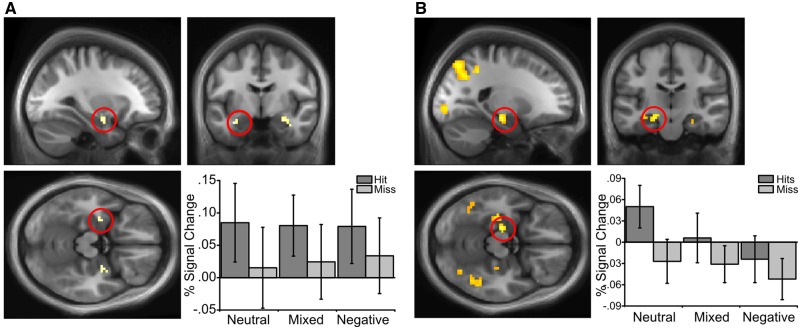
Although negative emotion can strengthen memory of an event it can also result in memory disturbances, as in post-traumatic stress disorder (PTSD). We examined the effects of negative item content on amygdalar and hippocampal function in memory for the items themselves and for the associations between them. During fMRI, we examined encoding and retrieval of paired associates made up of all four combinations of neutral and negative images. At test, participants were cued with an image and, if recognised, had to retrieve the associated (target) image. The presence of negative images increased item memory but reduced associative memory. At encoding, subsequent item recognition correlated with amygdala activity, while subsequent associative memory correlated with hippocampal activity. Hippocampal activity was reduced by the presence of negative images, during encoding and correct associative retrieval. In contrast, amygdala activity increased for correctly retrieved negative images, even when cued by a neutral image. Our findings support a dual representation account, whereby negative emotion up-regulates the amygdala to strengthen item memory but down-regulates the hippocampus to weaken associative representations. These results have implications for the development and treatment of clinical disorders in which diminished associations between emotional stimuli and their context contribute to negative symptoms, as in PTSD.
尽管负面情绪能够增强对某一事件的记忆,但它也可能导致记忆障碍,比如创伤后应激障碍(PTSD)。我们研究了负面项目内容对杏仁核和海马体功能的影响,这些功能涉及项目本身的记忆以及它们之间的关联记忆。在功能磁共振成像(fMRI)过程中,我们研究了由中性和负面图像的所有四种组合构成的配对联想的编码和检索。在测试时,向参与者呈现一幅图像作为提示,如果他们认出该图像,就必须检索出相关联的(目标)图像。负面图像的存在增加了项目记忆,但减少了联想记忆。在编码阶段,后续的项目识别与杏仁核活动相关,而后续的联想记忆与海马体活动相关。在编码和正确的联想检索过程中,负面图像的存在会降低海马体的活动。相比之下,即使是由中性图像提示,对于正确检索出的负面图像,杏仁核活动也会增加。我们的研究结果支持一种双重表征理论,即负面情绪上调杏仁核以增强项目记忆,但下调海马体以削弱联想表征。这些结果对于临床疾病的发展和治疗具有启示意义,在这些疾病中,情绪刺激与其背景之间关联的减少会导致负面症状,如在创伤后应激障碍中。