Andermann Anne, Pang Tikki, Newton John N, Davis Adrian, Panisset Ulysses
Department of Family Medicine and Department of Epidemiology, Biostatistics and Occupational Health, Faculty of Medicine, McGill University, Montreal, Canada.
Lee Kuan Yew School of Public Policy, National University of Singapore, Singapore, Singapore.
Health Res Policy Syst. 2016 Mar 14;14:17. doi: 10.1186/s12961-016-0086-3.
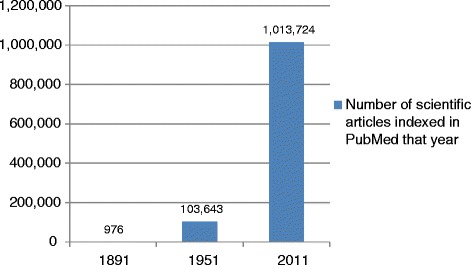
Even the highest quality evidence will have little impact unless it is incorporated into decision-making for health. It is therefore critical to overcome the many barriers to using evidence in decision-making, including (1) missing the window of opportunity, (2) knowledge gaps and uncertainty, (3) controversy, irrelevant and conflicting evidence, as well as (4) vested interests and conflicts of interest. While this is certainly not a comprehensive list, it covers a number of main themes discussed in the knowledge translation literature on this topic, and better understanding these barriers can help readers of the evidence to be more savvy knowledge users and help researchers overcome challenges to getting their evidence into practice. Thus, the first step in being able to use research evidence for improving population health is ensuring that the evidence is available at the right time and in the right format and language so that knowledge users can take the evidence into consideration alongside a multitude of other factors that also influence decision-making. The sheer volume of scientific publications makes it difficult to find the evidence that can actually help inform decisions for health. Policymakers, especially in low- and middle-income countries, require context-specific evidence to ensure local relevance. Knowledge synthesis and dissemination of policy-relevant local evidence is important, but it is still not enough. There are times when the interpretation of the evidence leads to various controversies and disagreements, which act as barriers to the uptake of evidence. Research evidence can also be influenced and misused for various aims and agendas. It is therefore important to ensure that any new evidence comes from reliable sources and is interpreted in light of the overall body of scientific literature. It is not enough to simply produce evidence, nor even to synthesize and package evidence into a more user-friendly format. Particularly at the policy level, political savvy is also needed to ensure that vested interests do not undermine decisions that can impact the health of individuals and populations.
即便最高质量的证据,如果不被纳入卫生决策过程,也将收效甚微。因此,克服在决策中使用证据的诸多障碍至关重要,这些障碍包括:(1)错过机会之窗;(2)知识差距与不确定性;(3)争议、不相关及相互冲突的证据;以及(4)既得利益和利益冲突。虽然这肯定不是一份详尽无遗的清单,但它涵盖了关于这一主题的知识转化文献中讨论的一些主要议题,更好地理解这些障碍有助于证据的读者成为更精明的知识使用者,并帮助研究人员克服将其证据应用于实践的挑战。因此,能够利用研究证据改善人群健康的第一步是确保证据能在正确的时间、以正确的格式和语言提供,以便知识使用者在考虑众多其他影响决策的因素时能够兼顾该证据。科学出版物数量庞大,难以找到真正有助于为卫生决策提供信息的证据。政策制定者,尤其是低收入和中等收入国家的政策制定者,需要针对具体情况的证据以确保与当地相关。对与政策相关的当地证据进行知识综合和传播很重要,但仍不够。有时对证据的解读会引发各种争议和分歧,这成为采用证据的障碍。研究证据也可能因各种目的和议程而受到影响和滥用。因此,重要的是要确保任何新证据都来自可靠来源,并根据科学文献的整体情况进行解读。仅仅产生证据,甚至将证据综合并包装成更便于用户使用的格式是不够的。特别是在政策层面,还需要政治智慧来确保既得利益不会破坏可能影响个人和人群健康的决策。