Casey Joan A, James Peter, Rudolph Kara E, Wu Chih-Da, Schwartz Brian S
Robert Wood Johnson Foundation Health and Society Scholars Program, UC San Francisco and UC Berkeley, CA 94704, USA.
Departments of Epidemiology and Environmental Health, Harvard TH Chan School of Public Health, Boston, MA 02215, USA.
Int J Environ Res Public Health. 2016 Mar 11;13(3):311. doi: 10.3390/ijerph13030311.
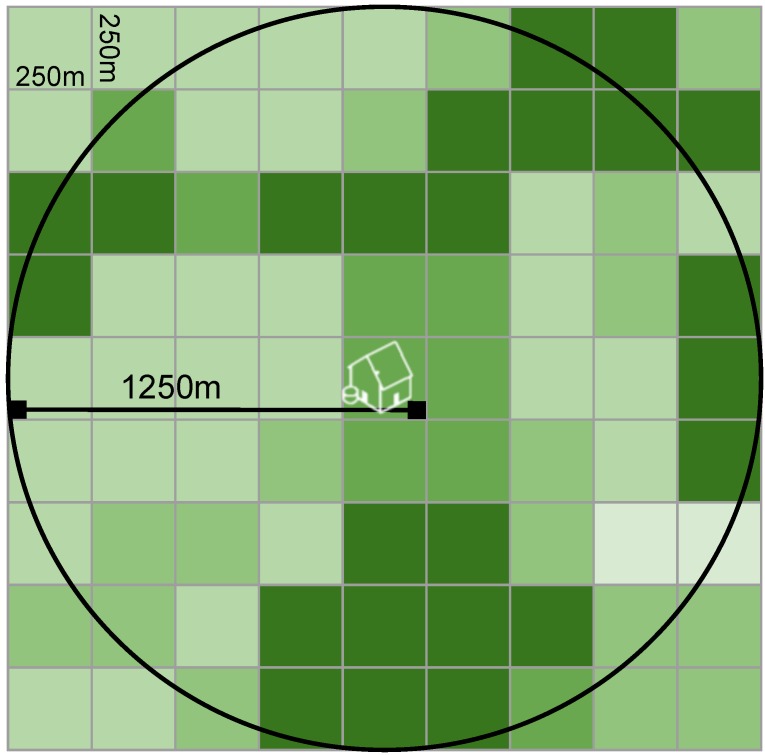
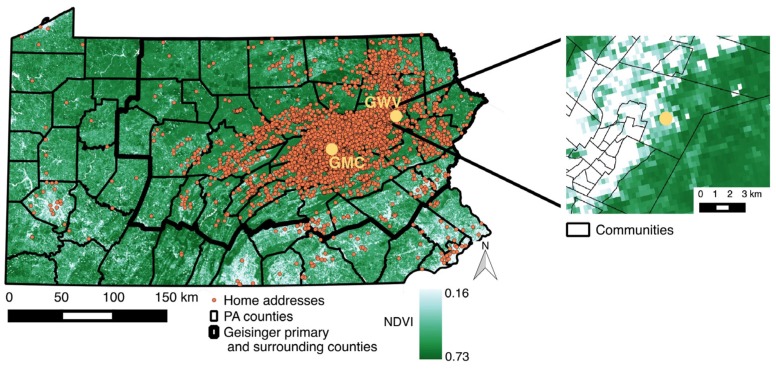
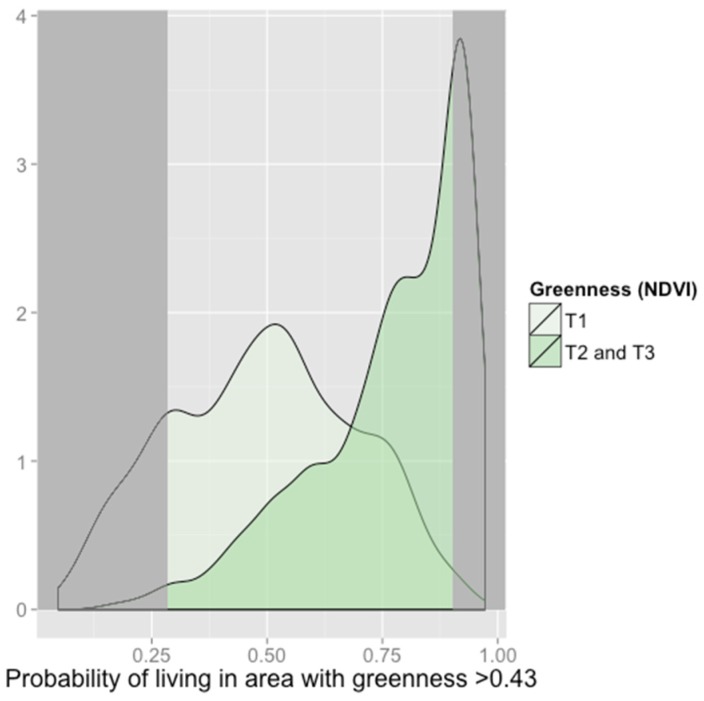
Living in communities with more vegetation during pregnancy has been associated with higher birth weights, but fewer studies have evaluated other birth outcomes, and only one has been conducted in the Eastern United States, in regions with a broad range, including high levels, of greenness. We evaluated associations between prenatal residential greenness and birth outcomes (term birth weight, small for gestational age, preterm birth, and low 5 min Apgar score) across a range of community types using electronic health record data from 2006-2013 from the Geisinger Health System in Pennsylvania. We assigned greenness based on mother's geocoded address using the normalized difference vegetation index from satellite imagery. We used propensity scores to restrict the study population to comparable groups among those living in green vs. less-green areas. Analyses were adjusted for demographic, clinical, and environmental covariates, and stratified by community type (city, borough, and township). In cities, higher greenness (tertiles 2-3 vs. 1) was protective for both preterm (OR = 0.78, 95% CI: 0.61-0.99) and small for gestational age birth (OR = 0.73, 95% CI: 0.58-0.97), but not birth weight or Apgar score. We did not observe associations between greenness and birth outcomes in adjusted models in boroughs or townships. These results add to the evidence that greener cities might be healthier cities.
孕期生活在植被较多的社区与较高的出生体重有关,但评估其他出生结局的研究较少,且仅有一项研究在美国东部进行,该地区的绿化程度范围广泛,包括高水平绿化地区。我们使用宾夕法尼亚州盖辛格医疗系统2006 - 2013年的电子健康记录数据,评估了一系列社区类型中产前居住绿化程度与出生结局(足月出生体重、小于胎龄儿、早产和5分钟阿氏评分低)之间的关联。我们使用卫星图像的归一化差异植被指数,根据母亲的地理编码地址来确定绿化程度。我们使用倾向得分将研究人群限制在居住在绿化程度高与绿化程度低地区的可比组中。分析对人口统计学、临床和环境协变量进行了调整,并按社区类型(城市、自治市镇和乡镇)进行了分层。在城市中,较高的绿化程度(第2 - 3三分位数与第1三分位数相比)对早产(比值比=0.78,95%置信区间:0.61 - 0.99)和小于胎龄儿出生(比值比=0.73,95%置信区间:0.58 - 0.97)均有保护作用,但对出生体重或阿氏评分无影响。在自治市镇或乡镇的调整模型中,我们未观察到绿化程度与出生结局之间的关联。这些结果进一步证明,绿化程度更高的城市可能是更健康的城市。