Chamari K, Briki W, Farooq A, Patrick T, Belfekih T, Herrera C P
Athletes Health and Performance Research Center (AHP), Aspetar, Qatar Orthopaedic and Sports Medicine Hospital, Doha, Qatar.
University of French West Indies and Guyana, Department of Sport Sciences, (ACTES) Laboratory, Pointe-à-Pitre, Guadeloupe, France.
Biol Sport. 2016 Mar;33(1):49-56. doi: 10.5604/20831862.1185888. Epub 2015 Dec 30.
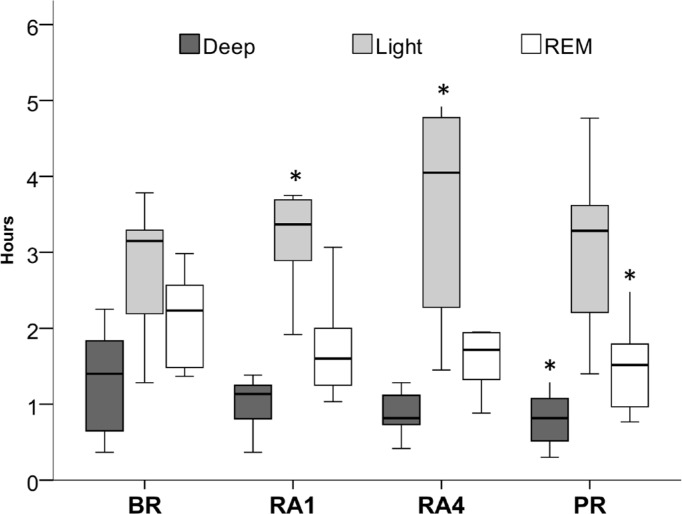
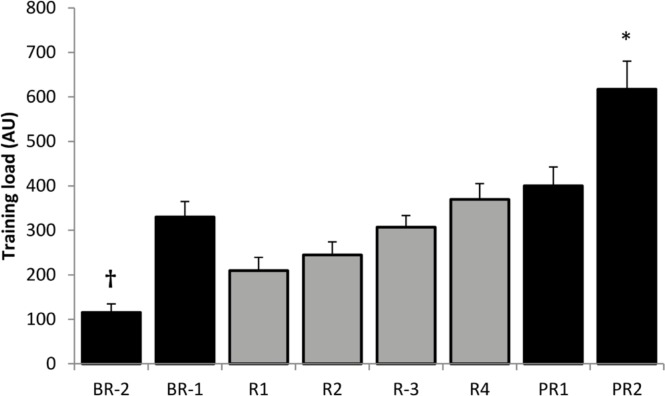
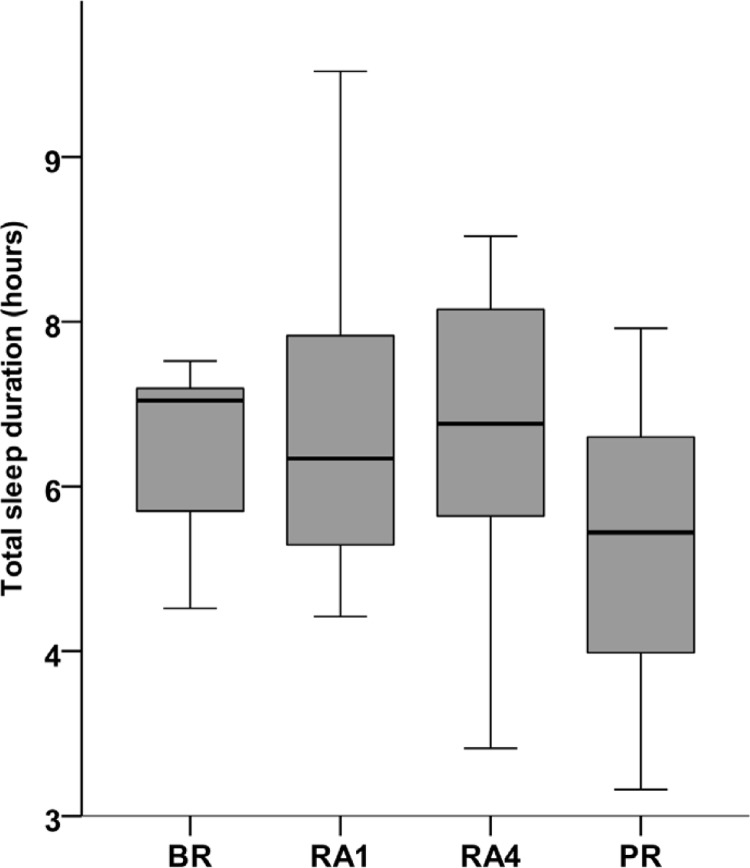
This study assessed selected measures of cognitive function in trained cyclists who observed daylight fasting during Ramadan. Eleven cyclists volunteered to participate (age: 21.6±4.8 years, VO2max: 57.7±5.6 ml kg(-1)·min(-1)) and were followed for 2 months. Cognitive function (Cambridge Neuropsychological Test Automated Battery (CANTAB), Reaction Time index (RTI) and Rapid Visual Information Processing (RVP) tests) and sleep architecture (ambulatory EEG) were assessed: before Ramadan (BR), in the 1st week (RA1) and 4th week of Ramadan (RA4), and 2 weeks post-Ramadan (PR). Both cognitive tests were performed twice per day: before and after Ramadan at 8-10 a.m. and 4-6 p.m., and during Ramadan at 4-6 p.m. and 0-2 a.m., respectively. Training load (TL) by the rating of perceived exertion (RPE) method and wellness (Hooper index) were measured daily. If the TL increased over the study period, this variable was stable during Ramadan. The perceived fatigue and delayed onset muscle soreness (DOMS) increased at RA4. Sleep patterns and architecture showed clear disturbances, with significant increases in the number of awakenings and light sleep durations during Ramadan (RA1 and RA4), together with decreased durations of deep and REM sleep stages at PR. RTI (simple and multiple reaction index) reaction and movement times did not vary over the study period. The RVP test showed reduced false alarms during Ramadan, suggesting reduced impulsivity. Overall accuracy significantly increased at RA1, RA4 and PR compared to baseline. At RA4, the accuracy was higher at 0-2 a.m. compared to 4-6 p.m. Despite the observed disturbances in sleep architecture, Ramadan fasting did not negatively impact the cognitive performance of trained cyclists from the Middle East.
本研究评估了在斋月期间进行日光禁食的训练有素的自行车运动员的认知功能相关指标。11名自行车运动员自愿参与(年龄:21.6±4.8岁,最大摄氧量:57.7±5.6 ml·kg⁻¹·min⁻¹),并接受了2个月的跟踪。评估了认知功能(剑桥神经心理测试自动成套系统(CANTAB)、反应时间指数(RTI)和快速视觉信息处理(RVP)测试)以及睡眠结构(动态脑电图):在斋月前(BR)、斋月第1周(RA1)和第4周(RA4)以及斋月后2周(PR)。两项认知测试均每天进行两次:斋月前和斋月期间分别于上午8 - 10点和下午4 - 6点,以及斋月期间于下午4 - 6点和凌晨0 - 2点进行。每天通过主观用力感觉(RPE)方法测量训练负荷(TL)和健康状况(胡珀指数)。如果TL在研究期间增加,该变量在斋月期间保持稳定。主观疲劳和延迟性肌肉酸痛(DOMS)在RA4时增加。睡眠模式和结构出现明显紊乱,斋月期间(RA1和RA4)觉醒次数和浅睡眠时长显著增加,同时PR时深睡眠和快速眼动睡眠阶段的时长减少。RTI(简单和多重反应指数)反应和动作时间在研究期间没有变化。RVP测试显示斋月期间误报减少,表明冲动性降低。与基线相比,RA1、RA4和PR时总体准确性显著提高。在RA4时,凌晨0 - 2点的准确性高于下午4 - 6点。尽管观察到睡眠结构存在紊乱,但斋月禁食并未对中东地区训练有素的自行车运动员的认知表现产生负面影响。