Hong HaiJie, He CaiLong, Zhu SiYuan, Zhang YanHui, Wang XiaoQian, She FeiFei, Chen YanLing
Department of Hepatobiliary Surgery and Fujian Institute of Hepatobiliary Surgery, Fujian Medical University Union Hospital, 29 Xinquan Road, Fuzhou, 350001, China.
Key Laboratory of Ministry of Education for Gastrointestinal Cancer, Fujian Medical University, 1 Xueyuan Road, Minhou, Fuzhou, 350108, China.
J Exp Clin Cancer Res. 2016 Mar 24;35:51. doi: 10.1186/s13046-016-0318-y.
CC-chemokine receptor 7 (CCR7), which plays an important role in cell directional movement, is highly expressed in various cancers and positively related to lymph node metastasis. The inflammatory cytokine tumour necrosis factor (TNF)-α promotes tumour progression and lymph node metastasis in gallbladder cancer (GBC). However, the expression of CCR7 in GBC is unclear, and its role in the TNF-α-induced lymphatic metastasis of GBC requires further research.
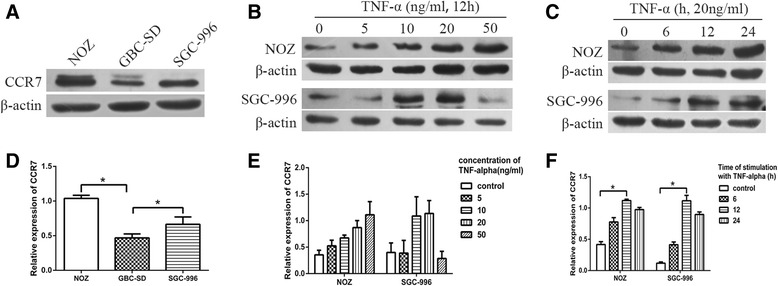
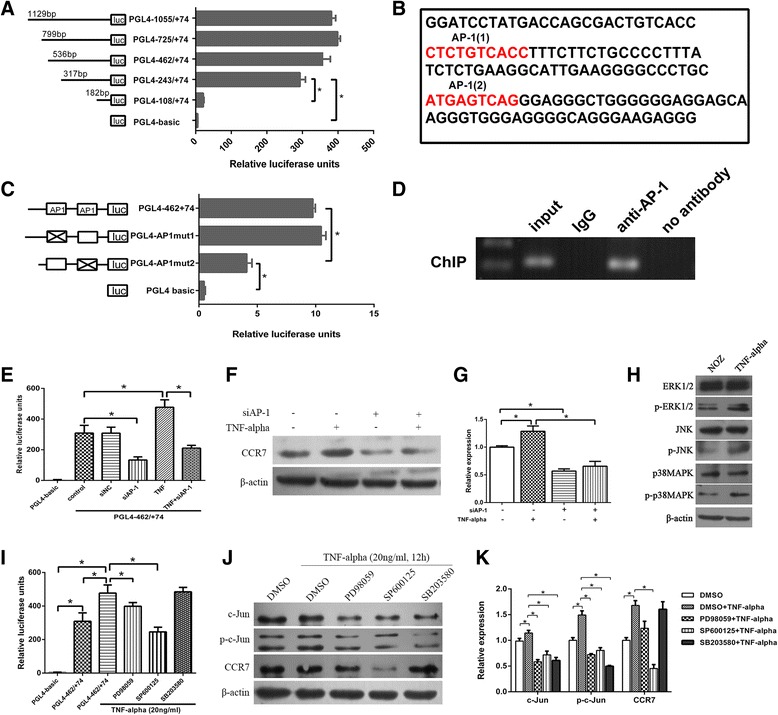
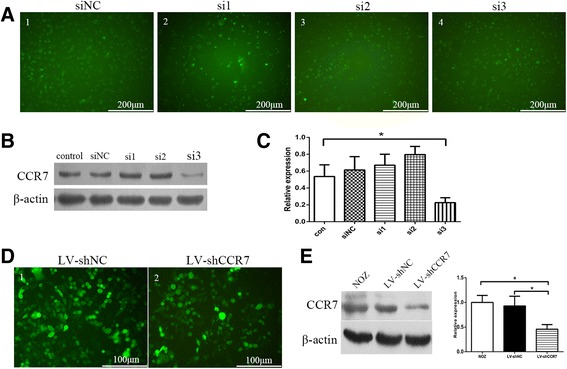
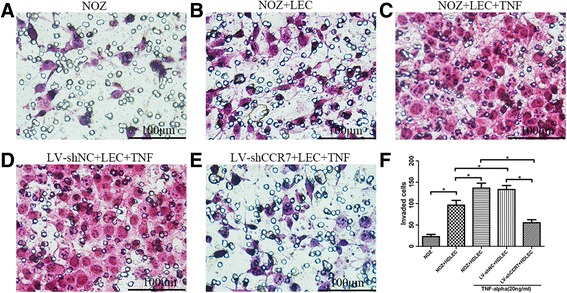
The expression of CCR7 in clinical samples was detected by immunohistochemistry, and the relationship between CCR7 and clinicopathological factors or the TNF-α level of the bile was analyzed. After treatment with various concentrations of TNF-α, CCR7 expression in GBC cell lines was measured by Western blotting. The relative luciferase reporter assay, site-directed mutagenesis and chromatin immunoprecipitation were used to analyze the promoter activity and transcriptional regulation of CCR7. MAPKs inhibitors were used to explore the upstream signalling molecules of AP-1. We established a NOZ cell line stably expressing lentiviral CCR7 shRNA that effectively silenced the expression of CCR7, and to determine the role of TNF-α - CCR7 axis in the migration of GBC cells to the lymphatic system by transwell assays and animal experiments.
CCR7 was highly expressed in GBC samples. Higher expression of CCR7 was associated with American Joint Committee on Cancer (AJCC) staging and lymph node metastasis. Moreover, we found that CCR7 expression in GBC tissue was positively correlated with the levels of TNF-α in the bile, and that TNF-α enhanced the promoter activity and protein expression of CCR7 through the "ERK1/2-AP-1" and "JNK-AP-1" pathways. Finally, we revealed that TNF-α could promote GBC cell migration to lymphatic endothelial cells or lymph nodes through upregulation of CCR7 in vitro and in vivo.
Our study suggests that CCR7 is highly expressed in GBC, and mediates the TNF-α-induced lymphatic metastasis of GBC through the "TNF-α - ERK1/2 - AP-1 - CCR7" and "TNF-α - JNK - AP-1 - CCR7" pathways.
C-C趋化因子受体7(CCR7)在细胞定向运动中起重要作用,在多种癌症中高表达,且与淋巴结转移呈正相关。炎性细胞因子肿瘤坏死因子(TNF)-α促进胆囊癌(GBC)的肿瘤进展和淋巴结转移。然而,CCR7在GBC中的表达尚不清楚,其在TNF-α诱导的GBC淋巴转移中的作用有待进一步研究。
采用免疫组织化学法检测临床样本中CCR7的表达,并分析CCR7与临床病理因素或胆汁中TNF-α水平的关系。用不同浓度的TNF-α处理后,通过蛋白质印迹法检测GBC细胞系中CCR7的表达。采用相对荧光素酶报告基因检测、定点诱变和染色质免疫沉淀法分析CCR7的启动子活性和转录调控。使用丝裂原活化蛋白激酶(MAPKs)抑制剂探索AP-1的上游信号分子。我们建立了稳定表达慢病毒CCR7短发夹RNA(shRNA)的NOZ细胞系,该细胞系有效沉默了CCR7的表达,并通过Transwell实验和动物实验确定TNF-α-CCR7轴在GBC细胞向淋巴系统迁移中的作用。
CCR7在GBC样本中高表达。CCR7的高表达与美国癌症联合委员会(AJCC)分期和淋巴结转移相关。此外,我们发现GBC组织中CCR7的表达与胆汁中TNF-α的水平呈正相关,且TNF-α通过“ERK1/2-AP-1”和“JNK-AP-1”途径增强CCR7的启动子活性和蛋白表达。最后,我们揭示TNF-α可通过体外和体内上调CCR7促进GBC细胞向淋巴管内皮细胞或淋巴结迁移。
我们的研究表明,CCR7在GBC中高表达,并通过“TNF-α-ERK1/2-AP-1-CCR7”和“TNF-α-JNK-AP-1-CCR7”途径介导TNF-α诱导GBC的淋巴转移。