Hanson Joey A, Kapron Ashley L, Swenson Kathryn M, Maak Travis G, Peters Christopher L, Aoki Stephen K
1. Department of Orthopaedics, University of Utah, 590 Wakara Way, Salt Lake City, UT 84108, USA.
J Hip Preserv Surg. 2015 Jun 13;2(3):280-6. doi: 10.1093/jhps/hnv041. eCollection 2015 Oct.
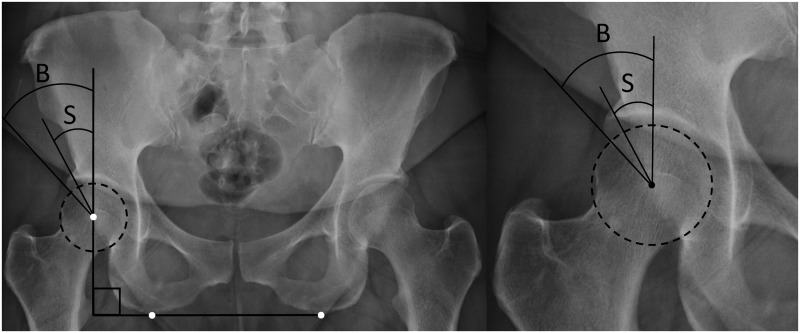
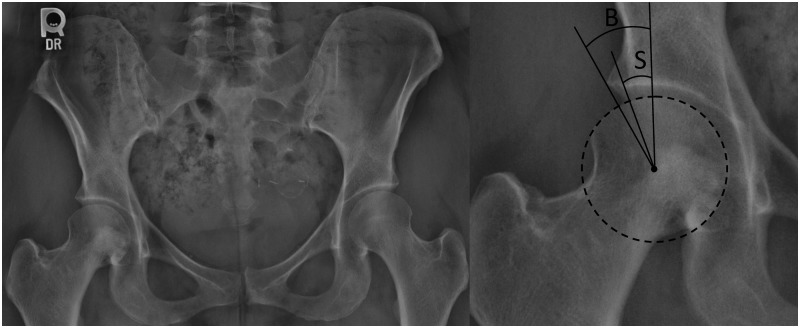
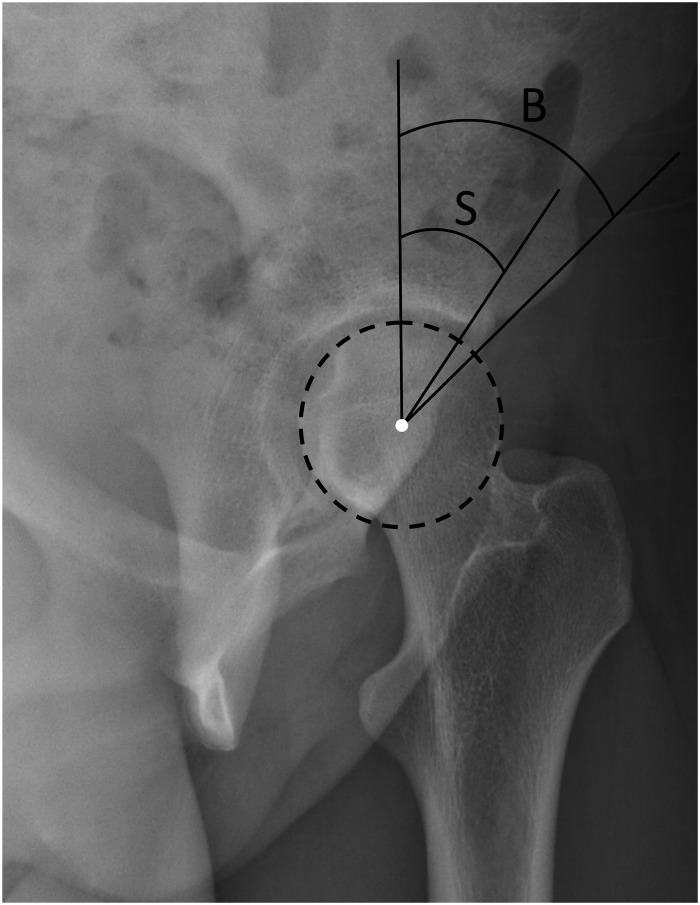
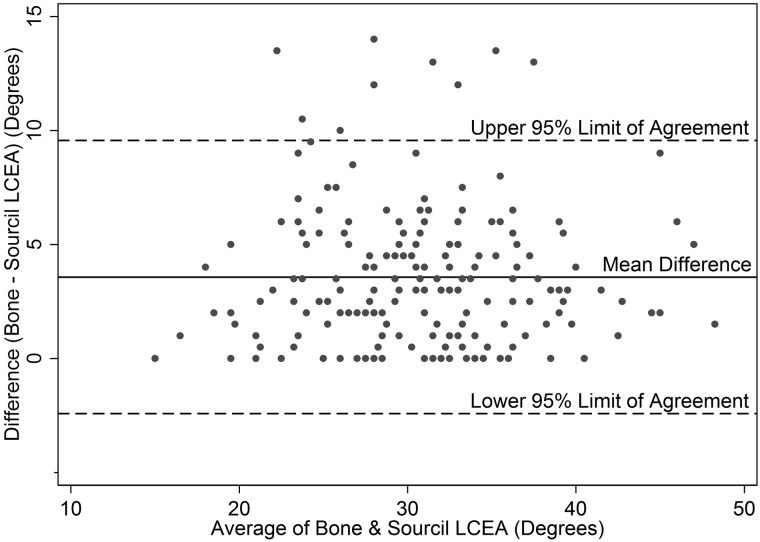
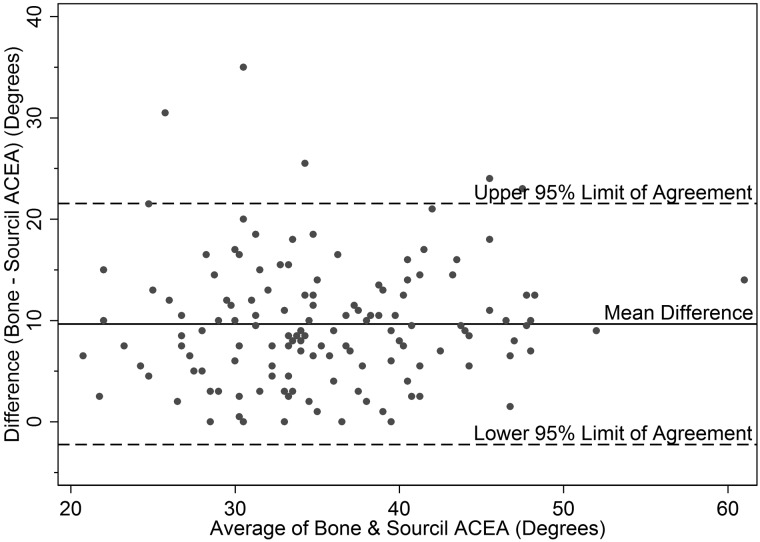
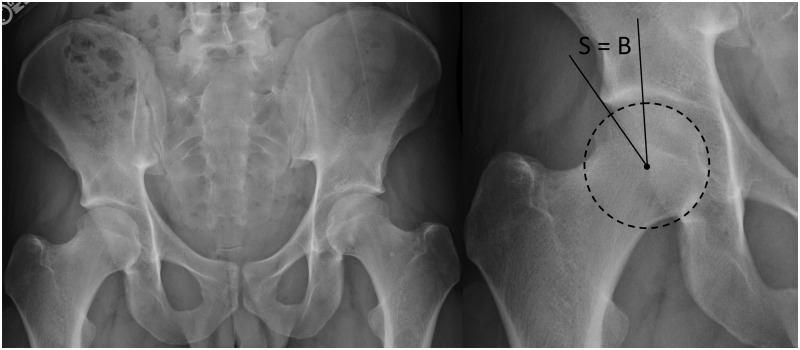
The lateral center edge angle (LCEA) and the anterior center edge angle (ACEA) are commonly used to assess acetabular coverage of the femoral head. There are two distinct methods found in the literature to obtain these angles, specifically, measuring to the most lateral bone edge versus the sclerotic lateral sourcil edge. A difference between these two methods may contribute to inconsistent estimates of acetabular coverage, and potentially lead to clinical misdiagnosis and treatment mismanagement. The objectives of this study were to quantify the difference between bone edge and sourcil edge measurements and to determine how the difference influences the classification of acetabular coverage in adult patients with suspected hip pathomorphology. Two observers completed the measurements independently using preoperative anteroposterior and false profile radiographs. Bland-Altman plots and paired t-tests were used to compare measurement methods. Bone and sourcil measurements of the LCEA and ACEA were significantly different (both P < 0.001). On average, the bone LCEA was 4° (95% limits of agreement = -2° to 10°) greater than the sourcil LCEA. The bone ACEA was, on average, 10° (95% limit of agreement = -2° to 22°) greater than the sourcil ACEA. The differences often led to different clinical classifications for the same hip. With a statistically and clinically significant difference in the quantification of acetabular coverage using bone edge versus sourcil edge methods for measuring the LCEA and ACEA in adult patients, it should be mandatory to clearly identify which method was used in each study.
外侧中心边缘角(LCEA)和前侧中心边缘角(ACEA)常用于评估股骨头的髋臼覆盖情况。文献中发现有两种不同的方法来获取这些角度,具体而言,是测量至最外侧骨边缘与硬化外侧眉弓边缘。这两种方法之间的差异可能导致髋臼覆盖估计不一致,并可能导致临床误诊和治疗管理不当。本研究的目的是量化骨边缘和眉弓边缘测量之间的差异,并确定该差异如何影响疑似髋关节病理形态的成年患者髋臼覆盖的分类。两名观察者使用术前前后位和假轮廓X线片独立完成测量。采用Bland-Altman图和配对t检验来比较测量方法。LCEA和ACEA的骨测量值与眉弓测量值存在显著差异(均P < 0.001)。平均而言,骨LCEA比眉弓LCEA大4°(95%一致性界限=-2°至10°)。骨ACEA平均比眉弓ACEA大10°(95%一致性界限=-2°至22°)。这些差异常常导致对同一髋关节的不同临床分类。由于在成年患者中使用骨边缘与眉弓边缘方法测量LCEA和ACEA时,髋臼覆盖量化存在统计学和临床意义上的显著差异,因此在每项研究中明确使用的是哪种方法应成为强制性要求。