Thwe Aye, Valan Arasu Mariadhas, Li Xiaohua, Park Chang Ha, Kim Sun Ju, Al-Dhabi Naif Abdullah, Park Sang Un
Department of Crop Science, Chungnam National University Daejeon, South Korea.
Department of Botany and Microbiology, Addiriyah Chair for Environmental Studies, College of Science, King Saud University Riyadh, Saudi Arabia.
Front Microbiol. 2016 Mar 14;7:318. doi: 10.3389/fmicb.2016.00318. eCollection 2016.
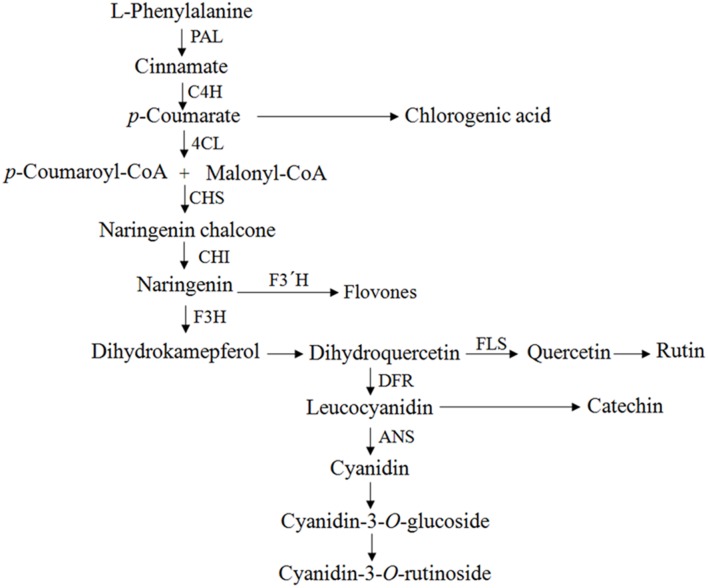
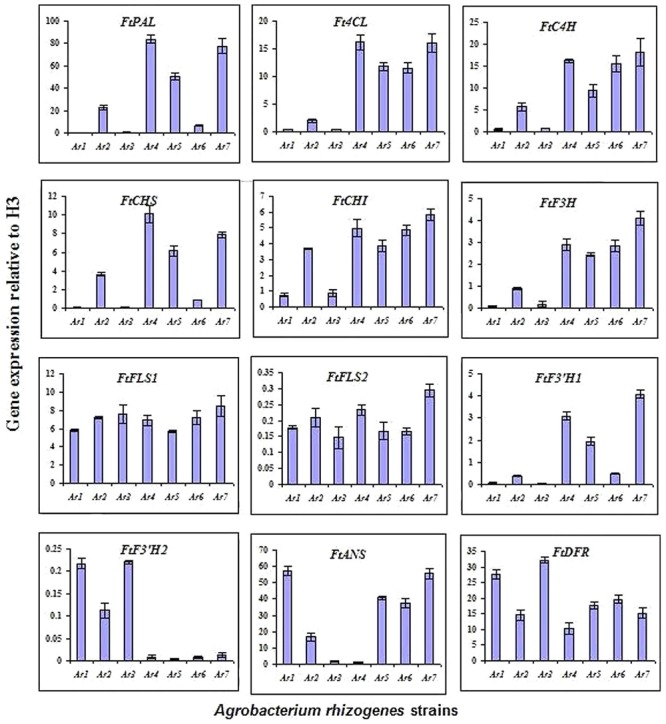
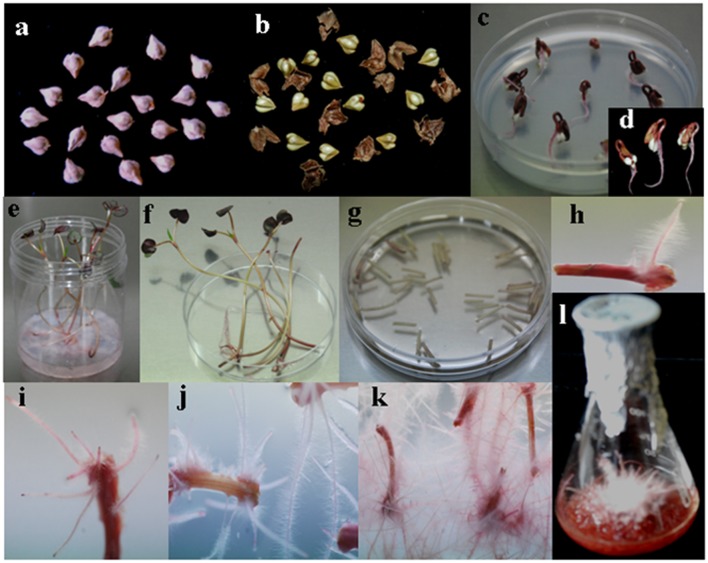
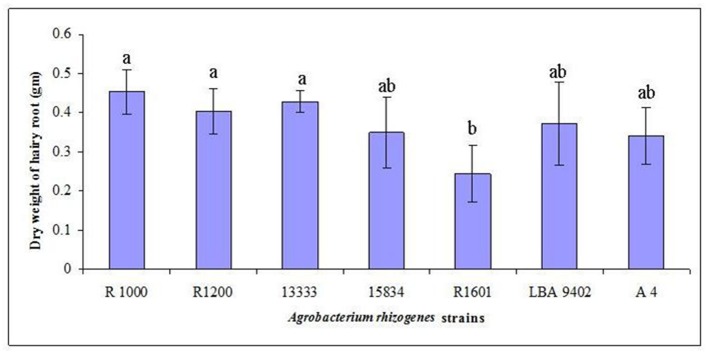
The development of an efficient protocol for successful hairy root induction by Agrobacterium rhizogenes is the key step toward an in vitro culturing method for the mass production of secondary metabolites. The selection of an effective Agrobacterium strain for the production of hairy roots is highly plant species dependent and must be determined empirically. Therefore, our goal was to investigate the transformation efficiency of different A. rhizogenes strains for the induction of transgenic hairy roots in Fagopyrum tataricum 'Hokkai T10' cultivar; to determine the expression levels of the polypropanoid biosynthetic pathway genes, such as ftpAL, FtC4H, Ft4CL, FrCHS, FrCH1, FrF3H, FtFLS1, FtFLS2, FtF3(,) H1, FtF3'H2, FtANS, and FtDFR; and to quantify the in vitro synthesis of phenolic compounds and anthocyanins. Among different strains, R1000 was the most promising candidate for hairy root stimulation because it induced the highest growth rate, root number, root length, transformation efficiency, and total anthocyanin and rutin content. The R1000, 15834, and A4 strains provided higher transcript levels for most metabolic pathway genes for the synthesis of rutin (22.31, 15.48, and 13.04 μg/mg DW, respectively), cyanidin 3-O-glucoside (800, 750, and 650 μg/g DW, respectively), and cyanidin 3-O-rutinoside (2410, 1530, and 1170 μg/g DW, respectively). A suitable A. rhizogenes strain could play a vital role in the fast growth of the bulk amount of hairy roots and secondary metabolites. Overall, R1000 was the most promising strain for hairy root induction in buckwheat.
通过发根农杆菌成功诱导毛状根的高效方案的开发是大规模生产次生代谢产物的体外培养方法的关键步骤。选择有效的发根农杆菌菌株来产生毛状根高度依赖于植物物种,必须通过实验确定。因此,我们的目标是研究不同发根农杆菌菌株对苦荞麦‘北海道T10’品种转基因毛状根诱导的转化效率;确定多聚丙烷生物合成途径基因的表达水平,如ftpAL、FtC4H、Ft4CL、FrCHS、FrCH1、FrF3H、FtFLS1、FtFLS2、FtF3(,)H1、FtF3'H2、FtANS和FtDFR;并量化酚类化合物和花青素的体外合成。在不同菌株中,R1000是诱导毛状根最有前景的候选菌株,因为它诱导出最高的生长速率、根数、根长、转化效率以及总花青素和芦丁含量。R1000、15834和A4菌株为芦丁(分别为22.31、15.48和13.04μg/mg干重)、矢车菊素3 - O - 葡萄糖苷(分别为800、750和650μg/g干重)和矢车菊素3 - O - 芸香糖苷(分别为2410、1530和1170μg/g干重)合成的大多数代谢途径基因提供了更高的转录水平。合适的发根农杆菌菌株在大量毛状根和次生代谢产物的快速生长中可以发挥至关重要的作用。总体而言,R1000是荞麦毛状根诱导最有前景的菌株。