Directory of Life Sciences Applied Metrology, National Institute of Metrology Quality and Technology, Rio de Janeiro, Brazil.
Brazilian Branch of Institute of Biomaterials, Tribocorrosion and Nanomedicine (IBTN), University Estadual Paulista, Faculty of Sciences, Bauru, São Paulo, Brazil.
Sci Rep. 2016 Mar 29;6:23615. doi: 10.1038/srep23615.
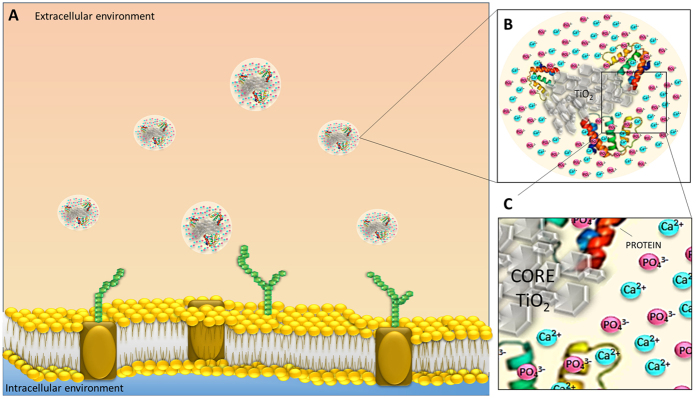
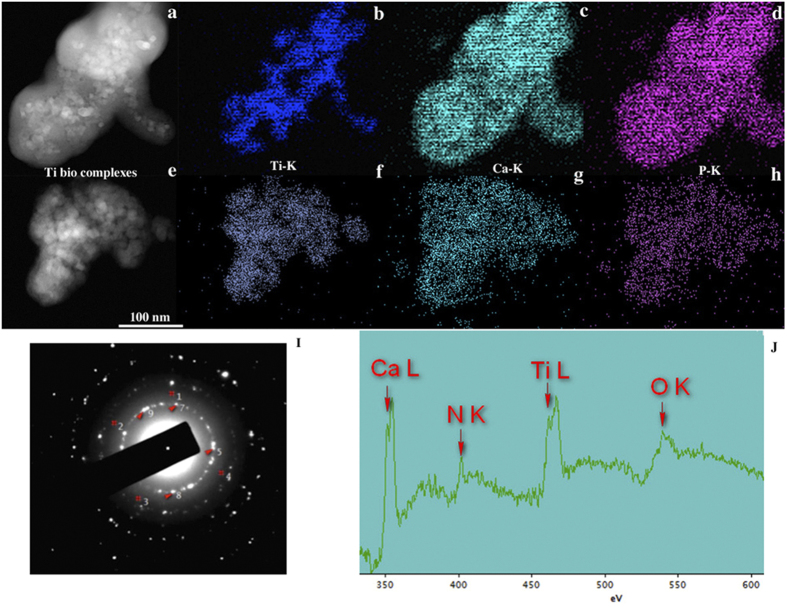
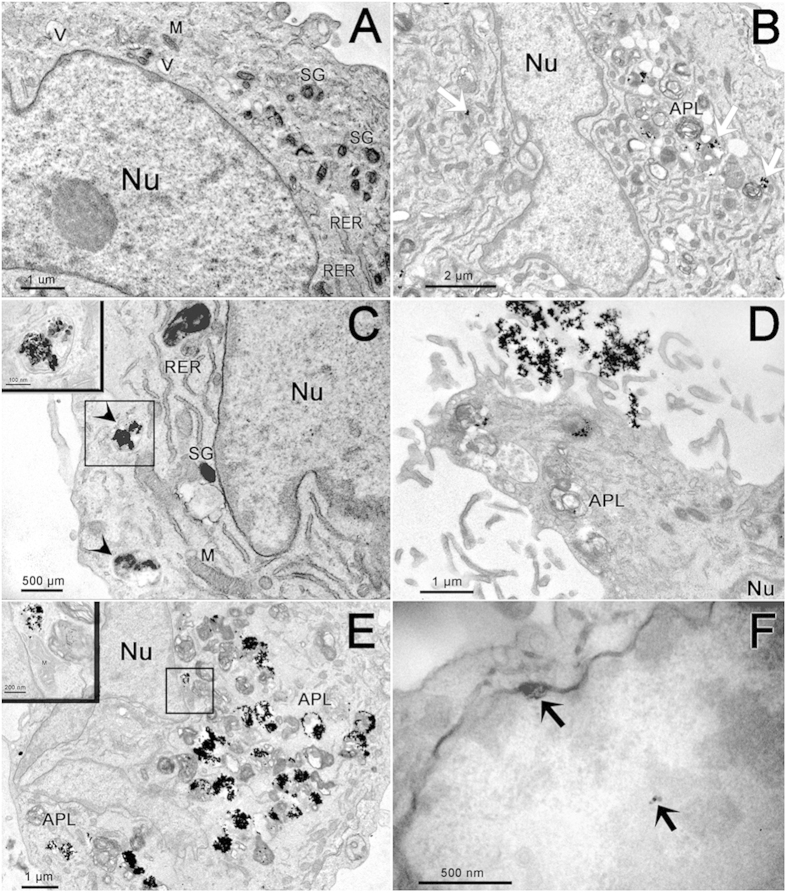
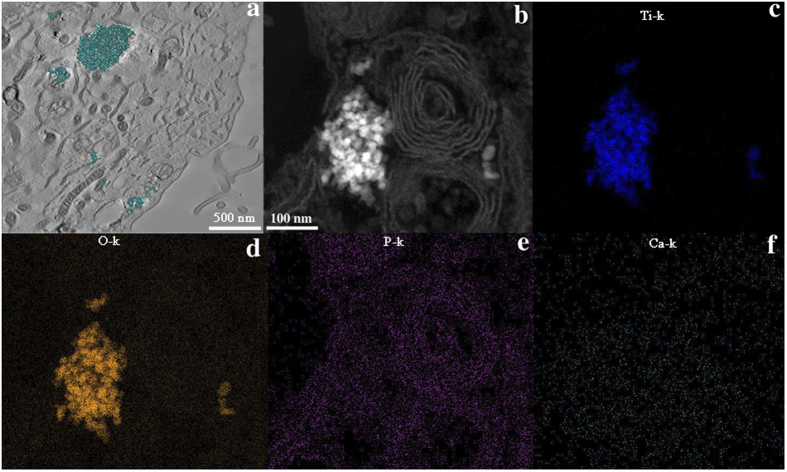
Dentistry and orthopedics are undergoing a revolution in order to provide more reliable, comfortable and long-lasting implants to patients. Titanium (Ti) and titanium alloys have been used in dental implants and total hip arthroplasty due to their excellent biocompatibility. However, Ti-based implants in human body suffer surface degradation (corrosion and wear) resulting in the release of metallic ions and solid wear debris (mainly titanium dioxide) leading to peri-implant inflammatory reactions. Unfortunately, our current understanding of the biological interactions with titanium dioxide nanoparticles is still very limited. Taking this into consideration, this study focuses on the internalization of titanium dioxide nanoparticles on primary bone cells, exploring the events occurring at the nano-bio interface. For the first time, we report the selective binding of calcium (Ca), phosphorous (P) and proteins from cell culture medium to anatase nanoparticles that are extremely important for nanoparticle internalization and bone cells survival. In the intricate biological environment, anatase nanoparticles form bio-complexes (mixture of proteins and ions) which act as a kind of 'Trojan-horse' internalization by cells. Furthermore, anatase nanoparticles-induced modifications on cell behavior (viability and internalization) could be understand in detail. The results presented in this report can inspire new strategies for the use of titanium dioxide nanoparticles in several regeneration therapies.
口腔医学和矫形外科学正在发生革命性的变化,以便为患者提供更可靠、更舒适、更持久的植入物。由于其优异的生物相容性,钛(Ti)及其合金已被用于牙科植入物和全髋关节置换术。然而,人体中的基于 Ti 的植入物会遭受表面降解(腐蚀和磨损),导致金属离子和固体磨损颗粒(主要是二氧化钛)的释放,从而引发植入物周围的炎症反应。不幸的是,我们目前对与二氧化钛纳米颗粒的生物学相互作用的理解仍然非常有限。考虑到这一点,本研究专注于二氧化钛纳米颗粒在原代骨细胞中的内化,探索纳米-生物界面上发生的事件。我们首次报道了细胞培养基中的钙(Ca)、磷(P)和蛋白质选择性结合到锐钛矿纳米颗粒上,这对于纳米颗粒的内化和骨细胞的存活极其重要。在复杂的生物环境中,锐钛矿纳米颗粒形成生物复合物(蛋白质和离子的混合物),这些复合物作为细胞的一种“特洛伊木马”内化。此外,还可以详细了解锐钛矿纳米颗粒诱导的细胞行为(活力和内化)的改变。本报告中呈现的结果可以为几种再生疗法中使用二氧化钛纳米颗粒提供新的策略。