Mayo Sara A, Song Ye K, Cruz Melissa R, Phan Tri M, Singh Kavindra V, Garsin Danielle A, Murray Barbara E, Dial Elizabeth J, Lichtenberger Lenard M
Departments of Integrative Biology & Pharmacology, Microbiology and Molecular Genetics, and Internal Medicine-Infectious Diseases, The University of Texas Health Science Center at Houston, Houston, Texas.
Departments of Integrative Biology & Pharmacology, Microbiology and Molecular Genetics, and Internal Medicine-Infectious Diseases, The University of Texas Health Science Center at Houston, Houston, Texas
Physiol Rep. 2016 Mar;4(6). doi: 10.14814/phy2.12725. Epub 2016 Mar 31.
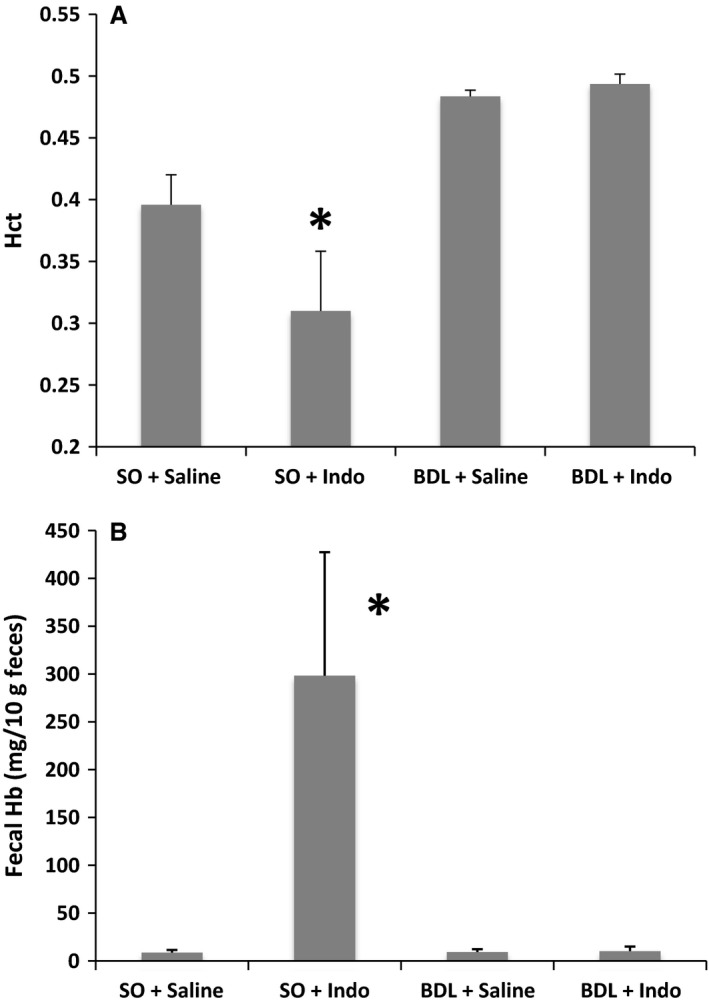
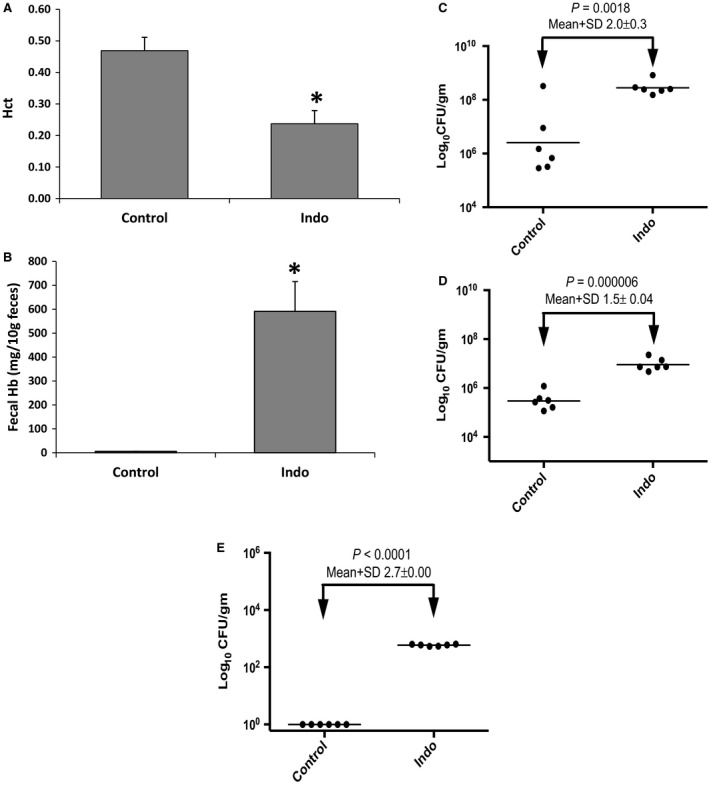
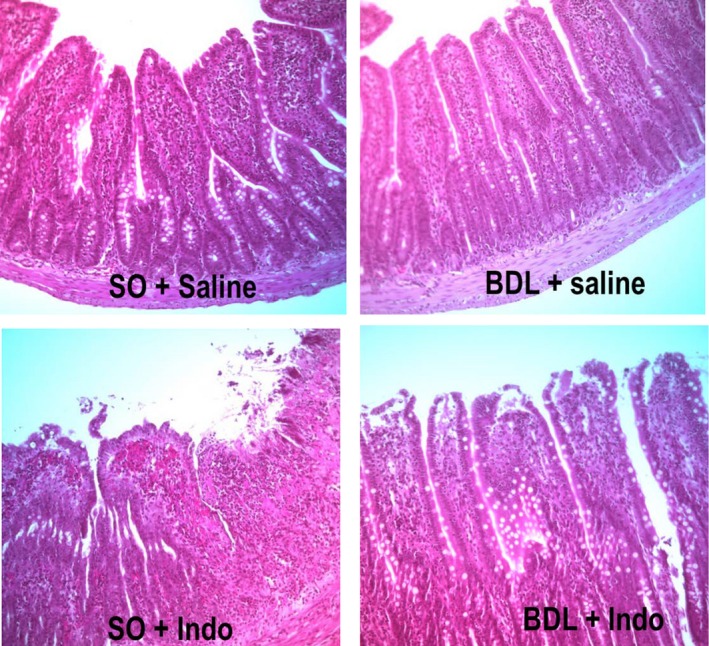
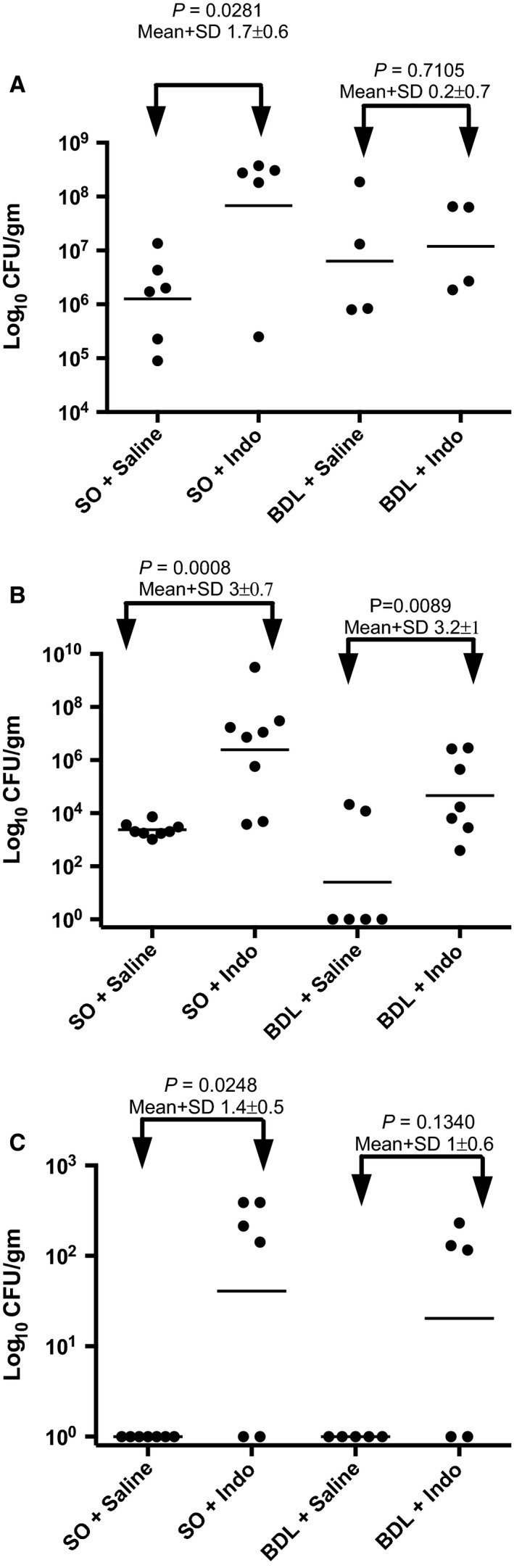
NSAIDuse is limited due to the drugs' toxicity to the gastrointestinal mucosa, an action incompletely understood. Lower gut injury induced byNSAIDs is dependent on bile secretion and is reported to increase the growth of a number of bacterial species, including an enterococcal species,Enterococcus faecalis This study examined the relationships between indomethacin (INDO)-induced intestinal injury/bleeding, small bowel overgrowth (SBO) and dissemination of enterococci, and the contribution of bile secretion to these pathological responses. Rats received either a sham operation (SO) or bile duct ligation (BDL) prior to administration of two daily subcutaneous doses of saline orINDO, and 24 h later, biopsies of ileum and liver were collected for plating on selective bacterial media. Fecal hemoglobin (Hb) and blood hematocrit (Hct) were measured to assess intestinal bleeding. Of the four treatment groups, onlySO/INDOrats experienced a significant 10- to 30-fold increase in fecal Hb and reduction in Hct, indicating thatBDLattenuatedINDO-induced intestinal injury/bleeding. Ileal enterococcal colony-forming units were significantly increased (500- to 1000-fold) inSO/INDOrats. Of all groups, only theSO/INDOrats demonstrated gut injury, and this was associated with enterococcal overgrowth of the gut and dissemination to the liver. We also demonstrated thatINDO-induced intestinal injury andE. faecalisovergrowth was independent of the route of administration of the drug, as similar findings were observed in rats orally dosed with theNSAID Bile secretion plays an important role inINDO-induced gut injury and appears to support enterococcal overgrowth of the intestine.NSAID-induced enterococcalSBOmay be involved either as a compensatory response to gut injury or with the pathogenic process itself and the subsequent development of sepsis.
由于非甾体抗炎药(NSAID)对胃肠道黏膜有毒性作用,其使用受到限制,而这种作用尚未完全明确。NSAID诱导的下消化道损伤依赖胆汁分泌,且据报道会增加包括肠球菌属粪肠球菌在内的多种细菌的生长。本研究探讨了吲哚美辛(INDO)诱导的肠道损伤/出血、小肠细菌过度生长(SBO)与肠球菌播散之间的关系,以及胆汁分泌对这些病理反应的作用。大鼠在每日皮下注射两次生理盐水或INDO之前,接受假手术(SO)或胆管结扎(BDL),24小时后,采集回肠和肝脏活检组织,接种于选择性细菌培养基上。测量粪便血红蛋白(Hb)和血液血细胞比容(Hct)以评估肠道出血情况。在四个治疗组中,只有SO/INDO组大鼠的粪便Hb显著增加10至30倍,Hct降低,表明BDL减轻了INDO诱导的肠道损伤/出血。SO/INDO组大鼠回肠肠球菌菌落形成单位显著增加(500至1000倍)。在所有组中,只有SO/INDO组大鼠出现肠道损伤,这与肠道肠球菌过度生长并播散至肝脏有关。我们还证明,INDO诱导的肠道损伤和粪肠球菌过度生长与药物给药途径无关,因为在口服该NSAID的大鼠中也观察到了类似结果。胆汁分泌在INDO诱导的肠道损伤中起重要作用,似乎支持肠道肠球菌过度生长。NSAID诱导的肠球菌SBO可能作为对肠道损伤的代偿反应或与致病过程本身及随后的脓毒症发展有关。