Reyna Valerie F, Corbin Jonathan C, Weldon Rebecca B, Brainerd Charles J
Cornell University.
J Appl Res Mem Cogn. 2016 Mar 1;5(1):1-9. doi: 10.1016/j.jarmac.2015.12.003.
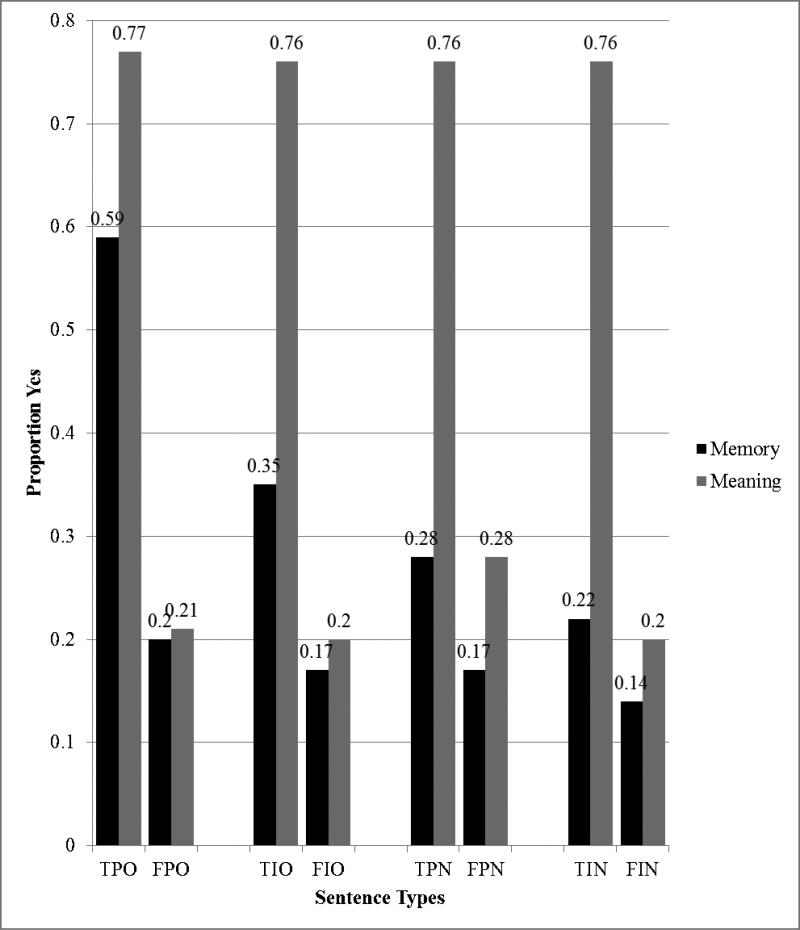
Fuzzy-trace theory posits independent verbatim and gist memory processes, a distinction that has implications for such applied topics as eyewitness testimony. This distinction between precise, literal verbatim memory and meaning-based, intuitive gist accounts for memory paradoxes including dissociations between true and false memory, false memories outlasting true memories, and developmental increases in false memory. We provide an overview of fuzzy-trace theory, and, using mathematical modeling, also present results demonstrating verbatim and gist memory in true and false recognition of narrative sentences and inferences. Results supported fuzzy-trace theory's dual-process view of memory: verbatim memory was relied on to reject meaning-consistent, but unpresented, sentences (via recollection rejection). However, verbatim memory was often not retrieved, and gist memory supported acceptance of these sentences (via similarity judgment and phantom recollection). Thus, mathematical models of words can be extended to explain memory for complex stimuli, such as narratives, the kind of memory interrogated in law.
模糊痕迹理论假定存在独立的逐字记忆和主旨记忆过程,这一区分对诸如目击证人证词等应用主题具有重要意义。精确的、逐字的逐字记忆与基于意义的、直观的主旨之间的这种区分解释了记忆悖论,包括真记忆与假记忆之间的分离、假记忆比真记忆持续时间更长以及假记忆在发展过程中的增加。我们概述了模糊痕迹理论,并通过数学建模展示了在叙事句子和推理的真假识别中逐字记忆和主旨记忆的结果。结果支持了模糊痕迹理论的记忆双过程观点:逐字记忆用于拒绝意义一致但未呈现的句子(通过回忆拒绝)。然而,逐字记忆常常无法被提取,主旨记忆则支持对这些句子的接受(通过相似性判断和虚幻回忆)。因此,单词的数学模型可以扩展到解释对复杂刺激(如叙事)的记忆,这种记忆在法律中经常被询问。