Nour Monica, Chen Juliana, Allman-Farinelli Margaret
School of Life and Environmental Sciences, University of Sydney, Sydney, NSW, Australia.
J Med Internet Res. 2016 Apr 8;18(4):e58. doi: 10.2196/jmir.5082.
Young adults (18-35 years) remain among the lowest vegetable consumers in many western countries. The digital era offers opportunities to engage this age group in interventions in new and appealing ways.
This systematic review evaluated the efficacy and external validity of electronic (eHealth) and mobile phone (mHealth) -based interventions that promote vegetable intake in young adults.
We searched several electronic databases for studies published between 1990 and 2015, and 2 independent authors reviewed the quality and risk of bias of the eligible papers and extracted data for analyses. The primary outcome of interest was the change in vegetable intake postintervention. Where possible, we calculated effect sizes (Cohen d and 95% CIs) for comparison. A random effects model was applied to the data for meta-analysis. Reach and representativeness of participants, intervention implementation, and program maintenance were assessed to establish external validity. Published validation studies were consulted to determine the validity of tools used to measure intake. We applied the Grading of Recommendations Assessment, Development and Evaluation (GRADE) system to evaluate the overall quality of the body of evidence.
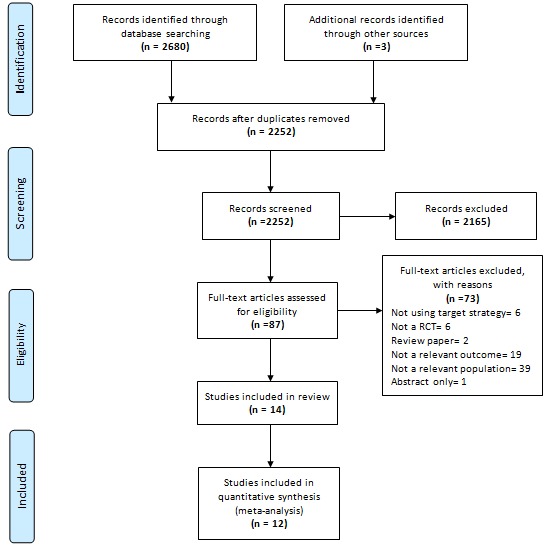
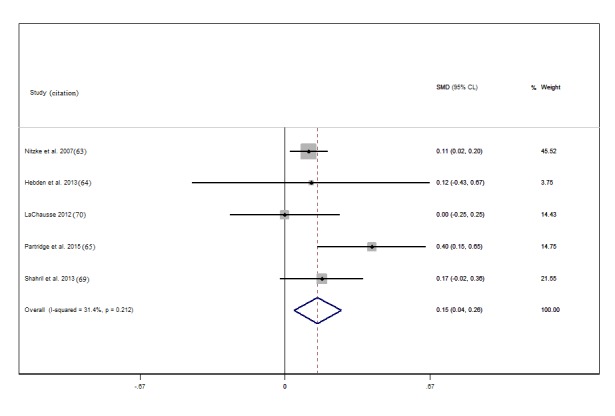
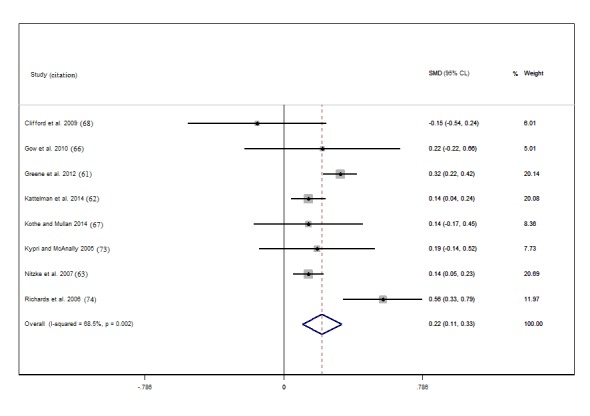
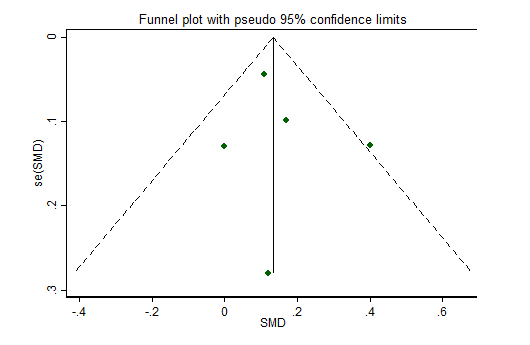
Of the 14 studies that met the selection criteria, we included 12 in the meta-analysis. In the meta-analysis, 7 studies found positive effects postintervention for fruit and vegetable intake, Cohen d 0.14-0.56 (pooled effect size 0.22, 95% CI 0.11-0.33, I(2)=68.5%, P=.002), and 4 recorded positive effects on vegetable intake alone, Cohen d 0.11-0.40 (pooled effect size 0.15, 95% CI 0.04-0.28, I(2)=31.4%, P=.2). These findings should be interpreted with caution due to variability in intervention design and outcome measures. With the majority of outcomes documented as a change in combined fruit and vegetable intake, it was difficult to determine intervention effects on vegetable consumption specifically. Measurement of intake was most commonly by self-report, with 5 studies using nonvalidated tools. Longer-term follow-up was lacking from most studies (n=12). Risk of bias was high among the included studies, and the overall body of evidence was rated as low quality. The applicability of interventions to the broader young adult community was unclear due to poor description of external validity components.
Preliminary evidence suggests that eHealth and mHealth strategies may be effective in improving vegetable intake in young adults; whether these small effects have clinical or nutritional significance remains questionable. With studies predominantly reporting outcomes as fruit and vegetable intake combined, we suggest that interventions report vegetables separately. Furthermore, to confidently establish the efficacy of these strategies, better-quality interventions are needed for young adults, using valid measures of intake, with improved reporting on costs, sustainability and long-term effects of programs.
PROSPERO International Prospective Register of Systematic Reviews: CRD42015017763; http://www.crd.york.ac.uk/PROSPERO/display_record.asp?ID=CRD42015017763 (Archived by WebCite at http://www.webcitation.org/6fLhMgUP4).
在许多西方国家,年轻人(18 - 35岁)仍然是蔬菜摄入量最低的群体之一。数字时代为以新颖且有吸引力的方式促使这一年龄段人群参与干预措施提供了机遇。
本系统评价评估了基于电子健康(eHealth)和移动健康(mHealth)促进年轻人蔬菜摄入量的干预措施的有效性和外部效度。
我们在多个电子数据库中检索了1990年至2015年间发表的研究,两名独立作者对符合条件的论文的质量和偏倚风险进行了审查,并提取数据进行分析。主要关注的结局是干预后蔬菜摄入量的变化。在可能的情况下,我们计算效应量(Cohen d和95%可信区间)用于比较。采用随机效应模型对数据进行荟萃分析。评估参与者的覆盖范围和代表性、干预措施的实施情况以及项目维持情况以确定外部效度。查阅已发表的验证研究以确定用于测量摄入量的工具的效度。我们应用推荐分级评估、制定与评价(GRADE)系统来评估证据总体的质量。
在符合入选标准的14项研究中,我们将12项纳入荟萃分析。在荟萃分析中,7项研究发现干预后水果和蔬菜摄入量有积极影响,Cohen d为0.14 - 0.56(合并效应量为0.22,95%可信区间为0.11 - 0.33,I² = 68.5%,P = 0.002),4项研究仅记录了对蔬菜摄入量的积极影响,Cohen d为0.11 - 0.40(合并效应量为0.15,95%可信区间为0.04 - 0.28,I² = 31.4%,P = 0.2)。由于干预设计和结局测量的变异性,这些结果应谨慎解读。由于大多数结局记录为水果和蔬菜摄入量的综合变化,因此难以具体确定干预对蔬菜消费的影响。摄入量的测量最常见的是通过自我报告,5项研究使用了未经验证的工具。大多数研究(n = 12)缺乏长期随访。纳入研究中的偏倚风险较高,证据总体质量被评为低质量。由于对外部效度组成部分的描述不佳,干预措施对更广泛的年轻成人社区的适用性尚不清楚。
初步证据表明,电子健康和移动健康策略可能对提高年轻人的蔬菜摄入量有效;这些微小的效果是否具有临床或营养意义仍值得怀疑。由于研究主要将结局报告为水果和蔬菜摄入量的综合情况,我们建议干预措施分别报告蔬菜摄入量。此外,为了可靠地确定这些策略的有效性,需要针对年轻人开展质量更高的干预措施,使用有效的摄入量测量方法,并更好地报告项目成本、可持续性和长期效果。
国际前瞻性系统评价注册库PROSPERO:CRD42015017763;http://www.crd.york.ac.uk/PROSPERO/display_record.asp?ID=CRD42015017763(由WebCite存档于http://www.webcitation.org/6fLhMgUP4)