Gonçalves Carla, Abreu Sandra, Padrão Patrícia, Pinho Olívia, Graça Pedro, Breda João, Santos Rute, Moreira Pedro
Faculty of Nutrition and Food Sciences, University of Porto, Porto, Portugal;
Research Centre in Physical Activity, Health and Leisure, Faculty of Sport, University of Porto, Porto, Portugal.
Food Nutr Res. 2016 Apr 11;60:29442. doi: 10.3402/fnr.v60.29442. eCollection 2016.
Hypertension is the leading cause for heart disease and stroke, for mortality and morbidity worldwide, and a high sodium-to-potassium intake ratio is considered a stronger risk factor for hypertension than sodium alone.
This study aims to evaluate sodium and potassium urinary excretion, and assess the food sources of these nutrients in a sample of Portuguese adolescents.
A cross-sectional study with a sample of 250 Portuguese adolescents. Sodium and potassium excretion were measured by one 24-h urinary collection, and the coefficient of creatinine was used to validate completeness of urine collections. Dietary sources of sodium and potassium were assessed using a 24-h dietary recall.
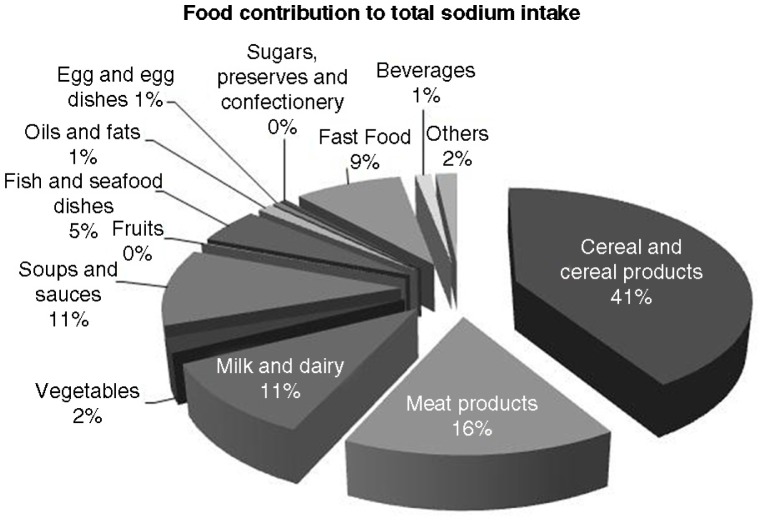
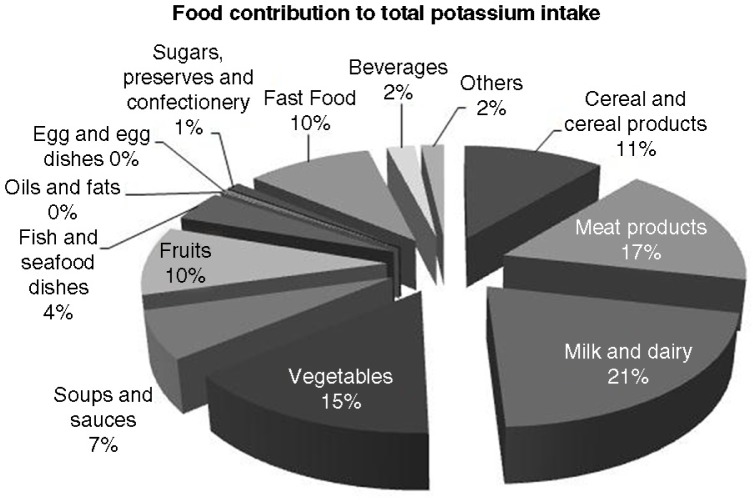
Valid urine collections were provided by 200 adolescents (118 girls) with a median age of 14.0 in both sexes (p=0.295). Regarding sodium, the mean urinary excretion was 3,725 mg/day in boys and 3,062 mg/day in girls (p<0.01), and 9.8% of boys and 22% of girls met the World Health Organization (WHO) recommendations for sodium intake. Concerning potassium, the mean urinary excretion was 2,237 mg/day in boys and 1,904 mg/day in girls (p<0.01), and 6.1% of boys and 1.7% of girls met the WHO recommendations for potassium intake. Major dietary sources for sodium intake were cereal and cereal products (41%), meat products (16%), and milk and milk products (11%); and for potassium intake, main sources were milk and milk products (21%), meat products (17%), and vegetables (15%).
Adolescents had a high-sodium and low-potassium diet, well above the WHO recommendations. Health promotion interventions are needed in order to decrease sodium and increase potassium intake.
高血压是全球范围内导致心脏病和中风、死亡和发病的主要原因,高钠钾摄入比被认为是比单纯高钠摄入更强的高血压风险因素。
本研究旨在评估葡萄牙青少年样本中钠和钾的尿排泄情况,并评估这些营养素的食物来源。
对250名葡萄牙青少年进行横断面研究。通过一次24小时尿液收集测量钠和钾排泄量,并使用肌酐系数验证尿液收集的完整性。使用24小时饮食回顾评估钠和钾的饮食来源。
200名青少年(118名女孩)提供了有效的尿液样本,男女中位年龄均为14.0岁(p = 0.295)。关于钠,男孩的平均尿排泄量为3725毫克/天,女孩为3062毫克/天(p<0.01),9.8%的男孩和22%的女孩符合世界卫生组织(WHO)的钠摄入建议。关于钾,男孩的平均尿排泄量为2237毫克/天,女孩为1904毫克/天(p<0.01),6.1%的男孩和1.7%的女孩符合WHO的钾摄入建议。钠摄入的主要饮食来源是谷物和谷物制品(41%)、肉类制品(16%)以及牛奶和奶制品(11%);钾摄入的主要来源是牛奶和奶制品(21%)、肉类制品(17%)以及蔬菜(15%)。
青少年的饮食中钠含量高而钾含量低,远高于WHO的建议。需要开展健康促进干预措施以减少钠摄入并增加钾摄入。