Milczarski Paweł, Hanek Monika, Tyrka Mirosław, Stojałowski Stefan
Department of Plant Genetics, Breeding and Biotechnology, West Pomeranian University of Technology in Szczecin, Słowackiego 17, 71-434, Szczecin, Poland.
Department of Biochemistry and Biotechnology, Rzeszów University of Technology, Powstańców Warszawy 6, 35-959, Rzeszów, Poland.
J Appl Genet. 2016 Nov;57(4):439-451. doi: 10.1007/s13353-016-0347-4. Epub 2016 Apr 16.
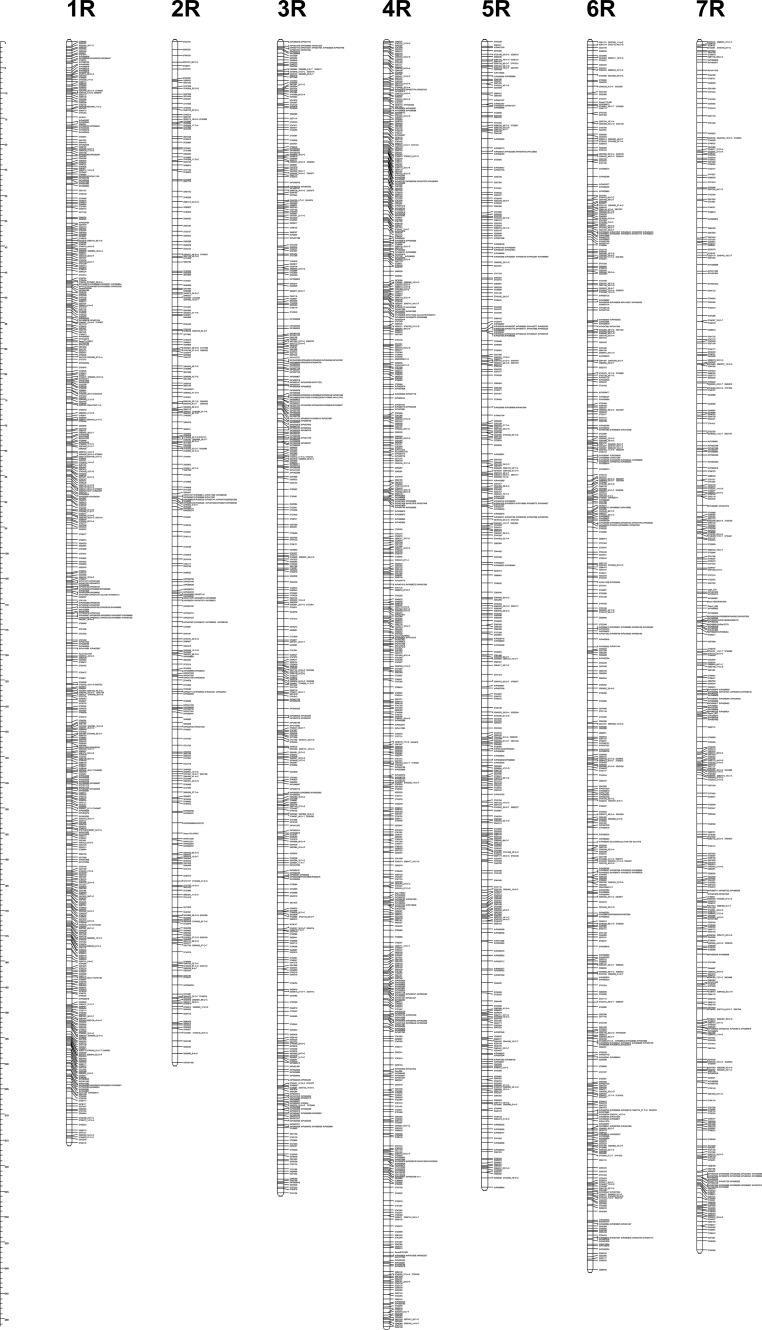
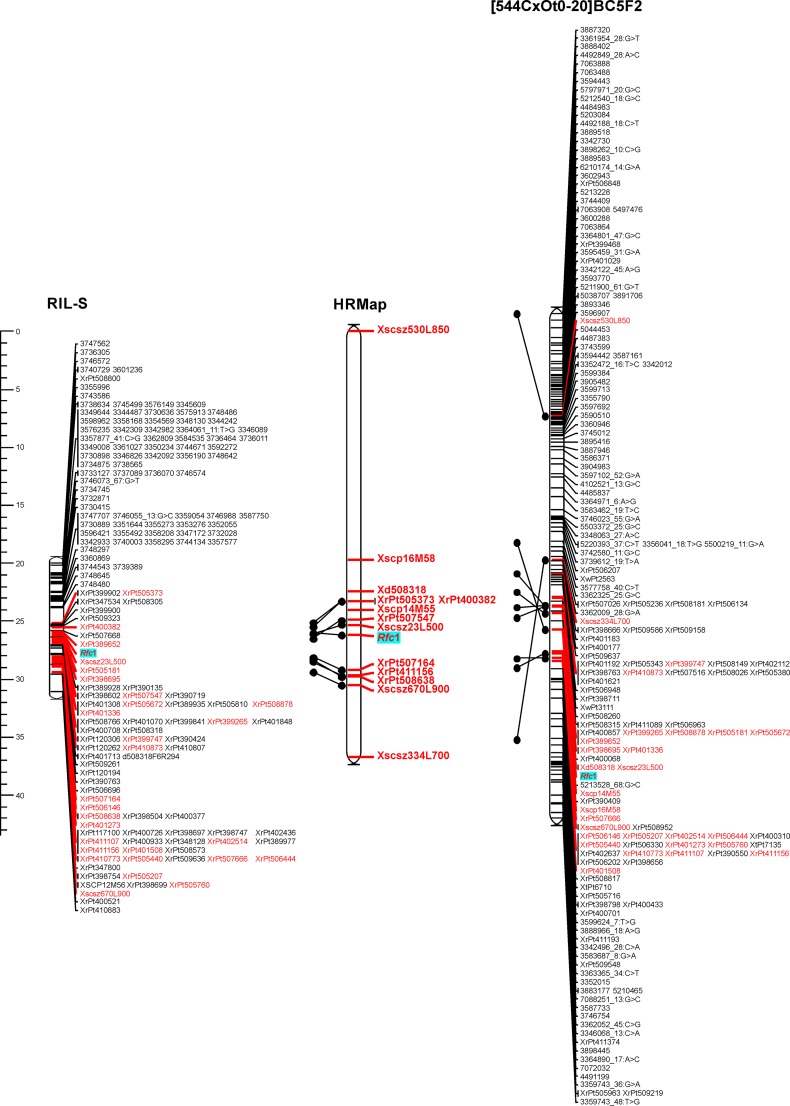
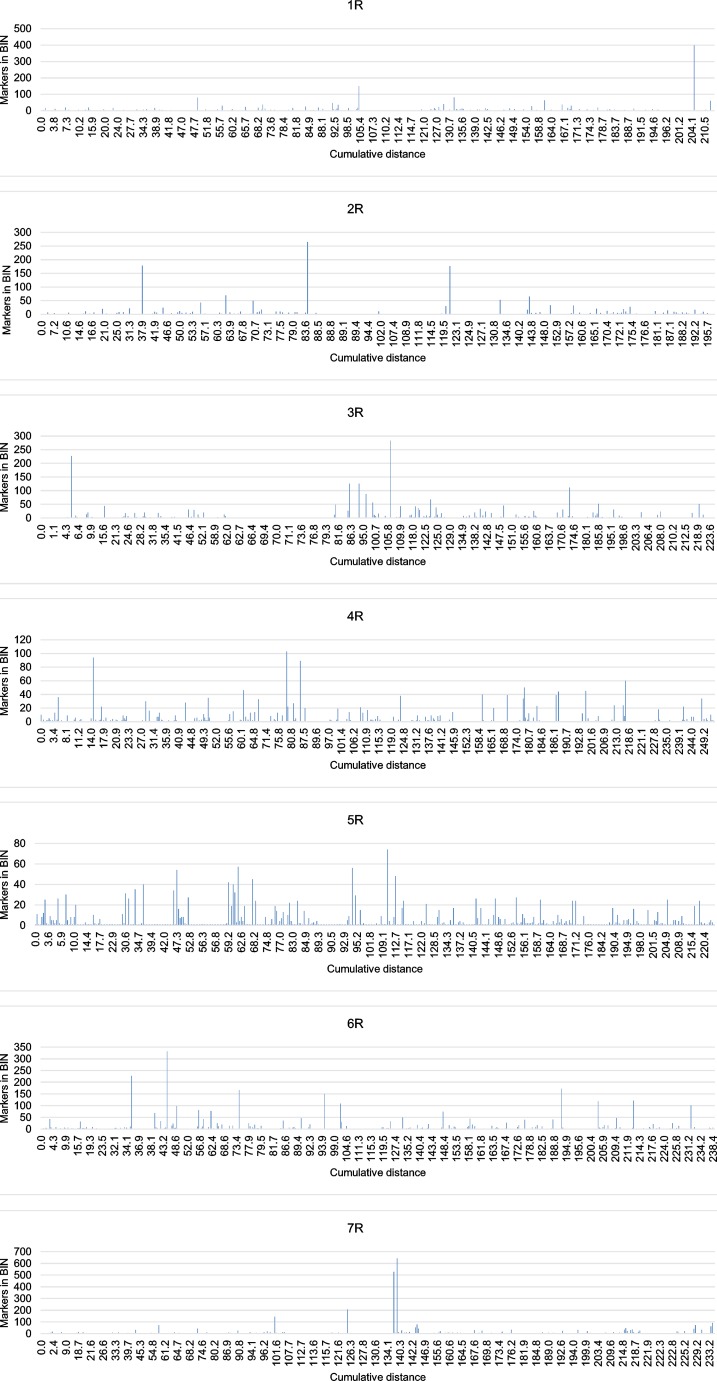
Genotyping by sequencing (GBS) is an efficient method of genotyping in numerous plant species. One of the crucial steps toward the application of GBS markers in crop improvement is anchoring them on particular chromosomes. In rye (Secale cereale L.), chromosomal localization of GBS markers has not yet been reported. In this paper, the application of GBS markers generated by the DArTseq platform for extending the high-density map of rye is presented. Additionally, their application is used for the localization of the Rfc1 gene that restores male fertility in plants with the C source of sterility-inducing cytoplasm. The total number of markers anchored on the current version of the map is 19,081, of which 18,132 were obtained from the DArTseq platform. Numerous markers co-segregated within the studied mapping population, so, finally, only 3397 unique positions were located on the map of all seven rye chromosomes. The total length of the map is 1593 cM and the average distance between markers is 0.47 cM. In spite of the resolution of the map being not very high, it should be a useful tool for further studies of the Secale cereale genome because of the presence on this map of numerous GBS markers anchored for the first time on rye chromosomes. The Rfc1 gene was located on high-density maps of the long arm of the 4R chromosome obtained for two mapping populations. Genetic maps were composed of DArT, DArTseq, and PCR-based markers. Consistent mapping results were obtained and DArTs tightly linked to the Rfc1 gene were successfully applied for the development of six new PCR-based markers useful in marker-assisted selection.
测序基因分型(GBS)是众多植物物种中一种高效的基因分型方法。将GBS标记应用于作物改良的关键步骤之一是将它们定位到特定染色体上。在黑麦(Secale cereale L.)中,尚未报道GBS标记的染色体定位情况。本文介绍了由DArTseq平台生成的GBS标记在扩展黑麦高密度图谱方面的应用。此外,它们还被用于定位Rfc1基因,该基因可恢复具有不育细胞质C型的植物的雄性育性。定位到当前版本图谱上的标记总数为19081个,其中18132个来自DArTseq平台。在研究的作图群体中有许多标记共分离,所以最终,在所有七条黑麦染色体的图谱上仅定位到3397个独特位置。图谱的总长度为1593厘摩,标记间的平均距离为0.47厘摩。尽管图谱的分辨率不是很高,但由于该图谱上存在大量首次定位到黑麦染色体上的GBS标记,它应该是进一步研究黑麦基因组的有用工具。Rfc1基因定位在为两个作图群体构建的4R染色体长臂的高密度图谱上。遗传图谱由DArT、DArTseq和基于PCR的标记组成。获得了一致的作图结果,与Rfc1基因紧密连锁的DArT标记成功用于开发六个新的基于PCR的标记,可用于标记辅助选择。