Ferrarini Mariana G, Siqueira Franciele M, Mucha Scheila G, Palama Tony L, Jobard Élodie, Elena-Herrmann Bénédicte, R Vasconcelos Ana T, Tardy Florence, Schrank Irene S, Zaha Arnaldo, Sagot Marie-France
ERABLE, Inria, 43, Bd du 11 Novembre 1918, Villeurbanne, France.
CBiot, UFRGS, Av Bento Gon'calves, Porto Alegre, 9500, Brazil.
BMC Genomics. 2016 May 13;17:353. doi: 10.1186/s12864-016-2644-z.
The respiratory tract of swine is colonized by several bacteria among which are three Mycoplasma species: Mycoplasma flocculare, Mycoplasma hyopneumoniae and Mycoplasma hyorhinis. While colonization by M. flocculare is virtually asymptomatic, M. hyopneumoniae is the causative agent of enzootic pneumonia and M. hyorhinis is present in cases of pneumonia, polyserositis and arthritis. The genomic resemblance among these three Mycoplasma species combined with their different levels of pathogenicity is an indication that they have unknown mechanisms of virulence and differential expression, as for most mycoplasmas.
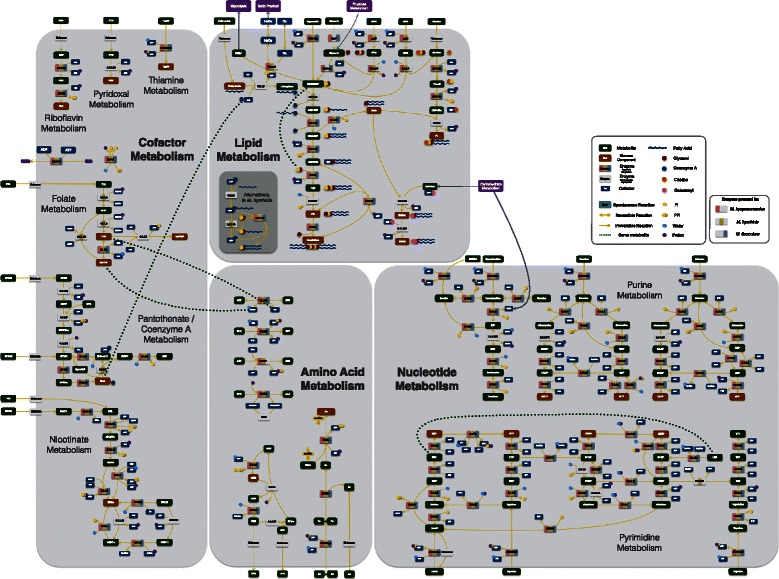
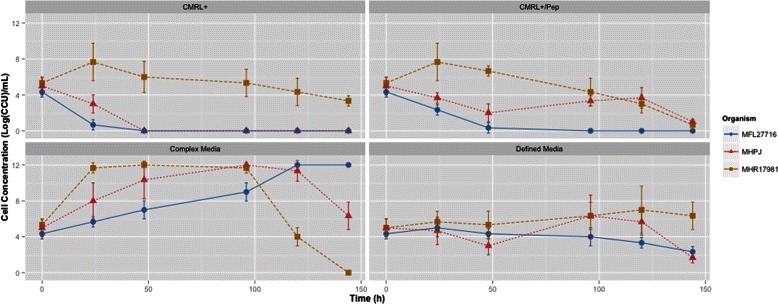
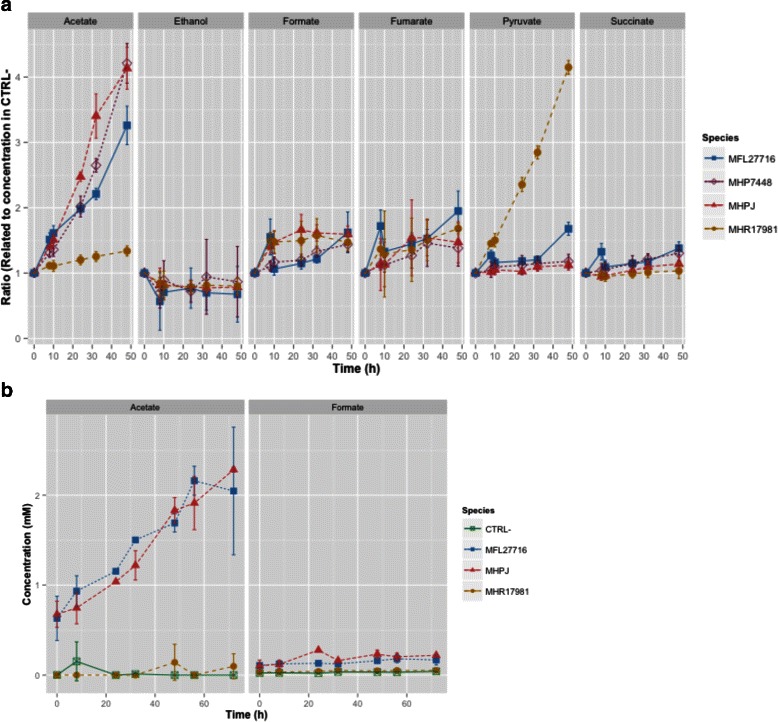
In this work, we performed whole-genome metabolic network reconstructions for these three mycoplasmas. Cultivation tests and metabolomic experiments through nuclear magnetic resonance spectroscopy (NMR) were also performed to acquire experimental data and further refine the models reconstructed in silico.
Even though the refined models have similar metabolic capabilities, interesting differences include a wider range of carbohydrate uptake in M. hyorhinis, which in turn may also explain why this species is a widely contaminant in cell cultures. In addition, the myo-inositol catabolism is exclusive to M. hyopneumoniae and may be an important trait for virulence. However, the most important difference seems to be related to glycerol conversion to dihydroxyacetone-phosphate, which produces toxic hydrogen peroxide. This activity, missing only in M. flocculare, may be directly involved in cytotoxicity, as already described for two lung pathogenic mycoplasmas, namely Mycoplasma pneumoniae in human and Mycoplasma mycoides subsp. mycoides in ruminants. Metabolomic data suggest that even though these mycoplasmas are extremely similar in terms of genome and metabolism, distinct products and reaction rates may be the result of differential expression throughout the species.
We were able to infer from the reconstructed networks that the lack of pathogenicity of M. flocculare if compared to the highly pathogenic M. hyopneumoniae may be related to its incapacity to produce cytotoxic hydrogen peroxide. Moreover, the ability of M. hyorhinis to grow in diverse sites and even in different hosts may be a reflection of its enhanced and wider carbohydrate uptake. Altogether, the metabolic differences highlighted in silico and in vitro provide important insights to the different levels of pathogenicity observed in each of the studied species.
猪的呼吸道被多种细菌定殖,其中包括三种支原体:絮状支原体、猪肺炎支原体和猪鼻支原体。虽然絮状支原体定殖几乎无症状,但猪肺炎支原体是地方性肺炎的病原体,猪鼻支原体存在于肺炎、多浆膜炎和关节炎病例中。这三种支原体物种之间的基因组相似性以及它们不同程度的致病性表明,与大多数支原体一样,它们具有未知的毒力机制和差异表达。
在这项工作中,我们对这三种支原体进行了全基因组代谢网络重建。还通过核磁共振光谱(NMR)进行了培养试验和代谢组学实验,以获取实验数据并进一步完善计算机重建的模型。
尽管完善后的模型具有相似的代谢能力,但有趣的差异包括猪鼻支原体中更广泛的碳水化合物摄取范围,这反过来也可以解释为什么该物种在细胞培养中是一种广泛的污染物。此外,肌醇分解代谢是猪肺炎支原体所特有的,可能是毒力的一个重要特征。然而,最重要的差异似乎与甘油转化为磷酸二羟丙酮有关,这会产生有毒的过氧化氢。这种仅在絮状支原体中缺失的活性可能直接参与细胞毒性,正如已经针对两种肺部致病支原体所描述的那样,即人类的肺炎支原体和反刍动物的丝状支原体丝状亚种。代谢组学数据表明,尽管这些支原体在基因组和代谢方面极其相似,但不同的产物和反应速率可能是整个物种差异表达的结果。
我们能够从重建的网络中推断出,与高致病性的猪肺炎支原体相比,絮状支原体缺乏致病性可能与其无法产生细胞毒性过氧化氢有关。此外,猪鼻支原体在不同部位甚至不同宿主中生长的能力可能反映了其增强和更广泛的碳水化合物摄取。总之,计算机模拟和体外实验突出的代谢差异为每个研究物种中观察到的不同致病水平提供了重要见解。