Mondini Sara, Madella Ileana, Zangrossi Andrea, Bigolin Angela, Tomasi Claudia, Michieletto Marta, Villani Daniele, Di Giovanni Giuseppina, Mapelli Daniela
Department of General Psychology, University of PaduaPadova, Italy; Neuromotor Rehabilitation Unit, Casa di Cura Figlie di San CamilloCremona, Italy; Human Inspired Technology Research Centre, University of PaduaPadova, Italy.
Department of General Psychology, University of Padua Padova, Italy.
Front Aging Neurosci. 2016 Apr 26;8:84. doi: 10.3389/fnagi.2016.00084. eCollection 2016.
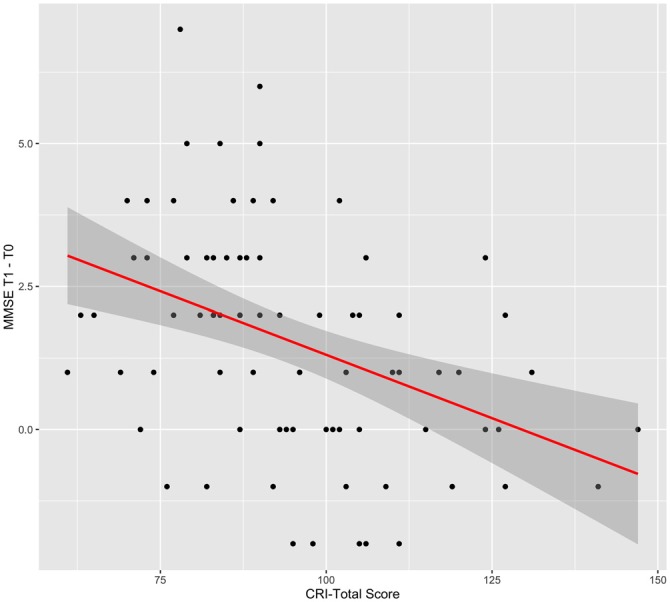
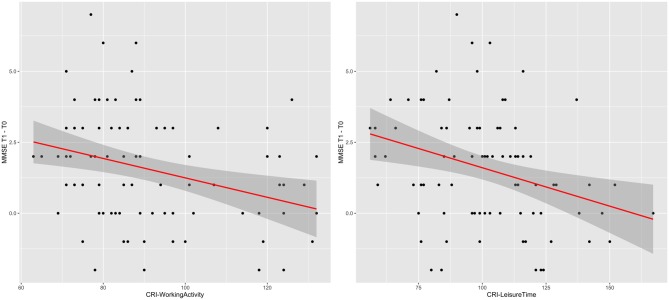
Cognitive reserve (CR) is a potential mechanism to cope with brain damage. The aim of this study was to evaluate the effect of CR on a cognitive training (CT) in a group of patients with dementia. Eighty six participants with mild to moderate dementia were identified by their level of CR quantified by the CR Index questionnaire (CRIq) and underwent a cycle of CT. A global measure of cognition mini mental state examination (MMSE) was obtained before (T0) and after (T1) the training. Multiple linear regression analyses highlighted CR as a significant factor able to predict changes in cognitive performance after the CT. In particular, patients with lower CR benefited from a CT program more than those with high CR. These data show that CR can modulate the outcome of a CT program and that it should be considered as a predictive factor of neuropsychological rehabilitation training efficacy in people with dementia.
认知储备(CR)是一种应对脑损伤的潜在机制。本研究的目的是评估CR对一组痴呆患者认知训练(CT)的影响。通过CR指数问卷(CRIq)量化的CR水平确定了86名轻度至中度痴呆患者,并让他们接受了一个CT周期。在训练前(T0)和训练后(T1)获得了认知的整体测量——简易精神状态检查表(MMSE)。多元线性回归分析强调CR是能够预测CT后认知表现变化的一个重要因素。特别是,CR较低的患者比CR较高的患者从CT项目中受益更多。这些数据表明,CR可以调节CT项目的结果,并且应将其视为痴呆患者神经心理康复训练疗效的一个预测因素。