Segalowitz Norman S, Doucerain Marina M, Meuter Renata F I, Zhao Yue, Hocking Julia, Ryder Andrew G
Department of Psychology, Concordia UniversityMontreal, QC, Canada; Faculty of Health, School of Psychology and Counselling, Queensland University of Technology (QUT)Brisbane, QLD, Australia.
Department of Psychology, Concordia University Montreal, QC, Canada.
Front Psychol. 2016 May 3;7:558. doi: 10.3389/fpsyg.2016.00558. eCollection 2016.
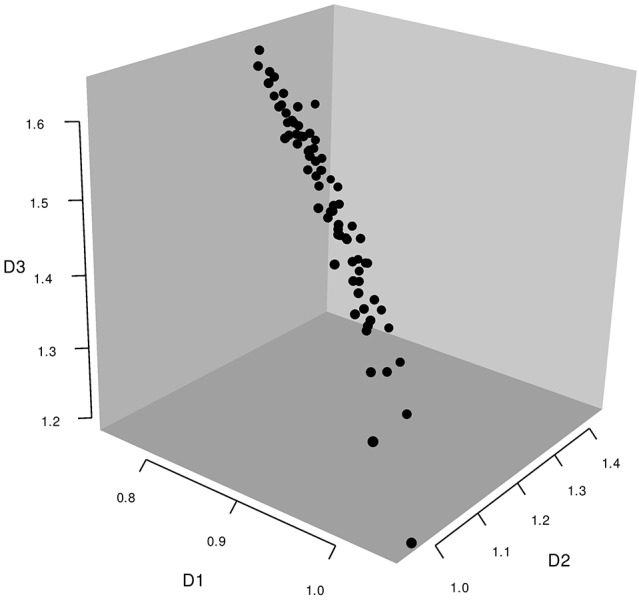
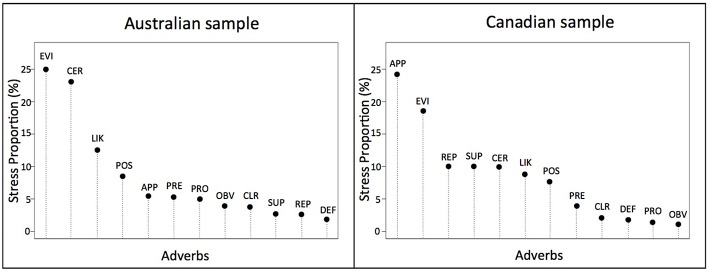
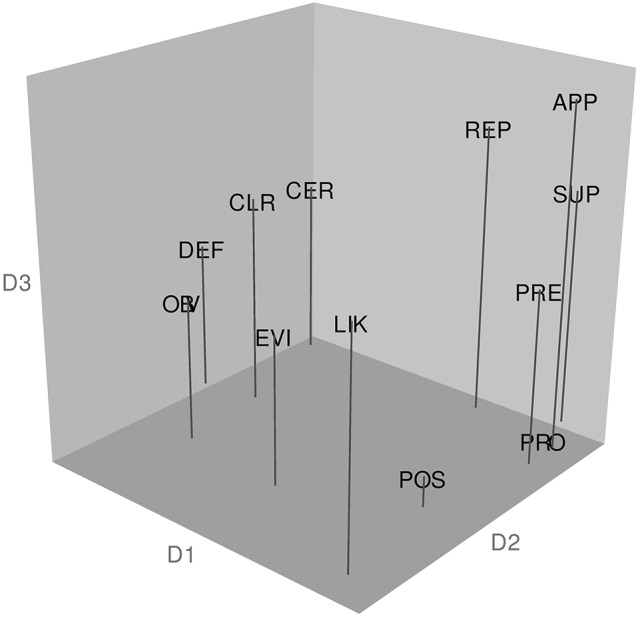
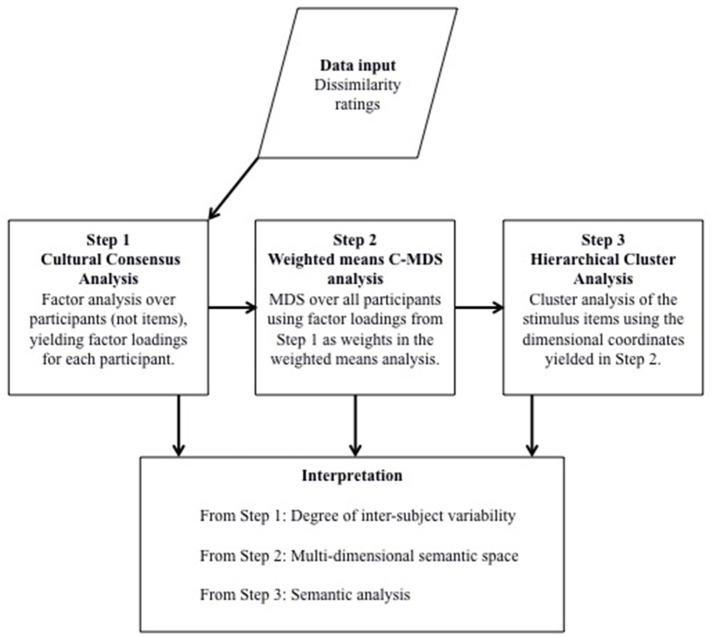
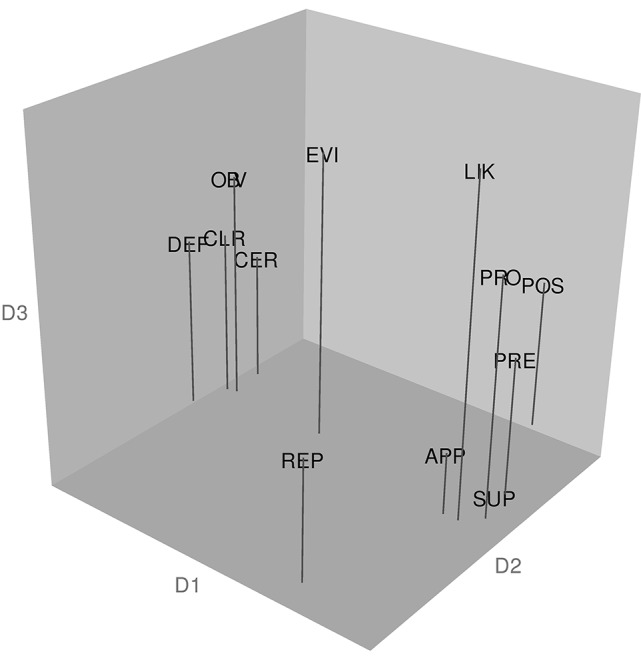
This research explored the feasibility of using multidimensional scaling (MDS) analysis in novel combination with other techniques to study comprehension of epistemic adverbs expressing doubt and certainty (e.g., evidently, obviously, probably) as they relate to health communication in clinical settings. In Study 1, Australian English speakers performed a dissimilarity-rating task with sentence pairs containing the target stimuli, presented as "doctors' opinions." Ratings were analyzed using a combination of cultural consensus analysis (factor analysis across participants), weighted-data classical-MDS, and cluster analysis. Analyses revealed strong within-community consistency for a 3-dimensional semantic space solution that took into account individual differences, strong statistical acceptability of the MDS results in terms of stress and explained variance, and semantic configurations that were interpretable in terms of linguistic analyses of the target adverbs. The results confirmed the feasibility of using MDS in this context. Study 2 replicated the results with Canadian English speakers on the same task. Semantic analyses and stress decomposition analysis were performed on the Australian and Canadian data sets, revealing similarities and differences between the two groups. Overall, the results support using MDS to study comprehension of words critical for health communication, including in future studies, for example, second language speaking patients and/or practitioners. More broadly, the results indicate that the techniques described should be promising for comprehension studies in many communicative domains, in both clinical settings and beyond, and including those targeting other aspects of language and focusing on comparisons across different speech communities.
本研究探讨了将多维尺度分析(MDS)与其他技术新颖结合,以研究在临床环境中与健康沟通相关的表达怀疑和确定含义的认知副词(如明显地、显然地、大概)理解情况的可行性。在研究1中,以澳大利亚英语为母语的人对包含目标刺激的句子对进行了差异评级任务,这些句子对以“医生的意见”呈现。使用文化共识分析(跨参与者的因素分析)、加权数据经典多维尺度分析和聚类分析相结合的方法对评级进行了分析。分析结果显示,在考虑个体差异的三维语义空间解决方案中,群体内部具有很强的一致性,多维尺度分析结果在压力和解释方差方面具有很强的统计可接受性,并且根据目标副词的语言分析,语义配置是可解释的。结果证实了在这种情况下使用多维尺度分析的可行性。研究2在相同任务上对以加拿大英语为母语的人重复了该结果。对澳大利亚和加拿大的数据集进行了语义分析和压力分解分析,揭示了两组之间的异同。总体而言,研究结果支持使用多维尺度分析来研究对健康沟通至关重要的词汇理解,包括在未来的研究中,例如,针对说第二语言的患者和/或从业者。更广泛地说,研究结果表明,所描述的技术在临床环境及其他环境中的许多交流领域的理解研究中应该很有前景,包括针对语言其他方面并专注于不同言语社区之间比较的研究。