Cunningham-Sabo Leslie, Lohse Barbara, Smith Stephanie, Browning Ray, Strutz Erin, Nigg Claudio, Balgopal Meena, Kelly Kathleen, Ruder Elizabeth
Department of Food Science and Human Nutrition, Colorado State University, 234 Gifford Building, Fort Collins, Colorado, 80523-1571, USA.
Wegmans School of Nutrition and Health, Rochester Institute of Technology, Rochester, New York, 14623, USA.
BMC Public Health. 2016 May 26;16:444. doi: 10.1186/s12889-016-3118-6.
Childhood obesity remains a serious concern in the United States and in many other countries. Direct experience preparing and tasting healthful foods and increasing activity during the school day are promising prevention approaches. Engaging parents and families remains an important challenge. Fuel for Fun: Cooking with Kids Plus Parents and Play is a multi-component school- and family-based intervention for 4th graders and their families intended to promote positive food and activity environments, policies and behaviors at the individual, family and school levels. This paper describes the design and evaluation plan.
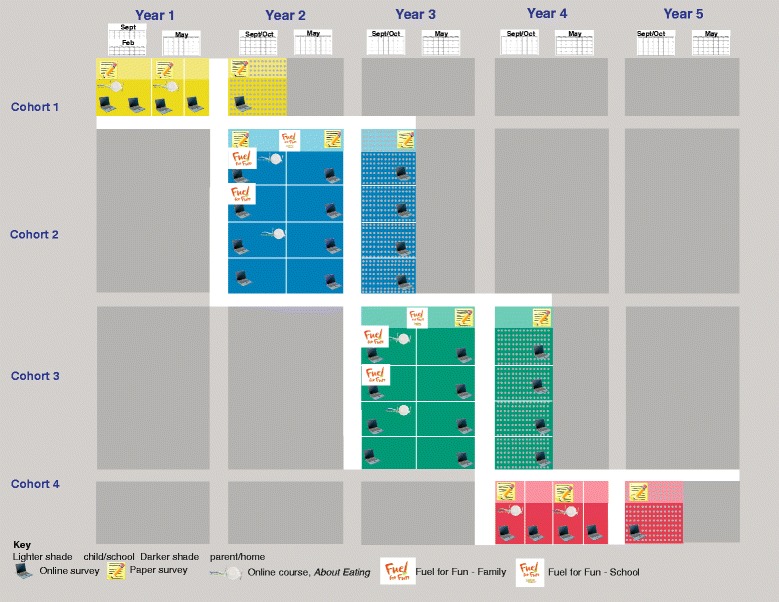
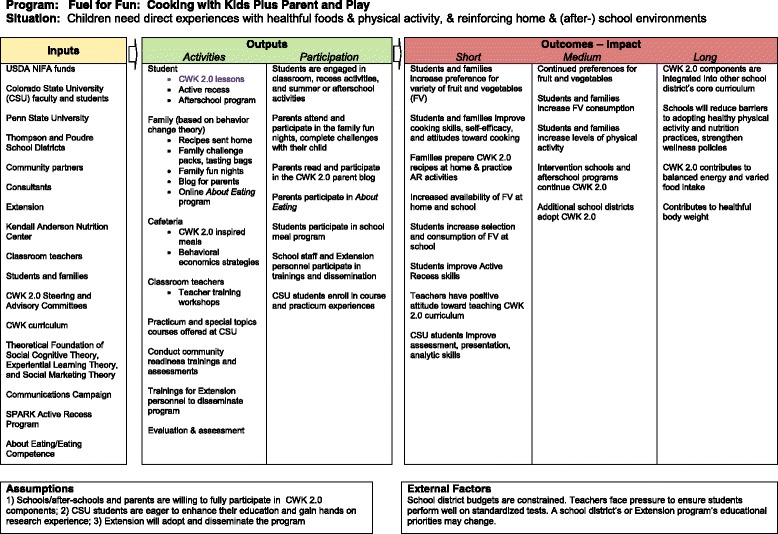
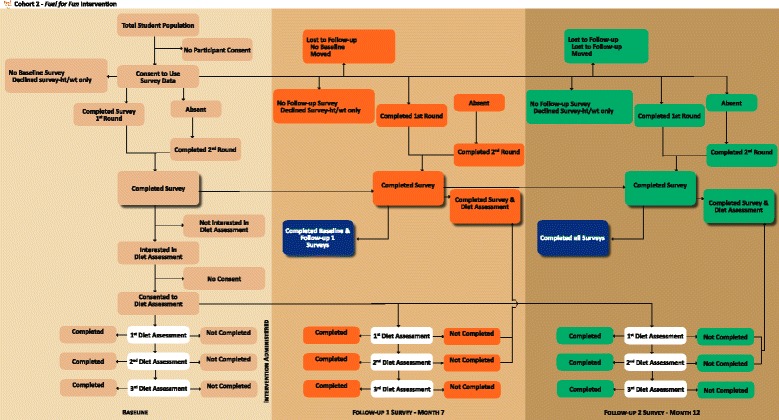
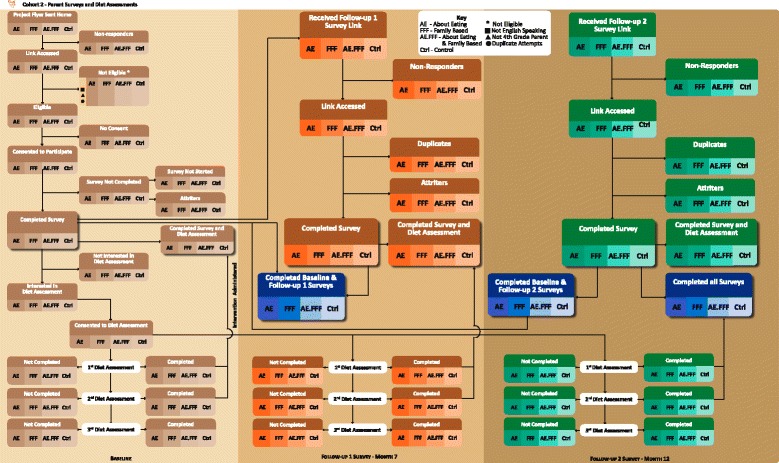
METHODS/DESIGN: Four cohorts of 4th-graders and their parents from 8 schools in 2 districts in the same Northern Colorado region are participating in a 4-arm cluster randomized controlled trial. Theory-based Fuel for Fun consists of 5 components delivered over 1 school year: 1) Cooking with Kids - Colorado; an experiential classroom-based cooking and tasting curriculum, 2) Cafeteria Connections; cafeteria-based reinforcements of classroom food experiences using behavioral economic strategies, 3) SPARK active recess; a playground intervention to engage children in moderate to vigorous activity, 4) Fuel for Fun Family; multi-element supports targeting parents to reinforce the 3 school-based components at home, and 5) About Eating; an online interactive program for parents addressing constructs of eating competence and food resource management. Outcomes include child and parent measures of fruit and vegetable preferences and intake, cooking, physical activity, sedentary behaviors and attitudes. School level data assess lunch plate waste and physical activity at recess. In-depth diet and accelerometry assessments are collected with a subsample of parent-child dyads. Data are collected at baseline, immediately post-intervention at 7 months, and at 12 month follow-up. We anticipate recruiting 1320-1584 children and their parents over the length of the project.
The Fuel for Fun study design allows for impact assessment of school-, family- and online parent-based intervention components separately and in combination. Study strengths include use of theory- and evidence-based programs, valid child and parent self-report instruments, and objective measures of food, cooking, and physical activity behaviors at the individual, family and school levels. Parent involvement and engagement is examined through multiple strategies.
Clinicaltrials.gov registration number NCT02491294 . Registered 7 July, 2015.
儿童肥胖在美国及许多其他国家仍然是一个严重问题。直接体验准备和品尝健康食品以及在上学日增加活动量是很有前景的预防方法。让家长和家庭参与进来仍是一项重大挑战。“趣味燃料:与孩子及家长一起烹饪和玩耍”是一项针对四年级学生及其家庭的多方面学校和家庭干预措施,旨在促进个人、家庭和学校层面积极的饮食和活动环境、政策及行为。本文描述了该干预措施的设计和评估计划。
方法/设计:来自科罗拉多州北部同一地区2个学区8所学校的4组四年级学生及其家长正在参与一项4组群集随机对照试验。基于理论的“趣味燃料”包括在1个学年内实施的5个组成部分:1)“与孩子一起烹饪 - 科罗拉多”;一个基于课堂体验的烹饪和品尝课程,2)“自助餐厅联系”;利用行为经济学策略在自助餐厅强化课堂饮食体验,3)“火花活跃课间休息”;一项让孩子们参与中度至剧烈活动的操场干预措施,4)“趣味燃料家庭”;针对家长的多方面支持,以强化家庭中基于学校的3个组成部分,5)“关于饮食”;一个针对家长的在线互动项目,涉及饮食能力和食物资源管理的相关内容。结果包括儿童和家长在水果和蔬菜偏好及摄入量、烹饪、体育活动、久坐行为和态度方面的测量指标。学校层面的数据评估午餐餐盘浪费情况和课间休息时的体育活动情况。对亲子二元组的一个子样本进行深入的饮食和加速度计评估。在基线、干预后7个月时以及12个月随访时收集数据。我们预计在项目期间招募1320 - 1584名儿童及其家长。
“趣味燃料”研究设计允许分别及综合评估基于学校、家庭和在线家长的干预组成部分的影响。研究优势包括使用基于理论和证据的项目、有效的儿童和家长自我报告工具,以及在个人、家庭和学校层面客观测量食物、烹饪和体育活动行为。通过多种策略研究家长的参与情况。
Clinicaltrials.gov注册号NCT02491294。于2015年7月7日注册。