Ramakrishnaiah Ravikumar, Alkheraif Abdulaziz A, Divakar Darshan Devang, Matinlinna Jukka P, Vallittu Pekka K
Dental Biomaterials Research Chair, Dental Health Department, College of Applied Medical Sciences, King Saud University, P. O. Box 10219, Riyadh 11433, Kingdom of Saudi Arabia.
Dental Materials Science, Faculty of Dentistry, The University of Hong Kong, Hong Kong, SAR, China.
Int J Mol Sci. 2016 May 27;17(6):822. doi: 10.3390/ijms17060822.
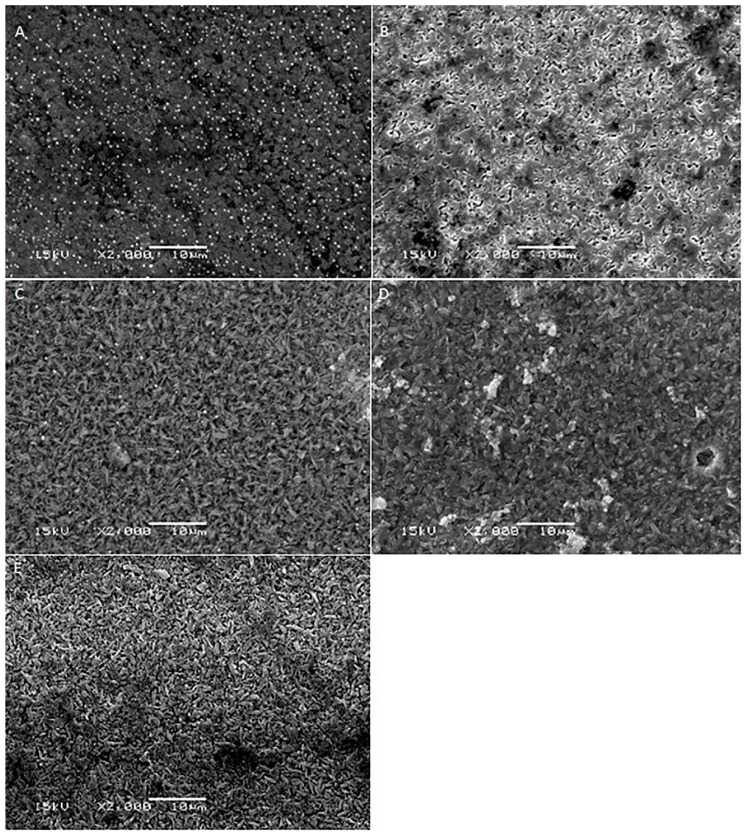
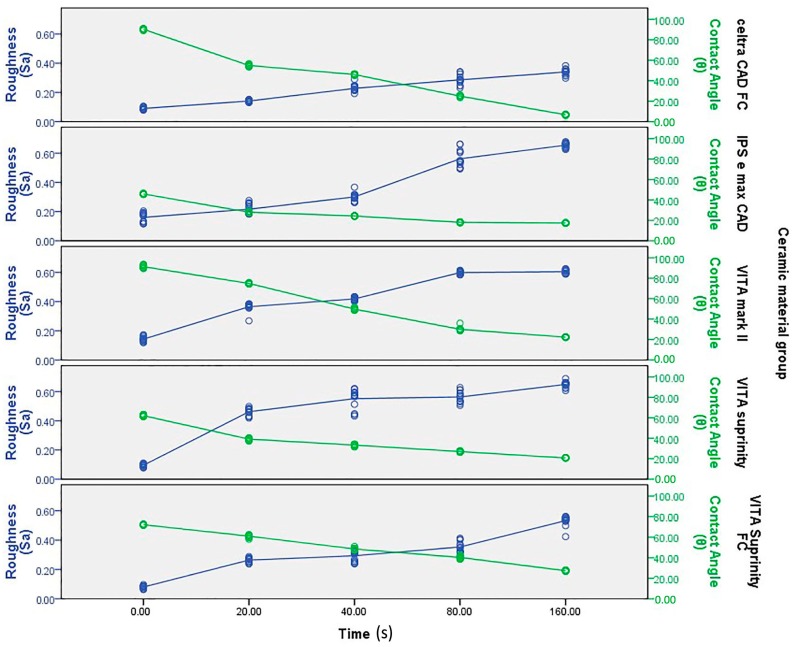
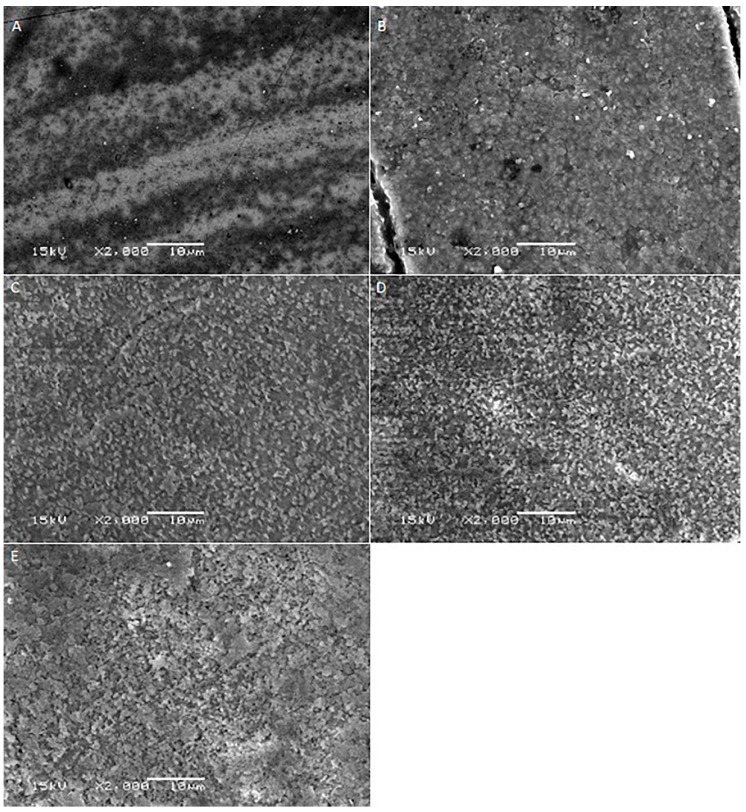
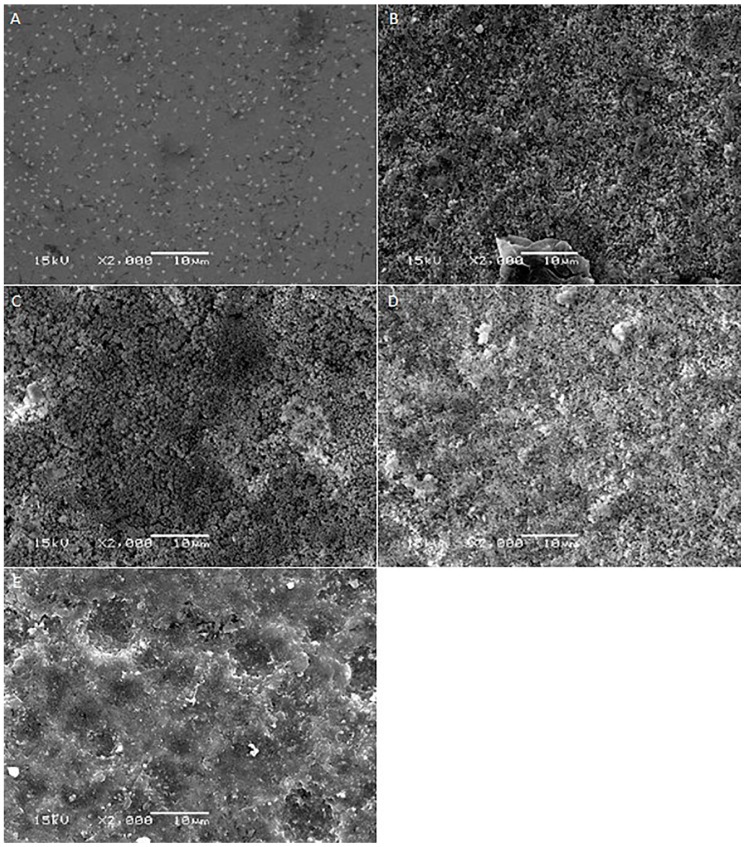
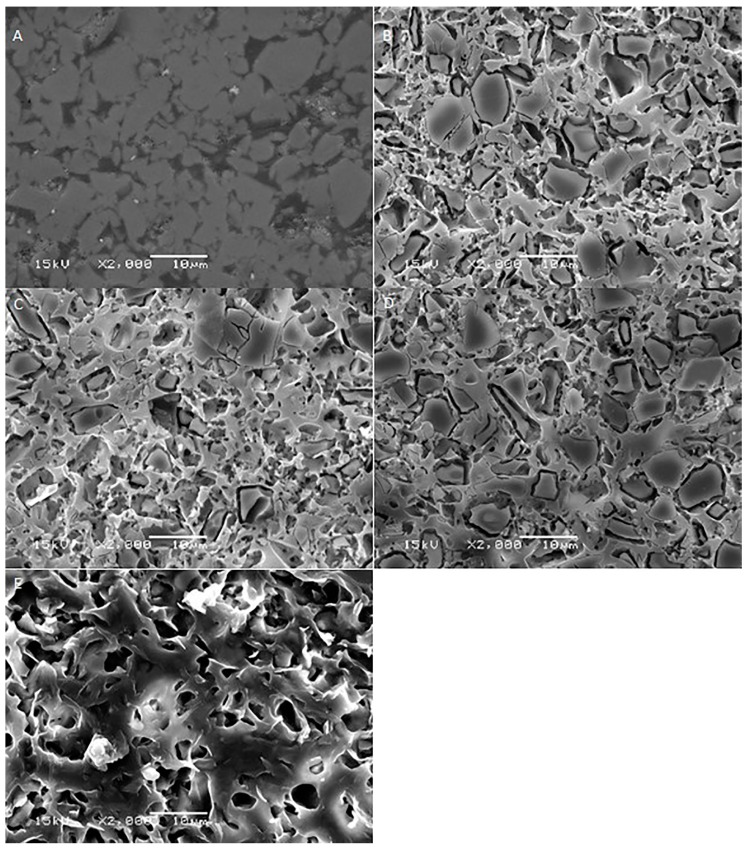
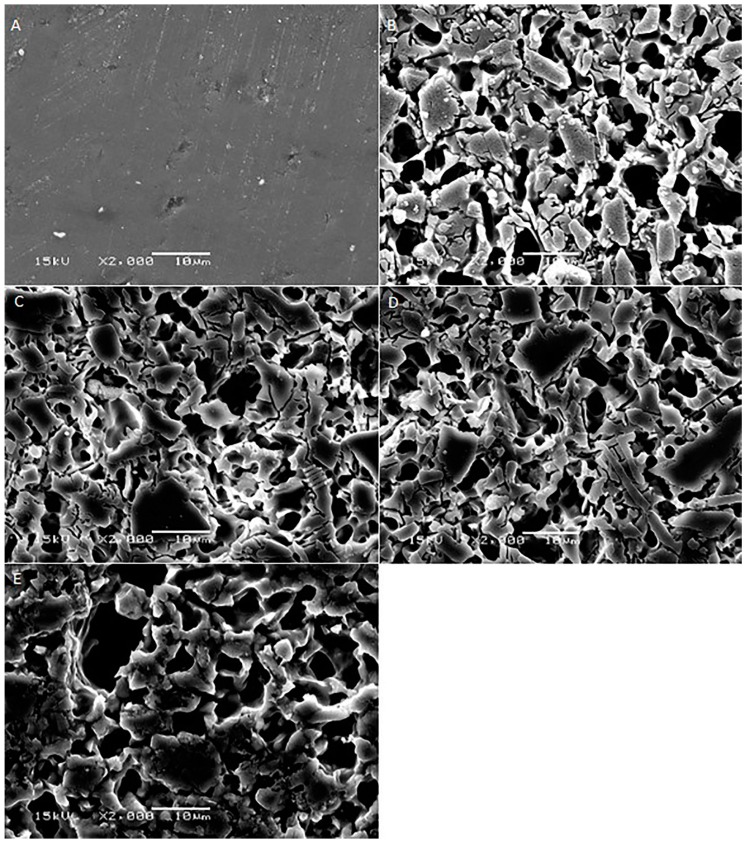
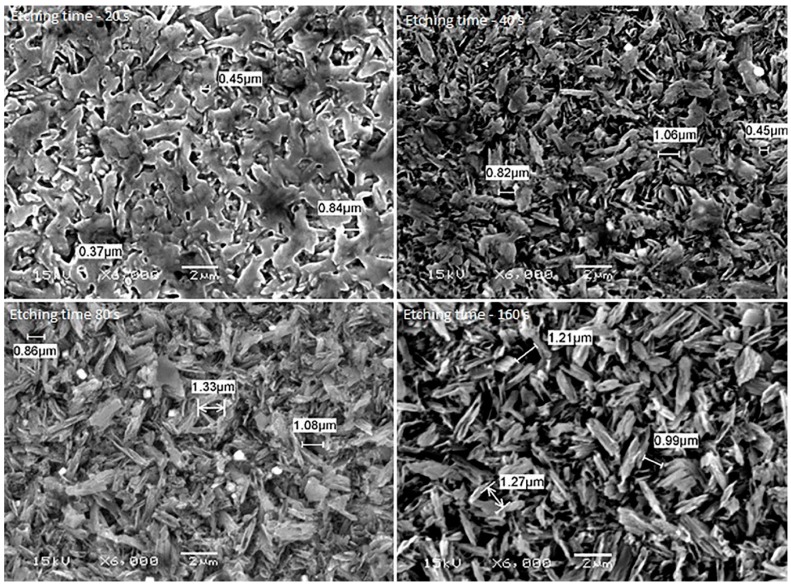
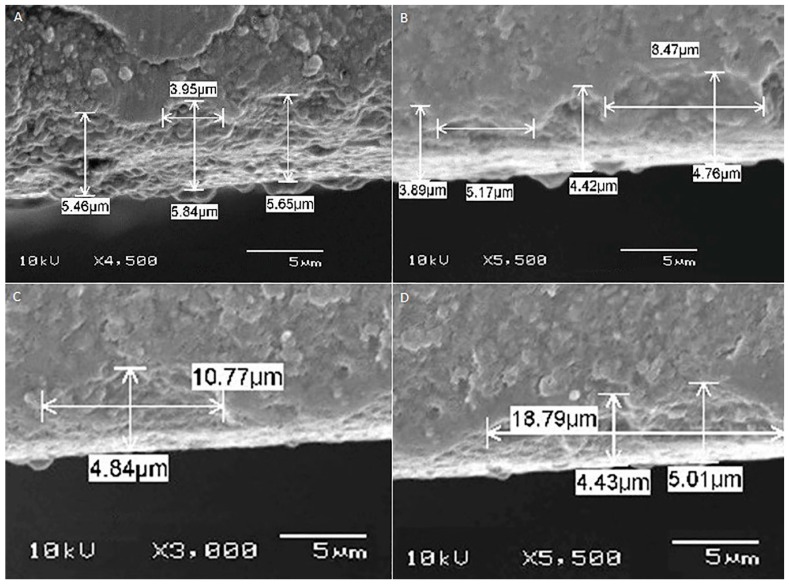
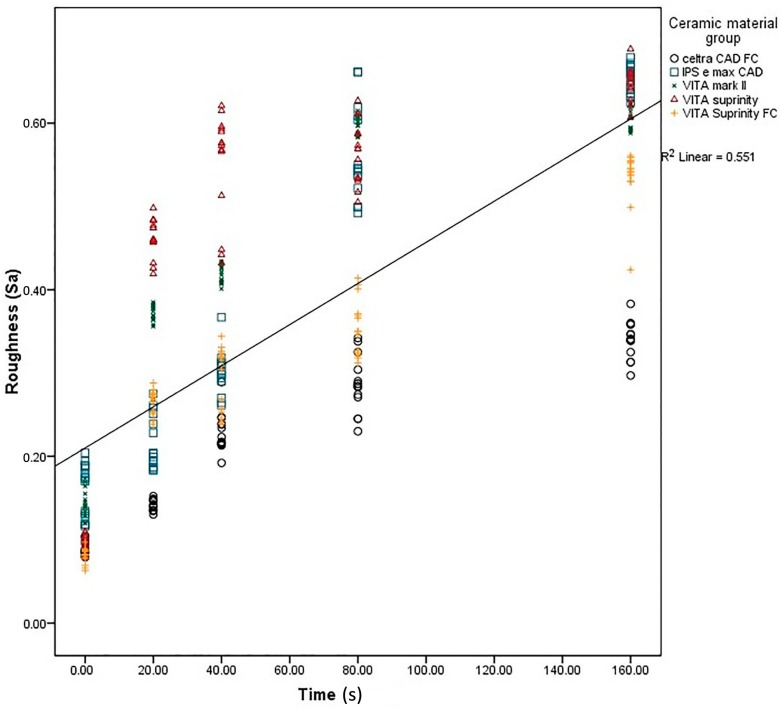
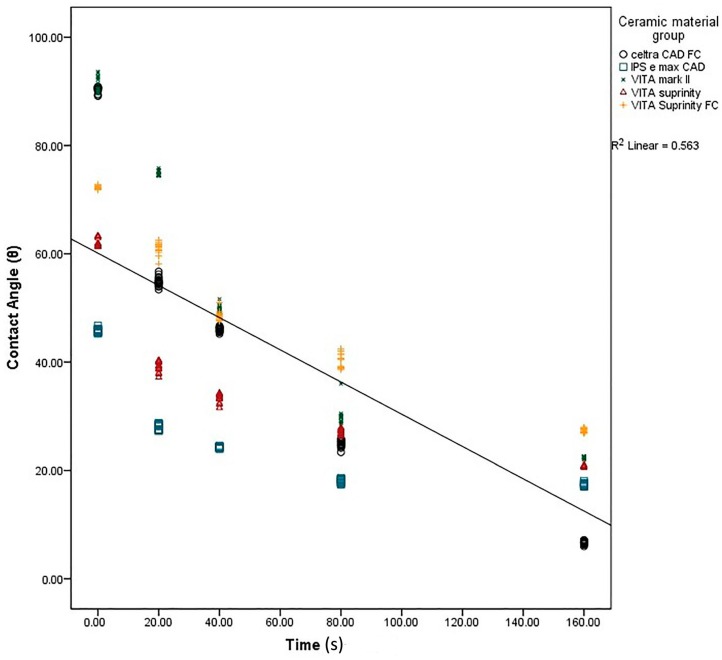
The current laboratory study is evaluating the effect of hydrofluoric acid etching duration on the surface characteristics of five silica-based glass ceramics. Changes in the pore pattern, crystal structure, roughness, and wettability were compared and evaluated. Seventy-five rectangularly shaped specimens were cut from each material (IPS e-max™, Dentsply Celtra™, Vita Suprinity™, Vita mark II™, and Vita Suprinity FC™); the sectioned samples were finished, polished, and ultrasonically cleaned. Specimens were randomly assigned into study groups: control (no etching) and four experimental groups (20, 40, 80 and 160 s of etching). The etched surfaces' microstructure including crystal structure, pore pattern, pore depth, and pore width was studied under a scanning electron microscope, and the surface roughness and wettability were analyzed using a non-contact surface profilometer and a contact angle measuring device, respectively. The results were statistically analyzed using one-way analysis of variance (ANOVA) and the post hoc Tukey's test. The results showed a significant change in the pore number, pore pattern, crystal structure, surface roughness, and wettability with increased etching duration. Etching for a short time resulted in small pores, and etching for longer times resulted in wider, irregular grooves. A significant increase in the surface roughness and wettability was observed with an increase in the etching duration. The findings also suggested a strong association between the surface roughness and wettability.
当前的实验室研究正在评估氢氟酸蚀刻时间对五种硅基玻璃陶瓷表面特性的影响。比较并评估了孔隙模式、晶体结构、粗糙度和润湿性的变化。从每种材料(义获嘉e-max™、登士柏Celtra™、维他灵Suprinity™、维他Mark II™和维他灵Suprinity FC™)上切割出75个矩形试样;将切割后的样品进行精加工、抛光并超声清洗。试样被随机分为研究组:对照组(无蚀刻)和四个实验组(蚀刻20、40、80和160秒)。在扫描电子显微镜下研究蚀刻表面的微观结构,包括晶体结构、孔隙模式、孔隙深度和孔隙宽度,并分别使用非接触式表面轮廓仪和接触角测量装置分析表面粗糙度和润湿性。使用单因素方差分析(ANOVA)和事后Tukey检验对结果进行统计分析。结果表明,随着蚀刻时间的增加,孔隙数量、孔隙模式、晶体结构、表面粗糙度和润湿性发生了显著变化。短时间蚀刻会产生小孔,长时间蚀刻会产生更宽、不规则的凹槽。随着蚀刻时间的增加,表面粗糙度和润湿性显著增加。研究结果还表明表面粗糙度和润湿性之间存在密切关联。