Qiu Juhui, Fan Xiaoying, Wang Yixia, Jin Hongbin, Song Yixiao, Han Yang, Huang Shenghong, Meng Yaping, Tang Fuchou, Meng Anming
State Key Laboratory of Membrane Biology, Tsinghua-Peking Center for Life Sciences, School of Life Sciences, Tsinghua University, Beijing 100084, China
Biodynamic Optical Imaging Center, College of Life Sciences, Department of Obstetrics and Gynecology, Third Hospital, and Ministry of Education Key Laboratory of Cell Proliferation and Differentiation, Peking University, Beijing 100871, China Peking-Tsinghua Center for Life Sciences, Peking University, Beijing 100871, China Center for Molecular and Translational Medicine, Peking University Health Science Center, Beijing 100191, China.
J Mol Cell Biol. 2016 Aug;8(4):288-301. doi: 10.1093/jmcb/mjw024. Epub 2016 Jun 1.
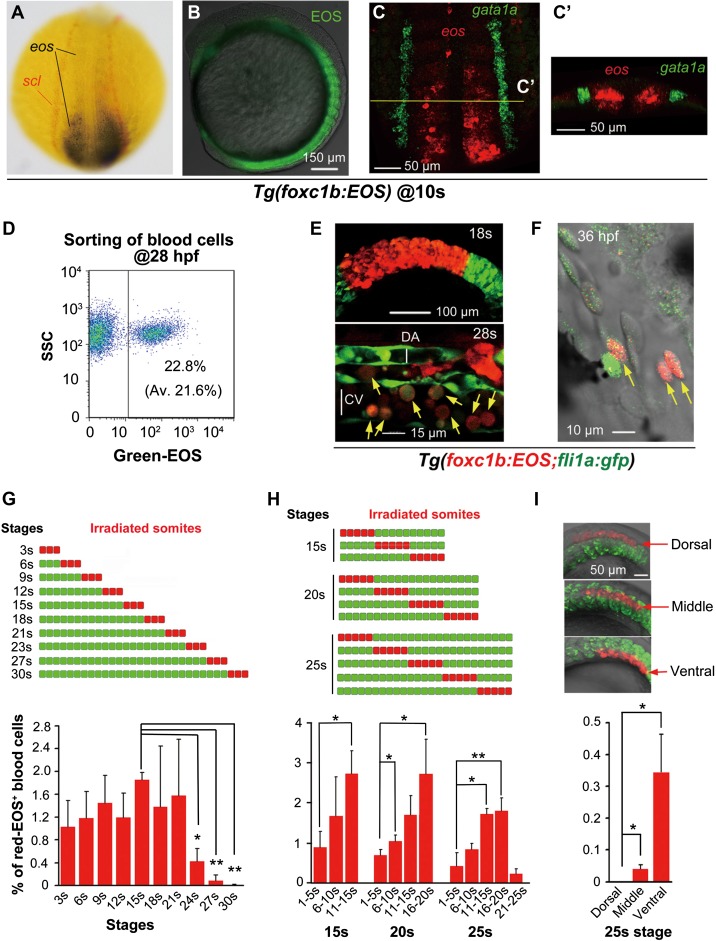
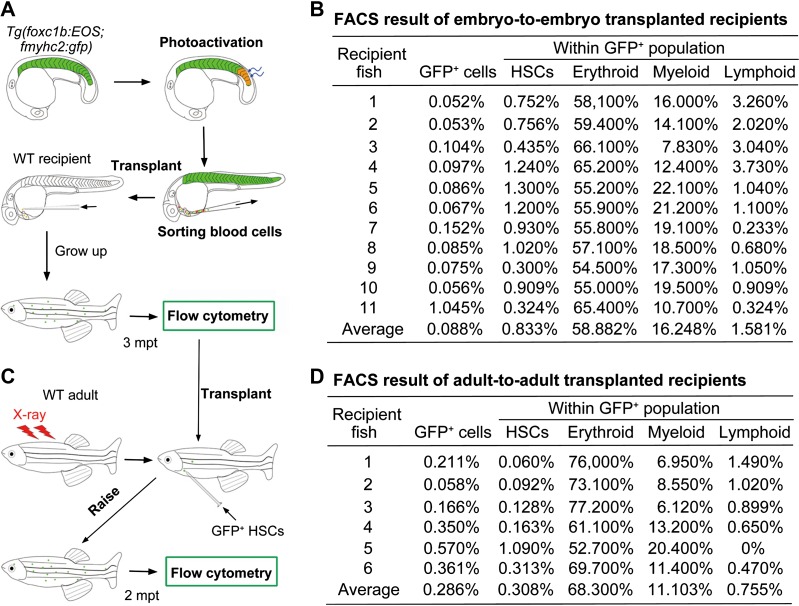
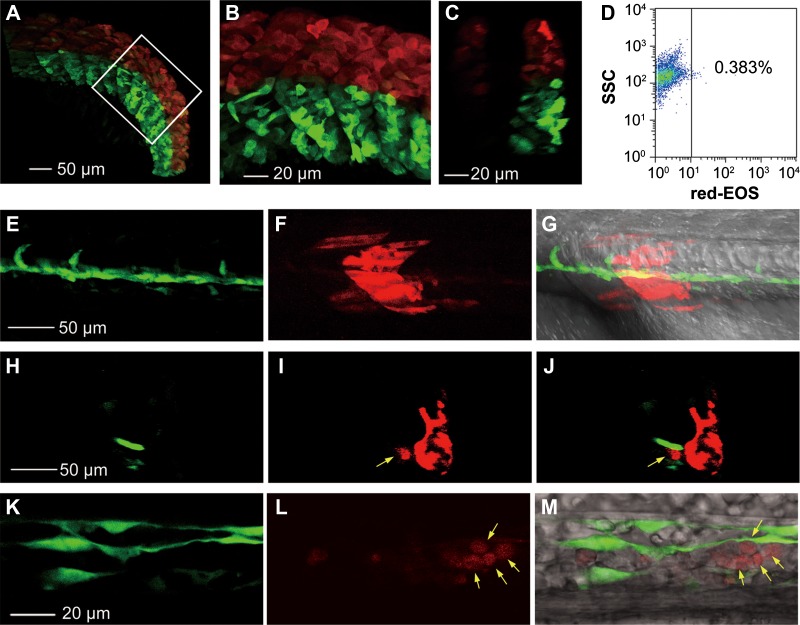
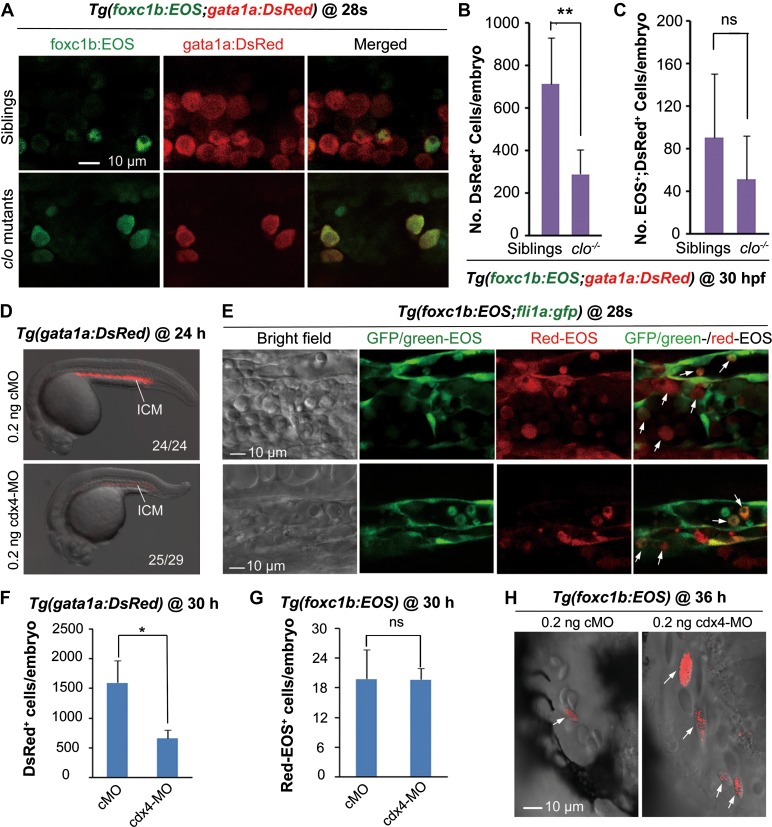
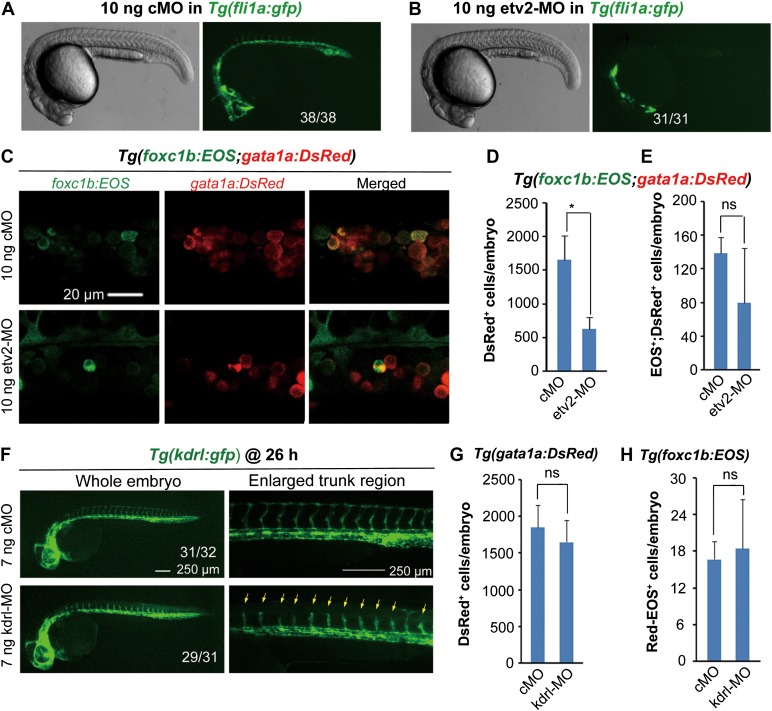
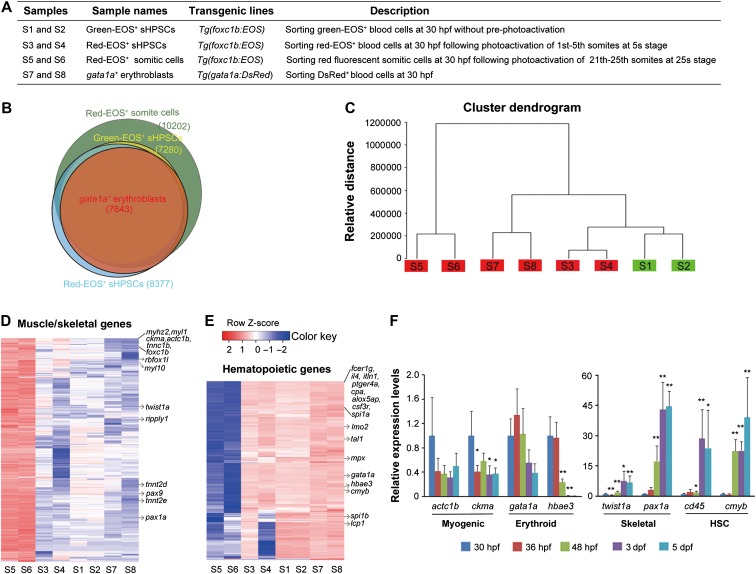
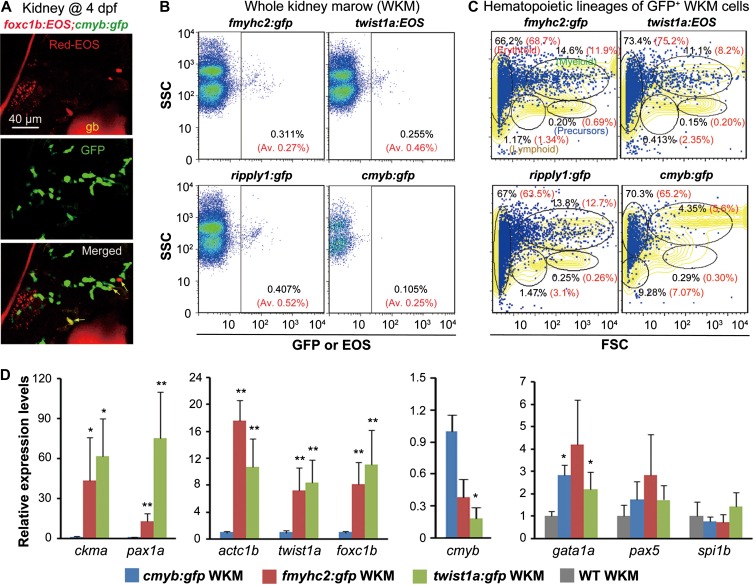
Hematopoietic stem cells (HSCs) replenish all types of blood cells. It is debating whether HSCs in adults solely originate from the aorta-gonad-mesonephros (AGM) region, more specifically, the dorsal aorta, during embryogenesis. Here, we report that somite hematopoiesis, a previously unwitnessed hematopoiesis, can generate definitive HSCs (dHSCs) in zebrafish. By transgenic lineage tracing, we found that a subset of cells within the forming somites emigrate ventromedially and mix with lateral plate mesoderm-derived primitive hematopoietic cells before the blood circulation starts. These somite-derived hematopoietic precursors and stem cells (sHPSCs) subsequently enter the circulation and colonize the kidney of larvae and adults. RNA-seq analysis reveals that sHPSCs express hematopoietic genes with sustained expression of many muscle/skeletal genes. Embryonic sHPSCs transplanted into wild-type embryos expand during growth and survive for life time with differentiation into various hematopoietic lineages, indicating self-renewal and multipotency features. Therefore, the embryonic origin of dHSCs in adults is not restricted to the AGM.
造血干细胞(HSCs)可补充所有类型的血细胞。目前仍在争论成体造血干细胞是否仅起源于胚胎发育过程中的主动脉-性腺-中肾(AGM)区域,更具体地说是背主动脉。在此,我们报告体节造血(一种先前未被观察到的造血过程)可在斑马鱼中产生定型造血干细胞(dHSCs)。通过转基因谱系追踪,我们发现正在形成的体节内的一部分细胞在血液循环开始前向腹内侧迁移,并与侧板中胚层来源的原始造血细胞混合。这些体节来源的造血前体细胞和干细胞(sHPSCs)随后进入循环系统,并定殖于幼虫和成虫的肾脏。RNA测序分析表明,sHPSCs表达造血基因,并持续表达许多肌肉/骨骼基因。移植到野生型胚胎中的胚胎sHPSCs在生长过程中扩增,并终生存活,分化为各种造血谱系,表明其具有自我更新和多能性特征。因此,成体dHSCs的胚胎起源并不局限于AGM。