Ghanakota Phani, Carlson Heather A
Department of Medicinal Chemistry, College of Pharmacy, University of Michigan , 428 Church Street, Ann Arbor, Michigan 48109-1065, United States.
J Phys Chem B. 2016 Aug 25;120(33):8685-95. doi: 10.1021/acs.jpcb.6b03515. Epub 2016 Jun 17.
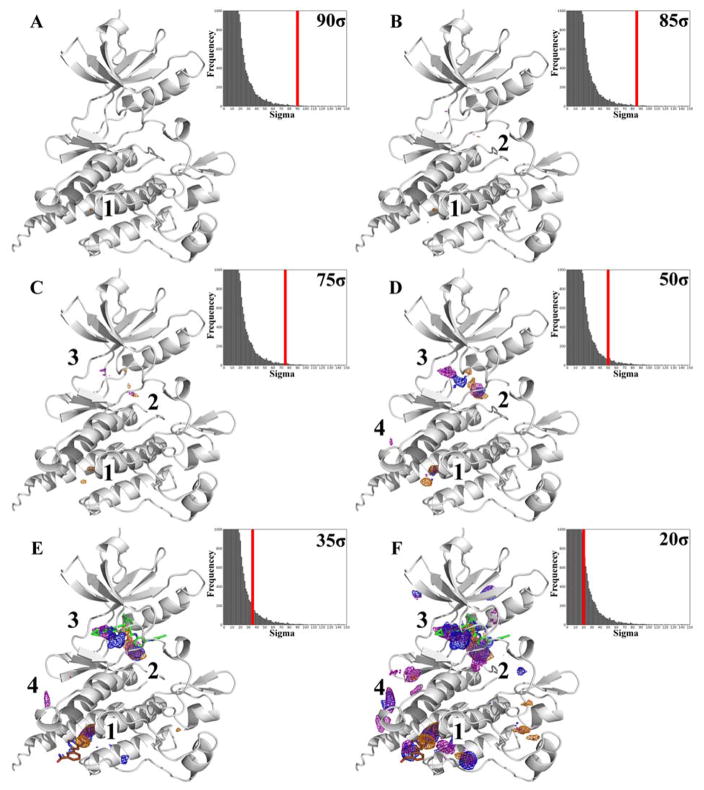
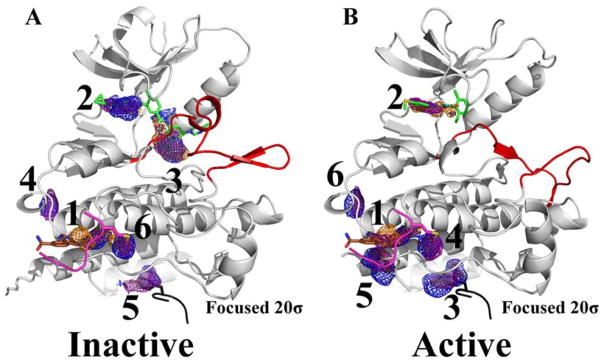
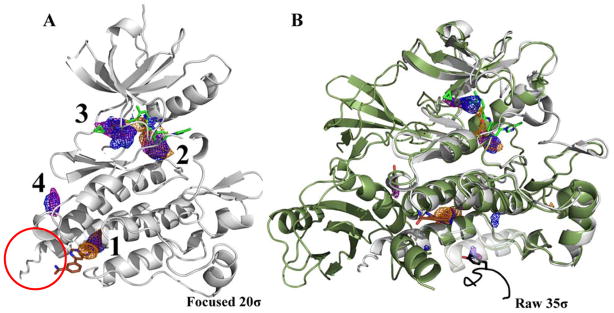
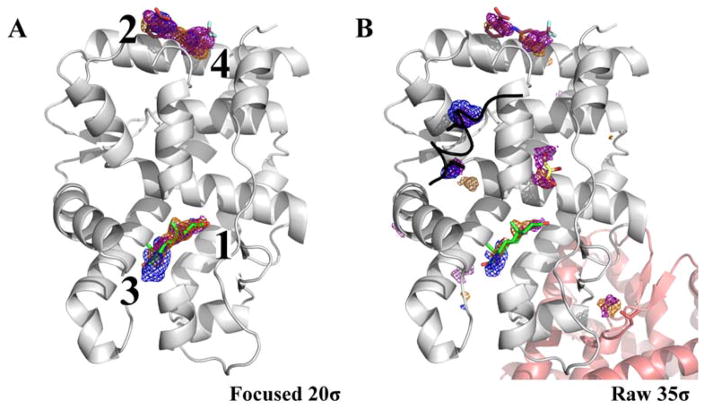
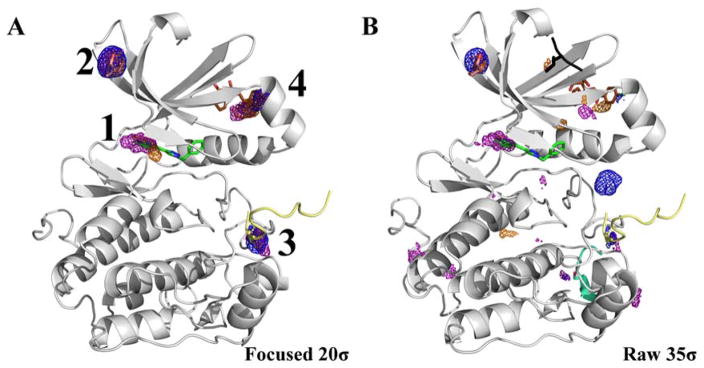
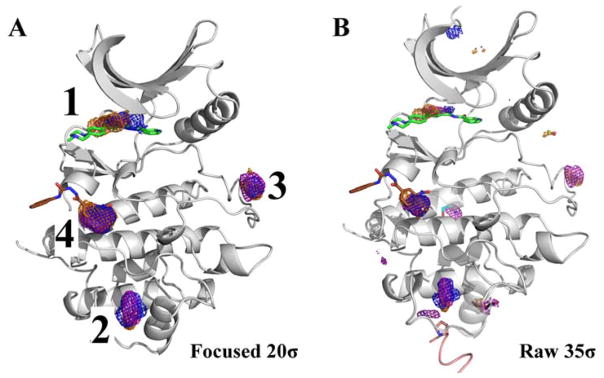
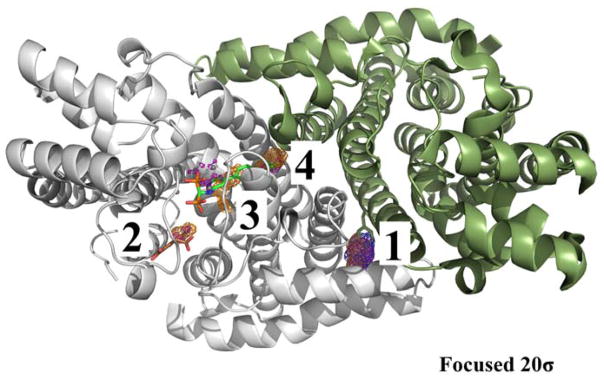
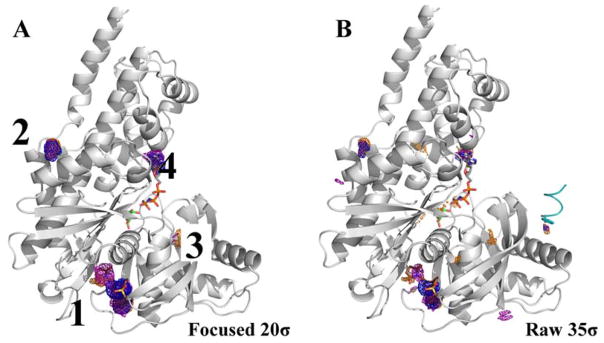
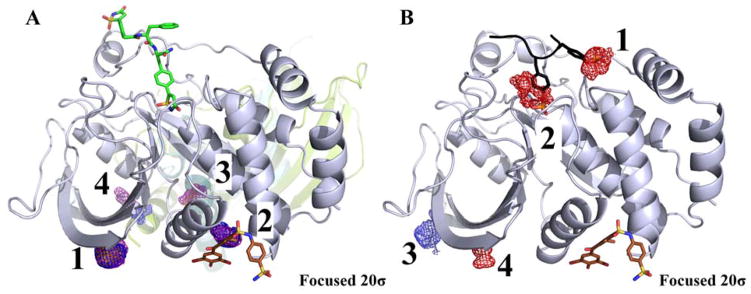
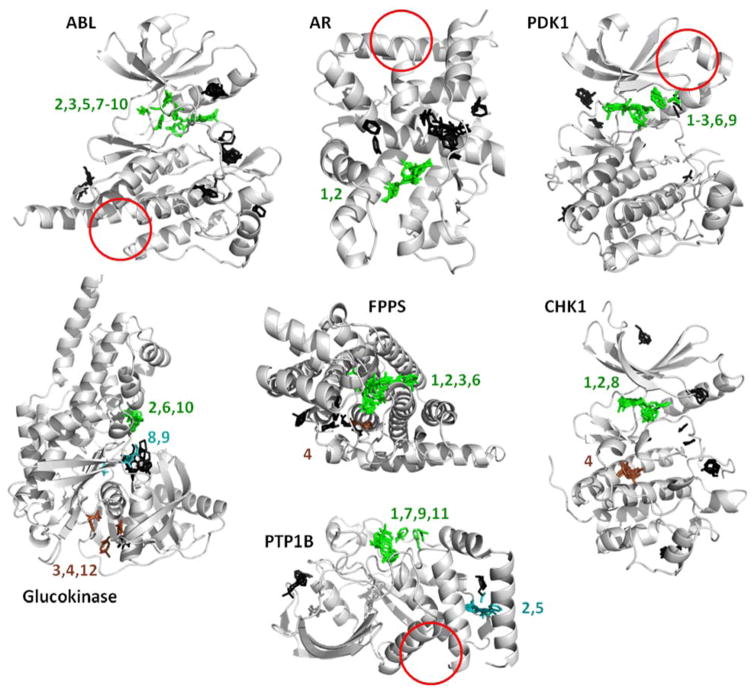
Mixed-solvent molecular dynamics (MixMD) is a hotspot-mapping technique that relies on molecular dynamics simulations of proteins in binary solvent mixtures. Previous work on MixMD has established the technique's effectiveness in capturing binding sites of small organic compounds. In this work, we show that MixMD can identify both competitive and allosteric sites on proteins. The MixMD approach embraces full protein flexibility and allows competition between solvent probes and water. Sites preferentially mapped by probe molecules are more likely to be binding hotspots. There are two important requirements for the identification of ligand-binding hotspots: (1) hotspots must be mapped at very high signal-to-noise ratio and (2) the hotspots must be mapped by multiple probe types. We have developed our mapping protocol around acetonitrile, isopropanol, and pyrimidine as probe solvents because they allowed us to capture hydrophilic, hydrophobic, hydrogen-bonding, and aromatic interactions. Charged probes were needed for mapping one target, and we introduce them in this work. In order to demonstrate the robust nature and wide applicability of the technique, a combined total of 5 μs of MixMD was applied across several protein targets known to exhibit allosteric modulation. Most notably, all the protein crystal structures used to initiate our simulations had no allosteric ligands bound, so there was no preorganization of the sites to predispose the simulations to find the allosteric hotspots. The protein test cases were ABL Kinase, Androgen Receptor, CHK1 Kinase, Glucokinase, PDK1 Kinase, Farnesyl Pyrophosphate Synthase, and Protein-Tyrosine Phosphatase 1B. The success of the technique is demonstrated by the fact that the top-four sites solely map the competitive and allosteric sites. Lower-ranked sites consistently map other biologically relevant sites, multimerization interfaces, or crystal-packing interfaces. Lastly, we highlight the importance of including protein flexibility by demonstrating that MixMD can map allosteric sites that are not detected in half the systems using FTMap applied to the same crystal structures.
混合溶剂分子动力学(MixMD)是一种热点映射技术,它依赖于蛋白质在二元溶剂混合物中的分子动力学模拟。先前关于MixMD的工作已经证实了该技术在捕获小有机化合物结合位点方面的有效性。在这项工作中,我们表明MixMD可以识别蛋白质上的竞争性位点和别构位点。MixMD方法考虑了蛋白质的完全灵活性,并允许溶剂探针与水之间的竞争。优先被探针分子映射的位点更有可能是结合热点。识别配体结合热点有两个重要要求:(1)热点必须以非常高的信噪比进行映射;(2)热点必须由多种探针类型进行映射。我们围绕乙腈、异丙醇和嘧啶作为探针溶剂开发了我们的映射协议,因为它们使我们能够捕获亲水、疏水、氢键和芳香相互作用。映射一个靶点需要带电探针,我们在这项工作中引入了它们。为了证明该技术的稳健性和广泛适用性,我们对几个已知表现出别构调节的蛋白质靶点总共应用了5微秒的MixMD。最值得注意的是,用于启动我们模拟的所有蛋白质晶体结构都没有结合别构配体,因此不存在位点的预组织,使模拟倾向于找到别构热点。蛋白质测试案例包括ABL激酶、雄激素受体、CHK1激酶、葡萄糖激酶、PDK1激酶、法呢基焦磷酸合酶和蛋白酪氨酸磷酸酶1B。该技术的成功体现在前四个位点仅映射了竞争性位点和别构位点这一事实。排名较低的位点始终映射其他生物学相关位点、多聚化界面或晶体堆积界面。最后,我们通过证明MixMD可以映射使用FTMap应用于相同晶体结构时在一半系统中未检测到的别构位点,突出了纳入蛋白质灵活性的重要性。