Hagaman Ashley K, Maharjan Uden, Kohrt Brandon A
School of Human Evolution and Social Change, Arizona State University, Tempe, USA.
Health Research and Social Development Forum, Kathmandu, Nepal.
Int J Ment Health Syst. 2016 Jun 6;10:46. doi: 10.1186/s13033-016-0073-7. eCollection 2016.
Despite increasing recognition of the high burden of suicide deaths in low- and middle-income countries, there is wide variability in the type and quality of data collected and reported for suspected suicide deaths. Suicide data are filtered through reporting systems shaped by social, cultural, legal, and medical institutions. Lack of systematic reporting may underestimate public health needs or contribute to misallocation of resources to groups most at risk.
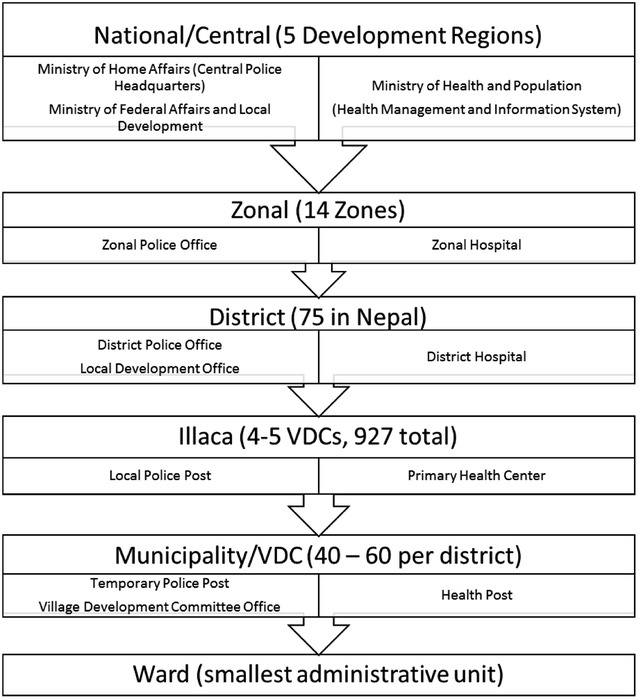
The goal of this study was to explore how institutional structures, cultural perspectives on suicide, and perceived criminality of self-harm influence the type and quality of suicide statistics, using Nepal as an example because of its purported high rate of suicide in the public health literature. Official documentation and reporting networks drawn by police, policy makers, and health officials were analyzed. Thirty-six stakeholders involved in various levels of the death reporting systems in Nepal participated in in-depth interviews and an innovative drawn surveillance system elicitation task.
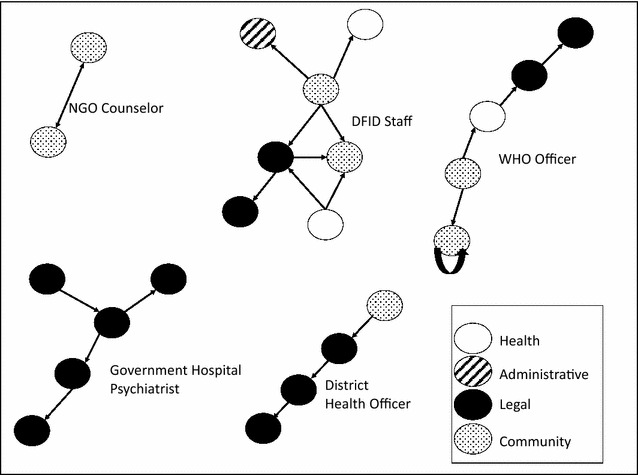
Content analysis and social network analysis revealed large variation across the participants perceived networks, where some networks were linear pathways dominated by a single institution (police or community) with few nodes involved in data transmission, while others were complex and communicative. Network analysis demonstrated that police institutions controlled the majority of suicide information collection and reporting, whereas health and community institutions were only peripherally involved. Both health workers and policy makers reported that legal codes criminalizing suicide impaired documentation, reporting, and care provision. However, legal professionals and law review revealed that attempting suicide is not a crime punishable by incarceration. Another limitation of current reporting was the lack of attention to male suicide.
Establishment and implementation of national suicide prevention strategies will not be possible without reliable statistics and comprehensive standardized reporting practices. The case of Nepal points to the need for collaborative reporting and accountability shared between law enforcement, administrative, and health sectors. Awareness of legal codes among health workers, in particular dispelling myths of suicide's illegality, is crucial to improve mental health services and reporting practices.
尽管人们越来越认识到低收入和中等收入国家自杀死亡负担沉重,但对于疑似自杀死亡所收集和报告的数据类型及质量存在很大差异。自杀数据是通过由社会、文化、法律和医疗机构塑造的报告系统进行筛选的。缺乏系统报告可能会低估公共卫生需求,或导致资源错配到风险最高的群体。
本研究的目的是探讨机构结构、对自杀的文化观念以及自我伤害的感知犯罪性如何影响自杀统计数据的类型和质量,以尼泊尔为例,因为在公共卫生文献中其自杀率据称很高。分析了警方、政策制定者和卫生官员绘制的官方文件和报告网络。尼泊尔参与不同层面死亡报告系统的36名利益相关者参加了深入访谈和一项创新性的绘制监测系统启发任务。
内容分析和社会网络分析显示,参与者所感知的网络存在很大差异,有些网络是由单个机构(警方或社区)主导的线性路径,参与数据传输的节点很少,而其他网络则复杂且具有交流性。网络分析表明,警察机构控制了大部分自杀信息的收集和报告,而卫生和社区机构只是边缘参与。卫生工作者和政策制定者都报告说,将自杀定为犯罪的法律法规妨碍了文件记录、报告和护理提供。然而,法律专业人员和法律审查表明,自杀未遂并非可处以监禁的罪行。当前报告的另一个局限性是对男性自杀缺乏关注。
没有可靠的统计数据和全面的标准化报告做法,就不可能制定和实施国家自杀预防战略。尼泊尔的案例表明,执法、行政和卫生部门之间需要进行协作报告并分担责任。提高卫生工作者对法律法规的认识,尤其是消除自杀非法性的误解,对于改善心理健康服务和报告做法至关重要。