Anand U, Sinisi M, Fox M, MacQuillan A, Quick T, Korchev Y, Bountra C, McCarthy T, Anand P
Department of Medicine, Imperial College London, Hammersmith Hospital, London, UK
Peripheral Nerve Injury Unit, Royal National Orthopaedic Hospital, Middlesex, UK.
Mol Pain. 2016 Jun 20;12. doi: 10.1177/1744806916654144. Print 2016.
Mycolactone is a polyketide toxin secreted by the mycobacterium Mycobacterium ulcerans, responsible for the extensive hypoalgesic skin lesions characteristic of patients with Buruli ulcer. A recent pre-clinical study proposed that mycolactone may produce analgesia via activation of the angiotensin II type 2 receptor (AT2R). In contrast, AT2R antagonist EMA401 has shown analgesic efficacy in animal models and clinical trials for neuropathic pain. We therefore investigated the morphological and functional effects of mycolactone in cultured human and rat dorsal root ganglia (DRG) neurons and the role of AT2R using EMA401. Primary sensory neurons were prepared from avulsed cervical human DRG and rat DRG; 24 h after plating, neurons were incubated for 24 to 96 h with synthetic mycolactone A/B, followed by immunostaining with antibodies to PGP9.5, Gap43, β tubulin, or Mitotracker dye staining. Acute functional effects were examined by measuring capsaicin responses with calcium imaging in DRG neuronal cultures treated with mycolactone.
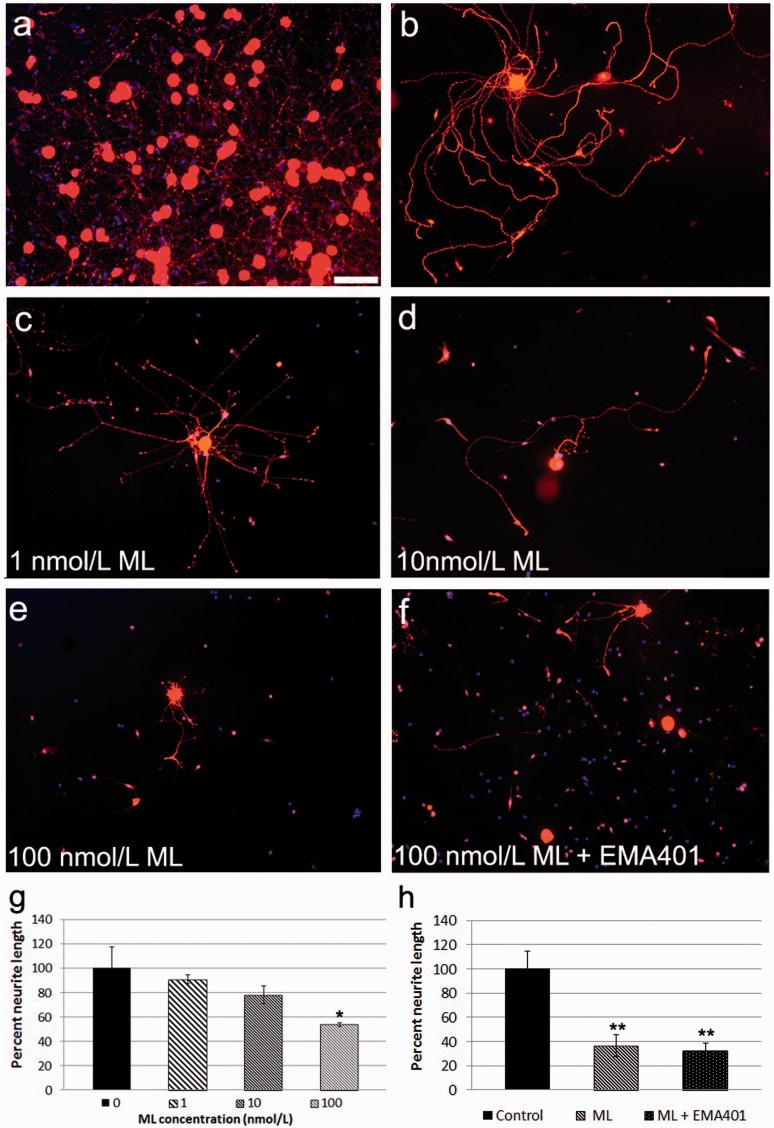
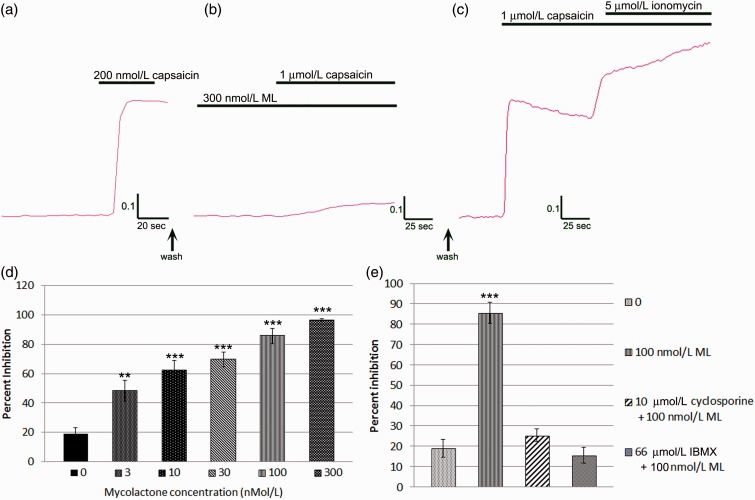
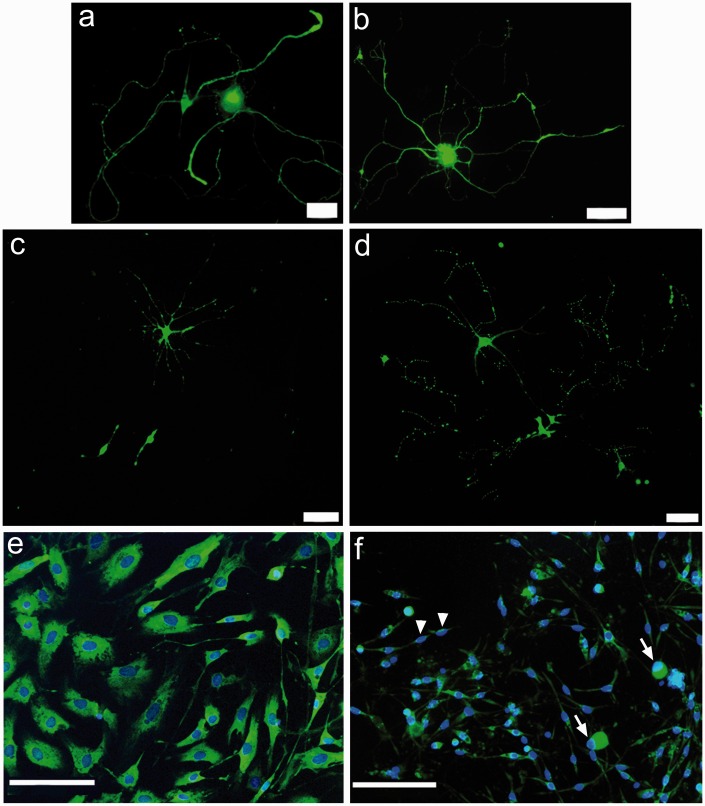
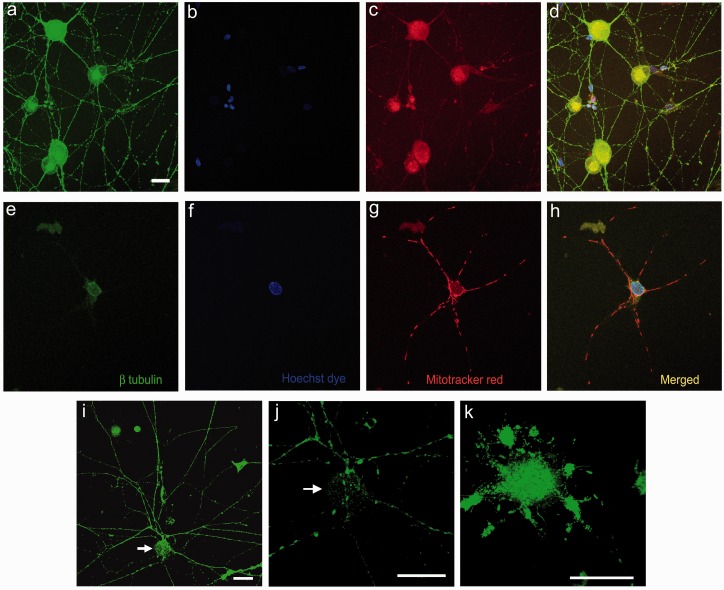
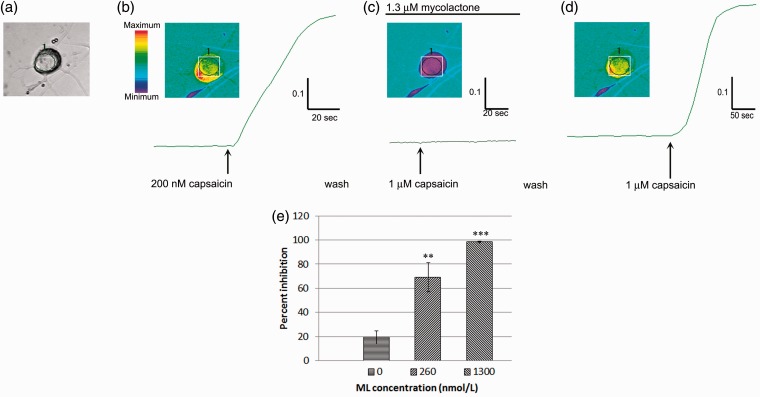
Morphological effects: Mycolactone-treated cultures showed dramatically reduced numbers of surviving neurons and non-neuronal cells, reduced Gap43 and β tubulin expression, degenerating neurites and reduced cell body diameter, compared with controls. Dose-related reduction of neurite length was observed in mycolactone-treated cultures. Mitochondria were distributed throughout the length of neurites and soma of control neurons, but clustered in the neurites and soma of mycolactone-treated neurons. Functional effects: Mycolactone-treated human and rat DRG neurons showed dose-related inhibition of capsaicin responses, which were reversed by calcineurin inhibitor cyclosporine and phosphodiesterase inhibitor 3-isobutyl-1-Methylxanthine, indicating involvement of cAMP/ATP reduction. The morphological and functional effects of mycolactone were not altered by Angiotensin II or AT2R antagonist EMA401.
Mycolactone induces toxic effects in DRG neurons, leading to impaired nociceptor function, neurite degeneration, and cell death, resembling the cutaneous hypoalgesia and nerve damage in individuals with M. Ulcerans infection.
分枝杆菌内酯是溃疡分枝杆菌分泌的一种聚酮化合物毒素,是导致布氏溃疡患者出现广泛的痛觉减退性皮肤损伤的原因。最近一项临床前研究表明,分枝杆菌内酯可能通过激活血管紧张素II 2型受体(AT2R)产生镇痛作用。相比之下,AT2R拮抗剂EMA401在神经性疼痛的动物模型和临床试验中已显示出镇痛效果。因此,我们使用EMA401研究了分枝杆菌内酯对培养的人及大鼠背根神经节(DRG)神经元的形态和功能影响以及AT2R的作用。从撕脱的颈段人DRG和大鼠DRG制备初级感觉神经元;接种24小时后,将神经元与合成的分枝杆菌内酯A/B孵育24至96小时,然后用抗PGP9.5、Gap43、β微管蛋白的抗体进行免疫染色或用Mitotracker染料染色。通过在用分枝杆菌内酯处理的DRG神经元培养物中用钙成像测量辣椒素反应来检测急性功能影响。
形态学影响:与对照组相比,用分枝杆菌内酯处理的培养物显示存活神经元和非神经元细胞数量显著减少,Gap43和β微管蛋白表达降低,神经突退化,细胞体直径减小。在用分枝杆菌内酯处理的培养物中观察到神经突长度与剂量相关的减少。线粒体分布在对照神经元的神经突和胞体全长,但聚集在用分枝杆菌内酯处理的神经元的神经突和胞体中。功能影响:用分枝杆菌内酯处理的人及大鼠DRG神经元显示出与剂量相关的辣椒素反应抑制,钙调神经磷酸酶抑制剂环孢素和磷酸二酯酶抑制剂3 - 异丁基 - 1 - 甲基黄嘌呤可逆转这种抑制,表明涉及cAMP/ATP减少。血管紧张素II或AT2R拮抗剂EMA401未改变分枝杆菌内酯的形态和功能影响。
分枝杆菌内酯在DRG神经元中诱导毒性作用,导致伤害感受器功能受损、神经突退化和细胞死亡,类似于溃疡分枝杆菌感染个体中的皮肤痛觉减退和神经损伤。