
分娩期抗生素预防以预防B族链球菌病后早期肠道微生物群的扰动
Early Gut Microbiota Perturbations Following Intrapartum Antibiotic Prophylaxis to Prevent Group B Streptococcal Disease.
作者信息
Mazzola Giuseppe, Murphy Kiera, Ross R Paul, Di Gioia Diana, Biavati Bruno, Corvaglia Luigi T, Faldella Giacomo, Stanton Catherine
机构信息
Department of Agricultural Sciences, University of Bologna, Bologna, Italy.
Food Biosciences Department, Teagasc Food Research Centre, Fermoy, Cork, Ireland.
出版信息
PLoS One. 2016 Jun 22;11(6):e0157527. doi: 10.1371/journal.pone.0157527. eCollection 2016.
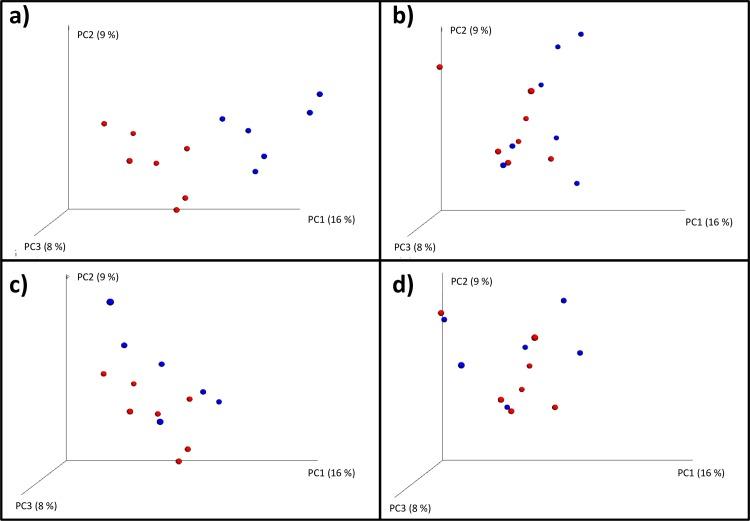
The faecal microbiota composition of infants born to mothers receiving intrapartum antibiotic prophylaxis with ampicillin against group B Streptococcus was compared with that of control infants, at day 7 and 30 of life. Recruited newborns were both exclusive breastfed and mixed fed, in order to also study the effect of dietary factors on the microbiota composition. Massive parallel sequencing of the V3-V4 region of the 16S rRNA gene and qPCR analysis were performed. Antibiotic prophylaxis caused the most marked changes on the microbiota in breastfed infants, mainly resulting in a higher relative abundance of Enterobacteriaceae, compared with control infants (52% vs. 14%, p = 0.044) and mixed-fed infants (52% vs. 16%, p = 0.13 NS) at day 7 and in a lower bacterial diversity compared to mixed-fed infants and controls. Bifidobacteria were also particularly vulnerable and abundances were reduced in breastfed (p = 0.001) and mixed-fed antibiotic treated groups compared to non-treated groups. Reductions in bifidobacteria in antibiotic treated infants were also confirmed by qPCR. By day 30, the bifidobacterial population recovered and abundances significantly increased in both breastfed (p = 0.025) and mixed-fed (p = 0.013) antibiotic treated groups, whereas Enterobacteriaceae abundances remained highest in the breastfed antibiotic treated group (44%), compared with control infants (16%) and mixed-fed antibiotic treated group (28%). This study has therefore demonstrated the short term consequences of maternal intrapartum antibiotic prophylaxis on the infant faecal microbial population, particularly in that of breastfed infants.
将接受氨苄青霉素预防B族链球菌产时抗生素治疗的母亲所生婴儿的粪便微生物群组成,与对照组婴儿在出生第7天和第30天的粪便微生物群组成进行了比较。招募的新生儿既有纯母乳喂养的,也有混合喂养的,以便研究饮食因素对微生物群组成的影响。对16S rRNA基因的V3-V4区域进行了大规模平行测序和qPCR分析。抗生素预防对母乳喂养婴儿的微生物群造成了最显著的变化,主要导致肠杆菌科的相对丰度更高,与对照组婴儿相比(52%对14%,p = 0.044),与混合喂养婴儿相比(52%对16%,p = 0.13,无显著性差异)在第7天,并且与混合喂养婴儿和对照组相比细菌多样性更低。双歧杆菌也特别脆弱,与未治疗组相比,母乳喂养(p = 0.001)和混合喂养抗生素治疗组中的双歧杆菌丰度降低。抗生素治疗婴儿中双歧杆菌的减少也通过qPCR得到证实。到第30天,双歧杆菌数量恢复,母乳喂养(p = 0.025)和混合喂养(p = 0.013)抗生素治疗组中的丰度均显著增加,而母乳喂养抗生素治疗组中肠杆菌科的丰度仍然最高(44%),与对照组婴儿(16%)和混合喂养抗生素治疗组(28%)相比。因此,本研究证明了母亲产时抗生素预防对婴儿粪便微生物群的短期影响,尤其是对母乳喂养婴儿的影响。


 Zotero 插件