Wolever Ruth Q, Jordan Meg, Lawson Karen, Moore Margaret
Osher Center for Integrative Medicine, Department of Physical Medicine & Rehabilitation, Vanderbilt Schools of Medicine & Nursing, 3401 West End Ave., Suite 380, Nashville, 37280, TN, USA.
Integrative Health Studies, California Institute of Integral Studies, CIIS Main Building, 4th Floor, 1453 Mission St., San Francisco, 94103, CA, USA.
BMC Health Serv Res. 2016 Jun 27;16:205. doi: 10.1186/s12913-016-1465-8.
The pressing need to manage burgeoning chronic disease has led to the emergence of job roles such as health and wellness coaches (HWCs). As use of this title has increased dramatically, so has the need to ensure consistency, quality and safety for health and wellness coaching (HWC) provided in both practice and research. Clear and uniform role definitions and competencies are required to ensure appropriate scope of practice, to allow best practices to emerge, and to support the implementation of well-designed, large scale studies to accumulate a rigorous evidence base. Since the nascent field is replete with heterogeneity in terms of role delineations and competencies, a collaborative volunteer non-profit organization, the National Consortium for Credentialing Health and Wellness Coaches (NCCHWC), has been built over the past six years to support professionalization of the field.
In 2014, a professionally led Job Task Analysis (JTA) was conducted with 15 carefully selected subject matter experts (SMEs) with diverse education and professional backgrounds who were practicing HWC in a wide variety of settings. After establishing a thorough list of specific tasks employed during HWC, the expert panel discussed the knowledge and skills necessary to competently perform the tasks. Subsequently, a large validation survey assessed the relative importance and frequency of each identified job task in conducting HWC.
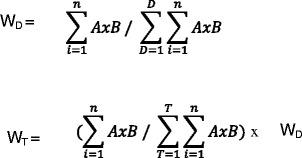
The JTA identified 21 job tasks as essential to HWC. In the subsequent validation survey, 4026 practicing health and wellness coaches were invited to rate each of the 21 job tasks in terms of their importance and frequency. A response rate of 25.6 % provided a diverse sample (n = 1031) in terms of background, and represented a wide variety of training programs from academia, industry, the private sector and associations. Per best practices, the subset of practicing HWCs (n = 885) provided importance and frequency ratings to be used to calculate task and domain weights that can serve as a foundation for a NCCHWC national certification examination.
This JTA provides a significant step forward in the building of a clear and consistent definition of HWC that will allow for uniform practice standards and enable more stringent methodology to evaluate this promising approach within evidence-based medicine.
应对迅速增长的慢性病的迫切需求催生了健康与 wellness 教练(HWC)等职业角色。随着这个头衔的使用急剧增加,确保在实践和研究中提供的健康与 wellness 教练服务(HWC)的一致性、质量和安全性的需求也随之增加。需要清晰统一的角色定义和能力要求,以确保适当的实践范围,促进最佳实践的出现,并支持开展精心设计的大规模研究以积累严格的证据基础。由于这个新兴领域在角色界定和能力方面存在诸多异质性,一个合作性的志愿非营利组织——国家健康与 wellness 教练认证联盟(NCCHWC)在过去六年中得以建立,以支持该领域的专业化发展。
2014 年,由专业人员主导对 15 名精心挑选的主题专家(SME)进行了工作任务分析(JTA),这些专家具有不同的教育和专业背景,在各种环境中从事 HWC 工作。在确定了 HWC 过程中使用的详细具体任务清单后,专家小组讨论了胜任这些任务所需的知识和技能。随后,一项大型验证性调查评估了每项已确定的工作任务在开展 HWC 时的相对重要性和频率。
JTA 确定了 21 项对 HWC 至关重要的工作任务。在随后的验证性调查中,邀请了 4026 名在职健康与 wellness 教练对这 21 项工作任务的重要性和频率进行评分。25.6%的回复率提供了一个背景多样的样本(n = 1031),代表了来自学术界、行业、私营部门和协会的各种培训项目。按照最佳实践,在职 HWC 的子集(n = 885)提供了重要性和频率评分,用于计算任务和领域权重,可为 NCCHWC 国家认证考试奠定基础。
这项 JTA 在构建清晰一致的 HWC 定义方面向前迈出了重要一步,这将允许统一实践标准,并使在循证医学中评估这种有前景的方法时采用更严格的方法。