State Key Laboratory of Rice Biology &Key Laboratory of Agricultural Entomology of Ministry of Agriculture, Institute of Insect Sciences, Zhejiang University, Hangzhou 310058, China.
College of Plant Protection, State &Local Joint Engineering Research Center of Green Pesticide Invention and Application, Nanjing Agricultural University, Nanjing 210095, China.
Sci Rep. 2016 Jun 29;6:28976. doi: 10.1038/srep28976.
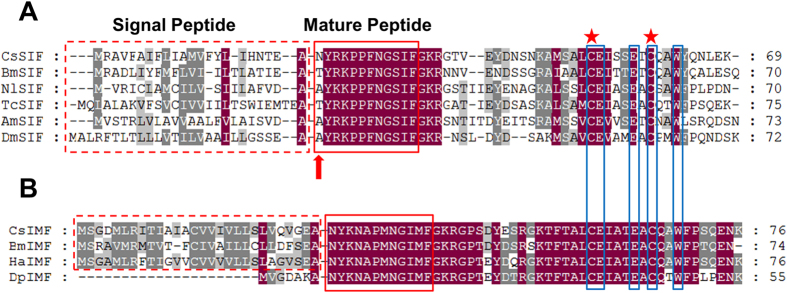
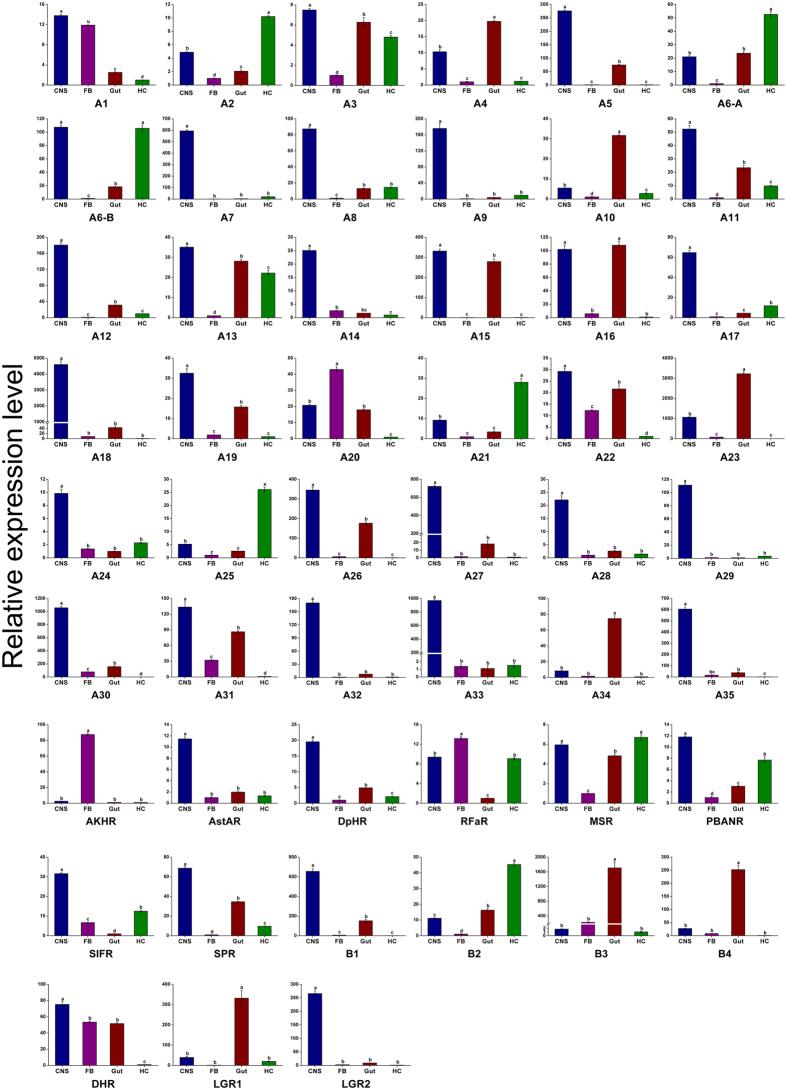
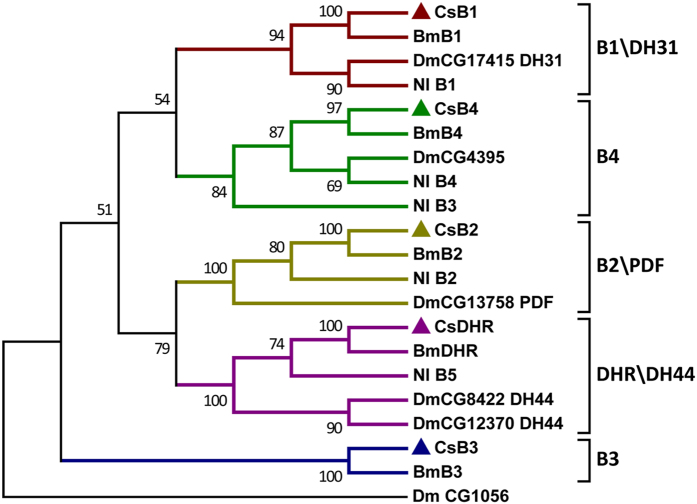
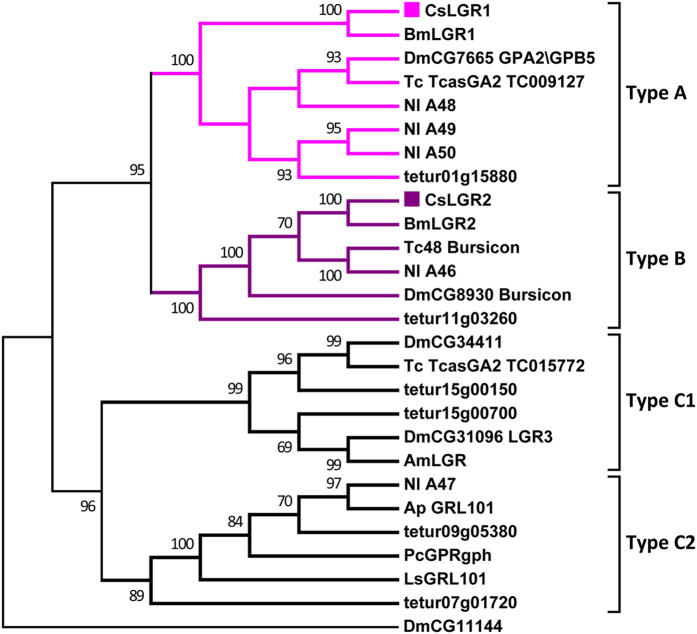
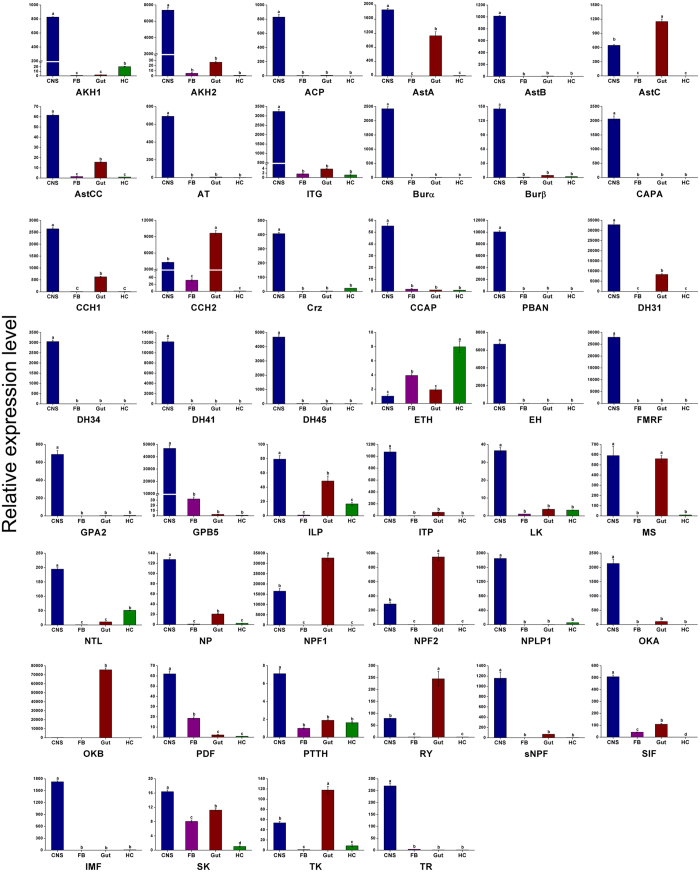
In insects, neuropeptides play important roles in the regulation of multiple physiological processes by binding to their corresponding receptors, which are primarily G protein-coupled receptors (GPCRs). The genes encoding neuropeptides and their associated GPCRs in the rice stem borer Chilo suppressalis were identified by a transcriptomic analysis and were used to identify potential targets for the disruption of physiological processes and the protection of crops. Forty-three candidate genes were found to encode the neuropeptide precursors for all known insect neuropeptides except for arginine-vasopressin-like peptide (AVLP), CNMamide, neuropeptide-like precursors 2-4 (NPLP2-4), and proctolin. In addition, novel alternative splicing variants of three neuropeptide genes (allatostatin CC, CCHamide 1, and short neuropeptide F) are reported for the first time, and 51 putative neuropeptide GPCRs were identified. Phylogenetic analyses demonstrated that 44 of these GPCRs belong to the A-family (or rhodopsin-like), 5 belong to the B-family (or secretin-like), and 2 are leucine-rich repeat-containing GPCRs. These GPCRs and their likely ligands were also described. qRT-PCR analyses revealed the expression profiles of the neuropeptide precursors and GPCR genes in various tissues of C. suppressalis. Our study provides fundamental information that may further our understanding of neuropeptidergic signaling systems in Lepidoptera and aid in the design of peptidomimetics, pseudopeptides or small molecules capable of disrupting the physiological processes regulated by these signaling molecules and their receptors.
在昆虫中,神经肽通过与相应的受体结合,在调节多种生理过程中发挥重要作用,这些受体主要是 G 蛋白偶联受体(GPCRs)。通过转录组分析,鉴定了水稻螟虫 Chilo suppressalis 中神经肽及其相关 GPCR 的基因,并将其用于鉴定潜在的生理过程干扰和作物保护的靶标。发现 43 个候选基因编码所有已知昆虫神经肽的前体,但不包括精氨酸加压素样肽(AVLP)、CNMamide、神经肽样前体 2-4(NPLP2-4)和 proctolin。此外,首次报道了三种神经肽基因(allatostatin CC、CCHamide 1 和短神经肽 F)的新型选择性剪接变体,鉴定了 51 个推定的神经肽 GPCR。系统发育分析表明,这些 GPCR 中有 44 个属于 A 族(或视紫红质样),5 个属于 B 族(或分泌素样),2 个属于富含亮氨酸重复的 GPCR。还描述了这些 GPCR 及其可能的配体。qRT-PCR 分析揭示了 C. suppressalis 不同组织中神经肽前体和 GPCR 基因的表达谱。我们的研究提供了基础信息,可能有助于进一步了解鳞翅目动物的神经肽信号系统,并有助于设计能够干扰这些信号分子及其受体调节的生理过程的肽模拟物、假肽或小分子。