Yadiki Josna Vinutha, Jampanapalli Sharada Reddy, Konda Suhasini, Inguva Hema Chandrika, Chimata Vamsi Krishna
Assistant Professor, Department of Pedodontics and Preventive Dentistry, Army College of Dental Sciences, Secunderabad, Telangana, India.
Professor and Head, Department of Pedodontics and Preventive Dentistry Government Dental College and Hospital, Hyderabad Telangana, India.
Int J Clin Pediatr Dent. 2016 Apr-Jun;9(2):99-103. doi: 10.5005/jp-journals-10005-1342. Epub 2016 Jun 15.
Chlorhexidine gluconate is a widely used antimicrobial agent. Adding chlorhexidine and quaternary ammonium compounds to filling materials, such as composite resins, acrylic resins, and glass ionomer cements increases the antibacterial property of restorative materials. This study includes antibacterial property of glass ionomer restorative cements with chlorhexidine gluconate.
The primary objective of our study was to compare the antimicrobial properties of two commercially available glass ionomer cements with and without chlorhexidine gluconate on strains of mutans streptococci.
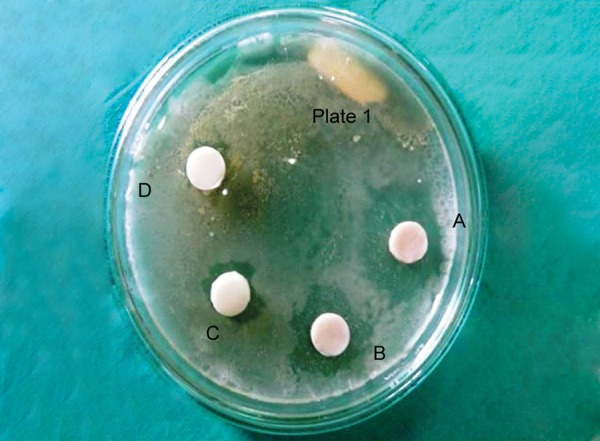
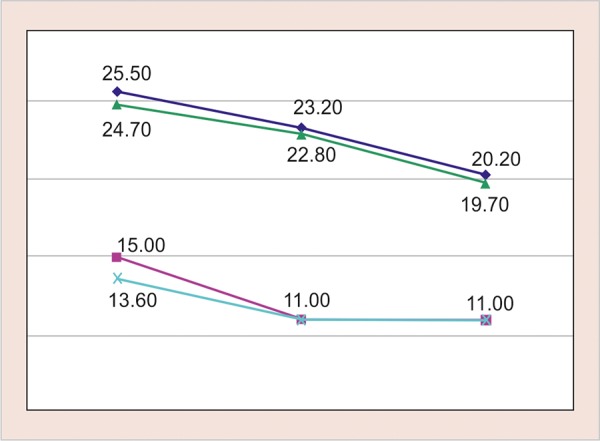
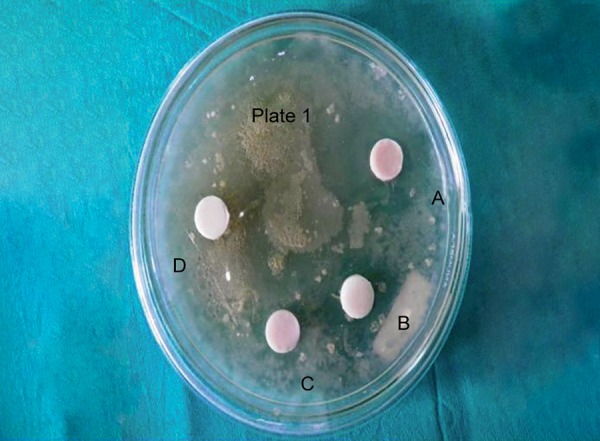
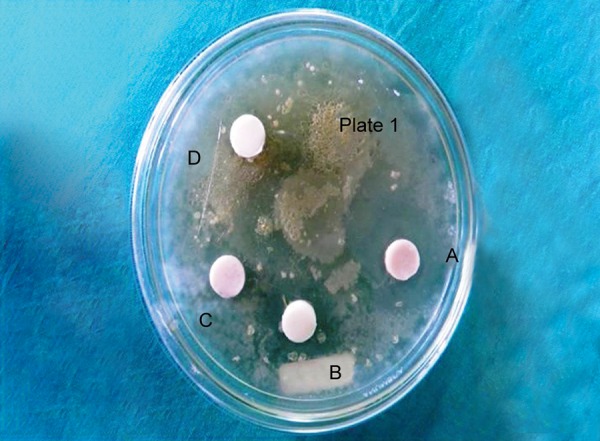
Two glass ionomers (Fuji II Conventional and Fuji IX) were used. Chlorhexidine gluconate was mixed with glass ionomer cements, and antimicrobial properties against mutans streptococci were assessed by agar diffusion. The tested bacterial strain was inhibited and the antimicrobial properties decreased with time.
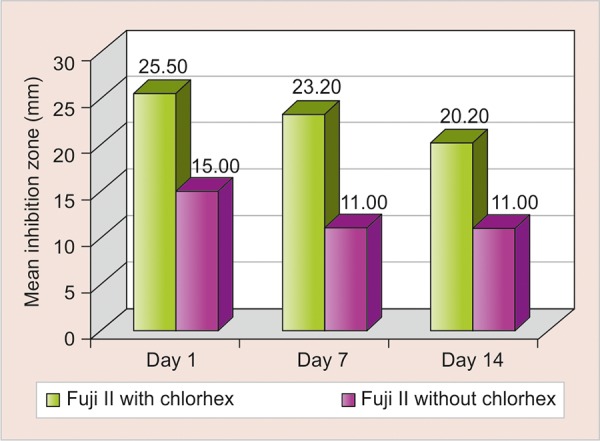
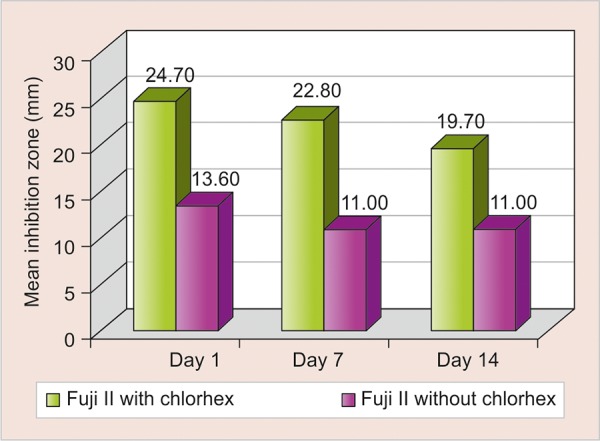
The highest amount of antimicrobial activity with mean inhibitory zone was found in Fuji II with chlorhexidine gluconate followed by Fuji IX with chlorhexidine gluconate, Fuji II without chlorhexidine gluconate, and Fuji IX without chlorhexidine gluconate.
The results of the study confirmed that the addition of 5% chlorhexidine gluconate to Fuji II and Fuji IX glass ionomer cements resulted in a restorative material that had increased antimicrobial properties over the conventional glass ionomer cements alone for Streptococcus mutans. How to cite this article: Yadiki JV, Jampanapalli SR , Konda S, Inguva HC, Chimata VK. Comparative Evaluation of the Antimicrobial Properties of Glass Ionomer Cements with and without Chlorhexidine Gluconate. Int J Clin Pediatr Dent 2016;9(2):99-103.
葡萄糖酸氯己定是一种广泛使用的抗菌剂。向复合树脂、丙烯酸树脂和玻璃离子水门汀等填充材料中添加氯己定和季铵化合物可增强修复材料的抗菌性能。本研究包括含葡萄糖酸氯己定的玻璃离子修复水门汀的抗菌性能。
我们研究的主要目的是比较两种市售含和不含葡萄糖酸氯己定的玻璃离子水门汀对变形链球菌菌株的抗菌性能。
使用了两种玻璃离子水门汀(传统型富士II和富士IX)。将葡萄糖酸氯己定与玻璃离子水门汀混合,并通过琼脂扩散法评估其对变形链球菌的抗菌性能。受试菌株受到抑制,且抗菌性能随时间下降。
平均抑菌圈显示抗菌活性最高的是含葡萄糖酸氯己定的富士II,其次是含葡萄糖酸氯己定的富士IX、不含葡萄糖酸氯己定的富士II和不含葡萄糖酸氯己定的富士IX。
研究结果证实,向富士II和富士IX玻璃离子水门汀中添加5%的葡萄糖酸氯己定可得到一种修复材料,该材料对变形链球菌的抗菌性能比单独的传统玻璃离子水门汀有所增强。如何引用本文:Yadiki JV, Jampanapalli SR, Konda S, Inguva HC, Chimata VK. 含和不含葡萄糖酸氯己定的玻璃离子水门汀抗菌性能的比较评价。《国际临床儿科牙科学杂志》2016年;9(2):99 - 103。