Subramanian Leena, Morris Monica Busse, Brosnan Meadhbh, Turner Duncan L, Morris Huw R, Linden David E J
MRC Centre for Neuropsychiatric Genetics and Genomics, School of Medicine, Cardiff UniversityCardiff, UK; Cardiff University Brain Research Imaging Centre, School of Psychology, Cardiff UniversityCardiff, UK.
MRC Centre for Neuropsychiatric Genetics and Genomics, School of Medicine, Cardiff University Cardiff, UK.
Front Behav Neurosci. 2016 Jun 8;10:111. doi: 10.3389/fnbeh.2016.00111. eCollection 2016.
Real-time functional magnetic resonance imaging (rt-fMRI) neurofeedback (NF) uses feedback of the patient's own brain activity to self-regulate brain networks which in turn could lead to a change in behavior and clinical symptoms. The objective was to determine the effect of NF and motor training (MOT) alone on motor and non-motor functions in Parkinson's Disease (PD) in a 10-week small Phase I randomized controlled trial.
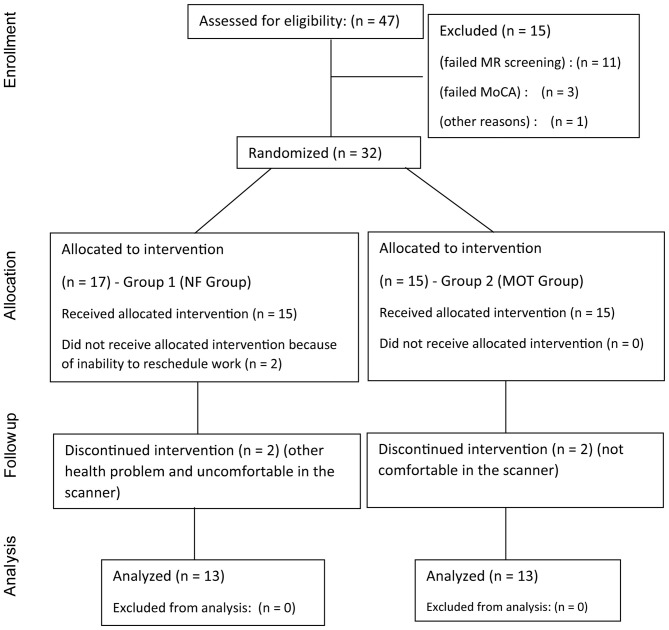
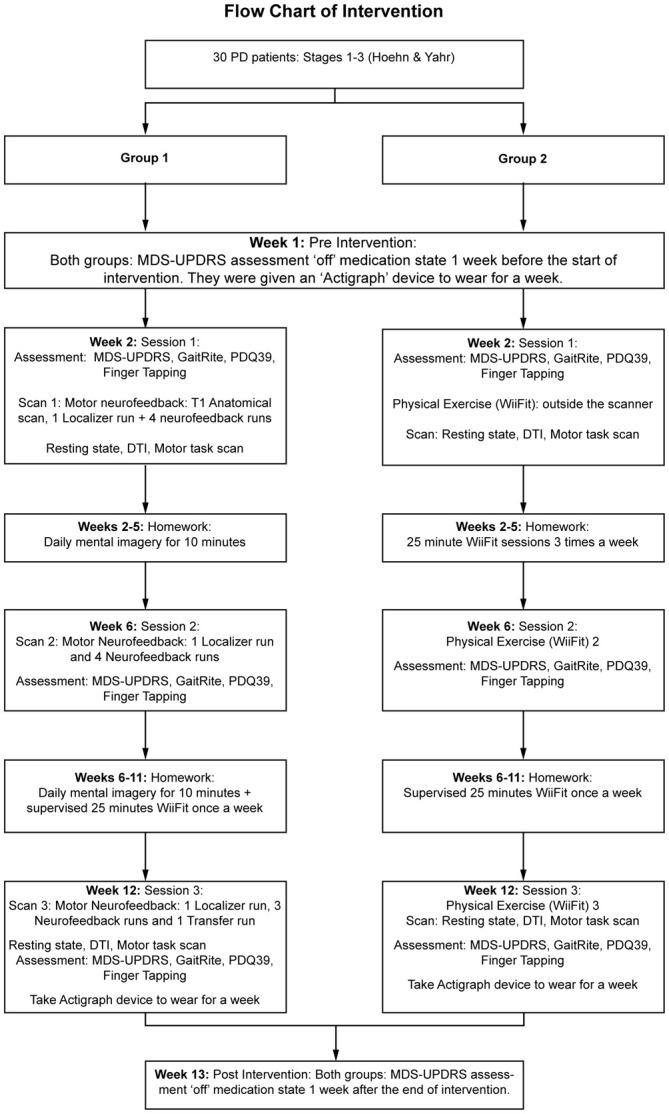
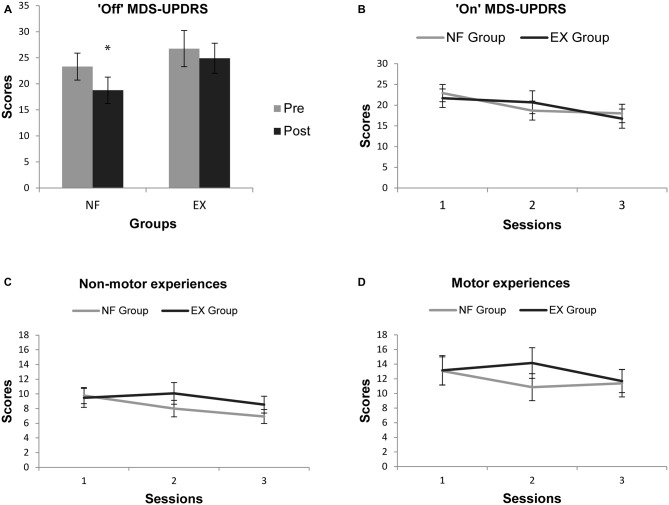
Thirty patients with Parkinson's disease (PD; Hoehn and Yahr I-III) and no significant comorbidity took part in the trial with random allocation to two groups. Group 1 (NF: 15 patients) received rt-fMRI-NF with MOT. Group 2 (MOT: 15 patients) received MOT alone. The primary outcome measure was the Movement Disorder Society-Unified PD Rating Scale-Motor scale (MDS-UPDRS-MS), administered pre- and post-intervention "off-medication". The secondary outcome measures were the "on-medication" MDS-UPDRS, the PD Questionnaire-39, and quantitative motor assessments after 4 and 10 weeks.
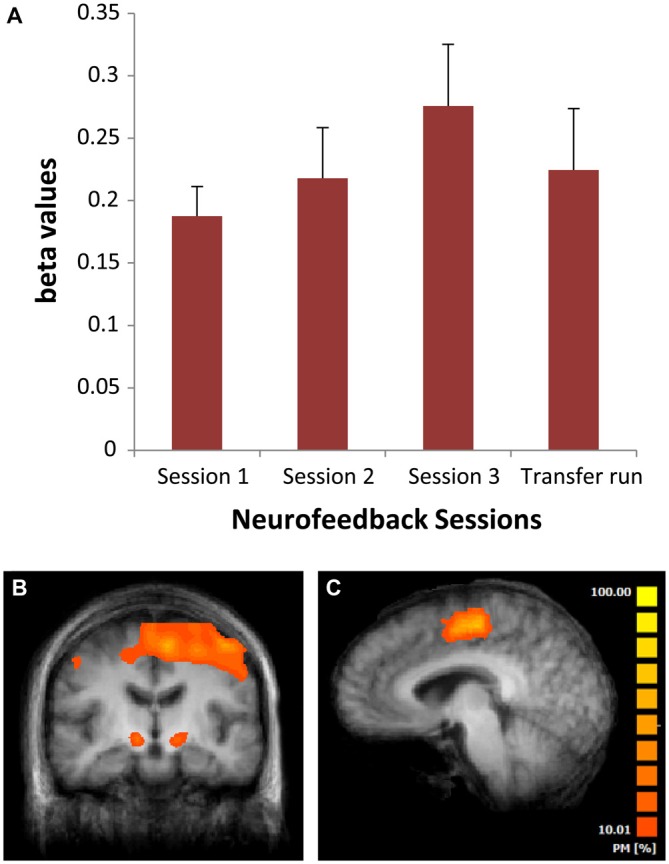
Patients in the NF group were able to upregulate activity in the supplementary motor area (SMA) by using motor imagery. They improved by an average of 4.5 points on the MDS-UPDRS-MS in the "off-medication" state (95% confidence interval: -2.5 to -6.6), whereas the MOT group improved only by 1.9 points (95% confidence interval +3.2 to -6.8). The improvement in the intervention group meets the minimal clinically important difference which is also on par with other non-invasive therapies such as repetitive Transcranial Magnetic Stimulation (rTMS). However, the improvement did not differ significantly between the groups. No adverse events were reported in either group.
This Phase I study suggests that NF combined with MOT is safe and improves motor symptoms immediately after treatment, but larger trials are needed to explore its superiority over active control conditions.
实时功能磁共振成像(rt-fMRI)神经反馈(NF)利用患者自身大脑活动的反馈来自我调节脑网络,进而可能导致行为和临床症状的改变。本研究的目的是在一项为期10周的小型I期随机对照试验中,确定NF和单纯运动训练(MOT)对帕金森病(PD)患者运动和非运动功能的影响。
30例帕金森病患者(Hoehn和Yahr I-III级)且无显著合并症参与了该试验,并随机分为两组。第1组(NF组:15例患者)接受rt-fMRI-NF联合MOT。第2组(MOT组:15例患者)仅接受MOT。主要结局指标是干预前后“未服药”状态下的运动障碍协会统一帕金森病评定量表-运动量表(MDS-UPDRS-MS)。次要结局指标是“服药”状态下的MDS-UPDRS、帕金森病问卷-39,以及4周和10周后的定量运动评估。
NF组患者能够通过运动想象上调辅助运动区(SMA)的活动。在“未服药”状态下,他们的MDS-UPDRS-MS平均改善了4.5分(95%置信区间:-2.5至-6.6),而MOT组仅改善了1.9分(95%置信区间:+3.2至-6.8)。干预组的改善达到了最小临床重要差异,这也与其他非侵入性治疗如重复经颅磁刺激(rTMS)相当。然而,两组之间的改善没有显著差异。两组均未报告不良事件。
这项I期研究表明,NF联合MOT是安全的,并且在治疗后立即改善了运动症状,但需要更大规模的试验来探索其相对于积极对照条件的优越性。